
Workplace health, safety and wellbeing for Industrial Sensor Makers: posture, fumes and eye strain
Sensor assembly means hours of seated, close work with solder, adhesives and small parts. Health and wellbeing show up in output and attendance.
Not sure what you need? Tell us about your business in six short steps and we will come to the first meeting prepared.
Share your requirementsWhy workplace health, safety and wellbeing matters in industrial sensor makers
Fine work tires eyes, neck and wrists. Benches are set for the person who sat there first and shared among all. Soldering fumes, flux and potting compounds are handled with whatever ventilation exists, and people do not mention headaches. Long seated spells and little rest lead to errors, sick days and a quiet exit.
A practical approach starts with how the bench is set: chair height, lighting, magnification and extraction at the point of work. Rest breaks are written into the shift, and rotation between tasks relieves strain. Handling rules for solder, resin and sealants are clear and taught. Staff are asked about discomfort before it becomes absence.
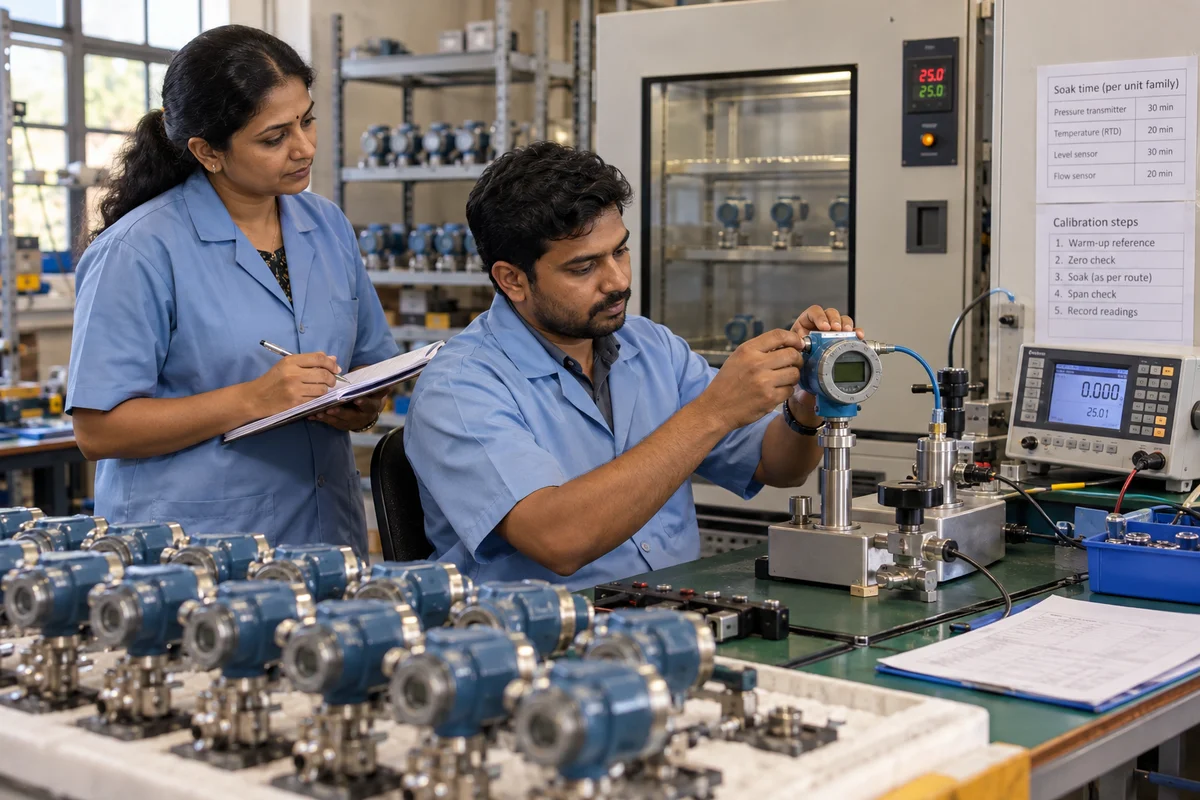
Sensor makers also work with calibration rigs, test chambers and sometimes pressure, heat or chemicals. Staff running these tests need clear rules for lock-out, guarding and protective gear. Safety here covers the test floor as well as the assembly bench.
How to set it up
1. Walk the benches
Sit at each station and note chair, lighting, magnifier and fume extraction. Ask the person what hurts at the end of the day.
2. Fix the set-up
Adjust seats and lighting, add task lights and magnification where needed, and place fume extraction close. Keep a list of changes.
3. Build breaks and rotation
Write short breaks into each shift and rotate between soldering, assembly and test where possible. Our workplace health, safety and wellbeing work covers this.
4. Teach safe handling
Brief staff on solder, flux, adhesives and potting material handling, and on what to do if there is irritation. Display simple notices.
5. Ask and follow up
Check in monthly about discomfort and headaches. Record what was changed and see whether complaints fall.
6. Cover the test floor
Set rules for pressure, temperature and electrical test rigs, including guards, warning signs and who may run them alone.
7. Plan for eye and hand strain
Provide rest periods, eye checks where practical, and tools that reduce hand strain on repetitive tasks.
Check these first
Before changing anything, find out what is true today. Use your own records for a defined period and note gaps in the evidence. The review may take longer if records are incomplete or spread across teams.
- Workstations with poor lighting or no extraction
- Staff who report eye strain, headache or neck pain
- Sick days that cluster on fine-work teams
- Handling instructions posted at each bench
- Walk the test floor with a technician and ask which rig they find most risky and why.
GullyHR can do this with you. Read how we approach workplace health, safety and wellbeing in general, or share your requirements and we will tell you where to start.
Questions owners ask
Short, regular breaks work better than one long one. Agree a pattern with the team that fits the batch rhythm, and make sure supervisors protect it.
Consider it if complaints continue. Ask a qualified adviser about checks and about the legal position for your unit. Do not rely on guesses.
Compare output and error rates at different stations and ask staff. If one station always has more complaints, change its set-up first.
Improve extraction at the bench, check the flux used and give staff a way to report symptoms. Ask your safety adviser or an occupational doctor for guidance on exposure.
They need good lighting, a safe way home and fair rest between shifts. Listen to their reports of fatigue and adjust the roster.
We set up the interview and hiring process for industrial sensor makers
Every business interviews, but few have a written process that works the same way for every role and every interviewer. GullyHR designs yours, from the role brief to the offer, trains your managers to run it, and can run it for you on the roles you hand us.