



GullyHR

Sheet Metal and Fabrication · Sheet Metal Fabricators

HR for Sheet Metal Fabricators: Cutting, Bending, Welding and Finishing Flow

A sheet metal fabricator turns flat sheet into brackets, panels and enclosures by cutting, bending, welding and finishing. A job crosses several stations, so one weak station slows the order.

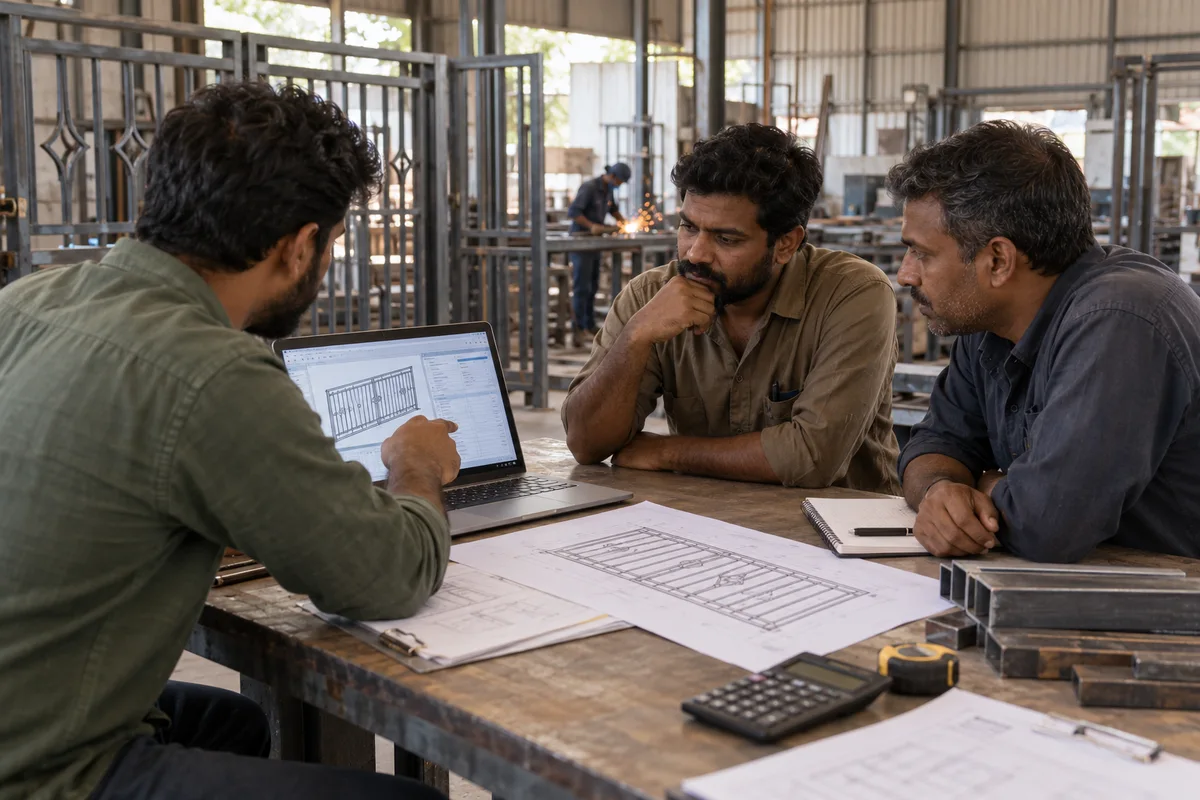
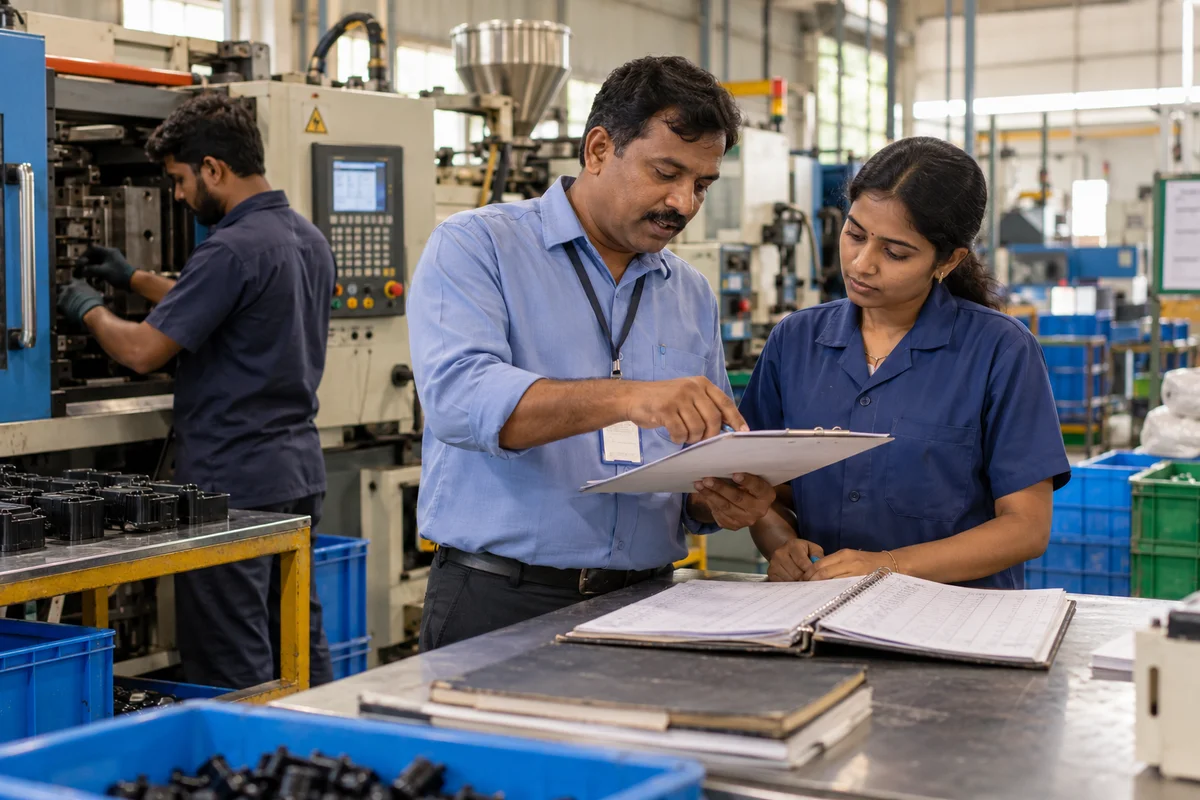
Workplace scene for Sheet Metal Fabricators: Cutting, Bending, Welding and Finishing Flow

Not sure what you need? Tell us about your business in six short steps and we will come to the first meeting prepared.

Share your requirements

A sheet metal fabricator makes parts and assemblies in mild steel, aluminium and stainless sheet for machine builders, electrical firms, vehicle makers and builders. A job moves through shearing, punching or laser cutting, bending on the press brake, welding or riveting, grinding, powder coating and packing. Orders are small and varied, built to customer drawings, and delivery dates are tight. Each station has its own skilled hands, and a gap at one, such as a bender on sick leave, leaves cut blanks stacked at the next. Supervisors are mostly promoted from the floor, and shops mix permanent skilled staff with daily helpers. Related reading: manufacturing HR.

  1. Plan
  2. Hire
  3. Onboard
  4. Manage
  5. Develop
  6. Perform
  7. Engage
  8. Retain
  9. Exit
  10. Improve

When HR is weak in sheet metal fabricators, you may see

  • A missing bender holds up the order
  • Small batches mean constant changeovers
  • Rework moves between stations unseen
  • Promoted welders become supervisors untrained
  • Daily helpers and permanent staff sit side by side on different pay
  • Orders bunch up at month end

These are the places the people side of this kind of business tends to give way. The rest of this page works through them.

Who does the work in sheet metal fabricators

HR here has to work for each of these groups, not only the office. The set-up below is written with all of them in mind.

  • Shearing and punching operators
  • Laser and turret punch operators
  • Press brake benders
  • MIG and TIG welders
  • Grinders and deburring staff
  • Powder coating and paint booth staff
  • Hardware fitters and assemblers
  • First-off and final inspectors
  • Production supervisors

Roles we help you hire in sheet metal fabricators

GullyHR runs talent acquisition for permanent roles in sheet metal fabricators. For each role we agree the job description with you, find and screen candidates against it, and support the offer through to joining. Tell us the role and the number of people, and we start there.

We recruit permanent employees. We do not supply contract or temporary staff.

We set up the interview and hiring process for sheet metal fabricators

Every business interviews, but few have a written process that works the same way for every role and every interviewer. GullyHR designs yours, from the role brief to the offer, trains your managers to run it, and can run it for you on the roles you hand us.

  1. 1. Role brief and scorecard

    We agree what the role must deliver, the must-have and nice-to-have skills, and how each will be scored.

  2. 2. Stages and sequence

    Screening call, assessment, interview rounds and decision points, sized to the role and the number of people you hire.

  3. 3. Question bank and scoring

    Structured questions for each role family and a rating guide, so two interviewers judge the same answer the same way.

  4. 4. Interviewer readiness

    A short briefing for your managers on what to ask, what to avoid and how to give a clear yes or no.

  5. 5. Offer and follow-up

    Who approves, how the offer is made, and how candidates are kept informed from first call to joining.

Where HR strains in sheet metal fabricators

  • A missing bender holds up the order

    Press brake skill sits with a few people, and one absence leaves cut blanks piled at the next station.

  • Small batches mean constant changeovers

    Each new job needs new tooling and a first-off check, and a rushed set-up produces bend angle and dimension errors.

  • Rework moves between stations unseen

    A distorted weld is blamed on the bend or the cut, and nobody records where it began.

  • Promoted welders become supervisors untrained

    The best welder is handed a team with no grounding in planning the day, settling a dispute or coaching, and the crew feels it.

  • Daily helpers and permanent staff sit side by side on different pay

    Unequal treatment across one line creates quiet resentment and unsteady output.

  • Orders bunch up at month end

    Customers release drawings late and expect month-end delivery, so overtime and absence land in the same days.

HR topics for sheet metal fabricators

Start with the topics that matter most here: Learning and Development; Performance Management; Employee Relations. Then work through the rest. Each topic is written for manufacturing, not in general.

Learning and Development

Training planned from need rather than from the calendar.

Performance Management

Goals, reviews and ratings that hold up in a conversation.

Employee Relations

Two routes, one for complaints, one for conduct, kept separate.

HR Strategy and Workforce Planning

How many people, in which roles, by when, and what they will cost.

Organisation Design

Structure, reporting lines and who is allowed to decide what.

Recruitment and Talent Acquisition

Requisition to joining, the same way every time.

Onboarding and Probation

A first day that is the same for the fifth joiner as the first.

Employee Administration

Records, attendance, leave and the day-to-day HR that must simply work.

Compensation, Payroll and Benefits

Salary structure, payroll inputs and a month that closes on time.

Career and Succession Management

Named backups for the roles that cannot be vacant.

Employee Engagement and Experience

Communication, recognition and the conditions people actually work in.

Policies, Compliance and Governance

Policies a manager can apply, and obligations with owners and dates.

Health, Safety and Wellbeing

Induction, records, incident reporting and follow-through.

Retention and Attrition Management

Who leaves, when, why, and which of them mattered.

Exit and Alumni Management

Resignation to relieving letter, in a defined order.

HR Technology and Automation

Records that survive people, and approvals that do not queue.

HR Analytics and Management Reporting

A short monthly pack management actually reads.

HR Operations and Governance

An HR function that runs the same way every month.

What a working HR set-up looks like

The pieces a sheet metal fabricators business puts in place, in an order that makes each easier. Open any card for the detail.

Cross-train a second person at every station

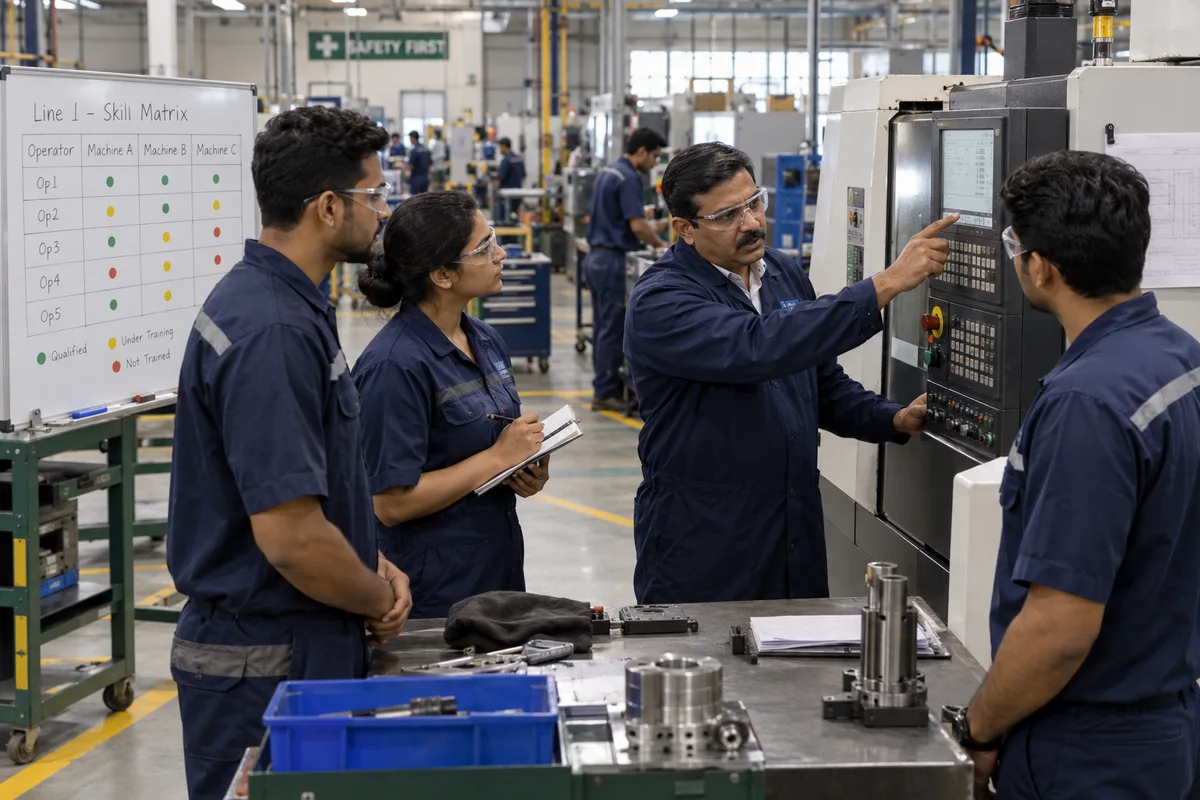
A matrix of stations against names and skill level, updated monthly, so one absence does not stall orders.

What this covers

A matrix of stations against names and skill level, updated monthly, so one absence does not stall orders. The learning plan can build it.

Trace each rework to where it began

A short tag on each rejected part showing the station and cause, reviewed weekly with supervisors.

What this covers

A short tag on each rejected part showing the station and cause, reviewed weekly with supervisors. HR reporting helps track it.

Run a short programme for new supervisors

Planning the shift, giving feedback and handling disputes.

What this covers

Planning the shift, giving feedback and handling disputes. Use the supervisor training as the base.

Write one pay logic for permanent and daily staff

A scale by skill, set down on paper, so people doing the same work can see why pay differs.

What this covers

A scale by skill, set down on paper, so people doing the same work can see why pay differs.

Plan month-end peaks well ahead

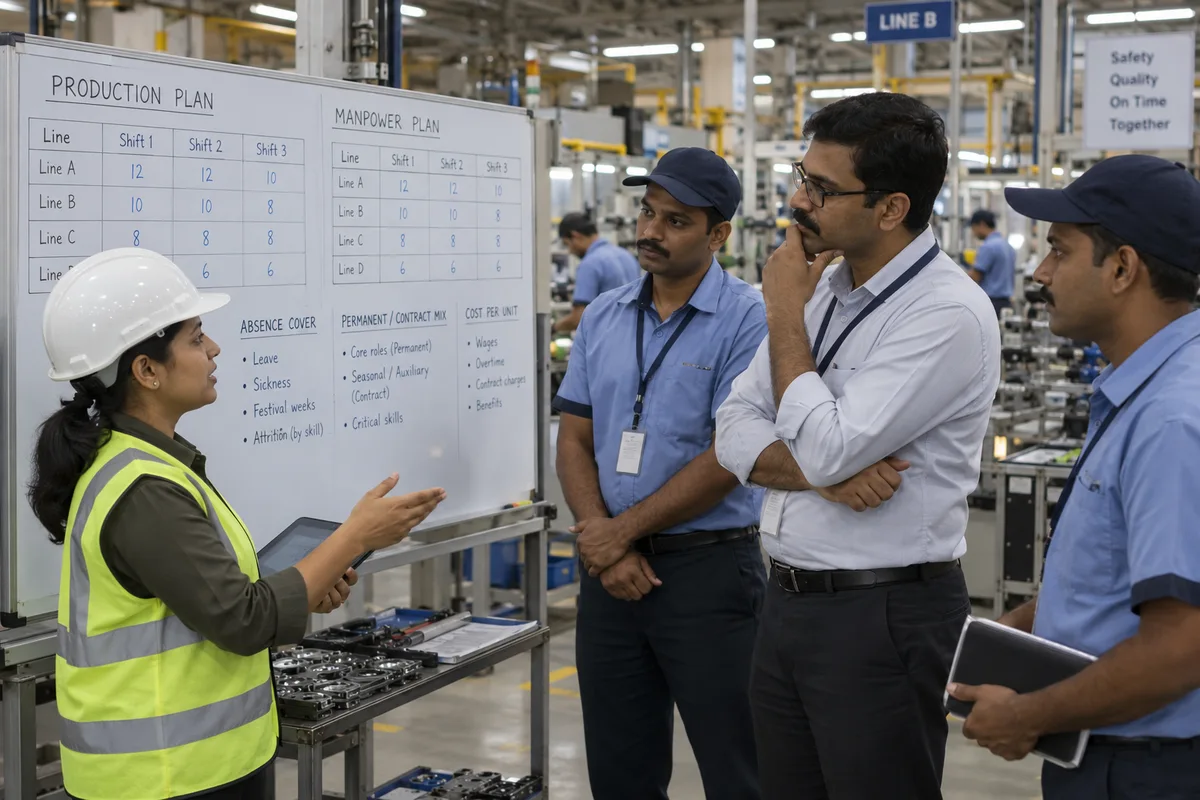
A shared view of the order book to fix overtime, leave and helpers early.

What this covers

A shared view of the order book to fix overtime, leave and helpers early. The leave and shift rules help set the limits.

Start by checking where you stand

Before changing anything, find out what is true today. Work through the checks using a recent operating period. The time needed depends on the records you hold; note missing evidence and use the findings to choose a priority.

Share your requirements
  • Draw the station chart and mark each station that has no trained backup.
  • Gather last month's rework tags and note where each fault began.
  • Ask your supervisors what training they had before they took the role.
  • Count how many helpers are daily-rated and how many permanent on the same line.
  • Check the days at last quarter's month end when attendance dipped.
  • Confirm with a qualified professional the registration, record-keeping and employment obligations that cover your cutting, welding and finishing shop, and list which need attention.

Confirm with a qualified professional. What applies to you depends on your business, your state and your arrangements, and it changes. This page describes practice. It does not state a legal position.

How GullyHR helps

The services below fit this kind of business best. Each starts by recording where you stand, and every later report compares against that. We do not promise outcomes.

Start with a free conversation, or see the paid HR Diagnostic.

Our HR transformation approach

  1. 1

    Assess

    Understand the business, its workforce, current processes and HR challenges.

  2. 2

    Identify gaps

    Find the missing, weak, inconsistent or person-dependent processes.

  3. 3

    Design

    Create the structure, processes, policies, SOPs, dashboards and systems needed.

  4. 4

    Implement

    Help HR and department managers actually adopt the new system.

  5. 5

    Automate

    Digitise repetitive and approval-based workflows where it is worth doing.

  6. 6

    Measure

    Track hiring, attendance, employee cost, performance, training and attrition.

  7. 7

    Improve

    Strengthen the people-management system continuously, not once.

Blogs worth reading first

From the GullyHR blog: one on HR in manufacturing, and one on each of the topics this page points to.

More on the GullyHR blog.

Questions owners ask

Train a second person for each station and keep a skill matrix where everyone can see it. Begin with the stations that have caused the most delay.

Start with your business need

What does your HR team need to solve?

Tell us your industry, team size and the issue you want to address. Bring one example of where work gets delayed or ownership is unclear, and the deadline or decision you are working towards.

  • A free first conversation with an HR practitioner
  • A clear scope and fee before any paid work
  • A practical next step for your business

Let’s start with your business

Share your contact details and the HR challenge on your mind. We’ll help you find the right starting point.

10-digit Indian mobile, without +91.

Your details stay private. Privacy policy