HR for Welding Shops: Welders, Test Pieces and Fume Exposure
A welding shop sells joints that hold. Gates, tanks, frames and machine bases leave the bay only if the bead is sound, and the welders who lay it can leave for another shop on a small raise.
Make this work for your business. Share your team size, priorities and what you need help with. We’ll use your brief to prepare for the first conversation.
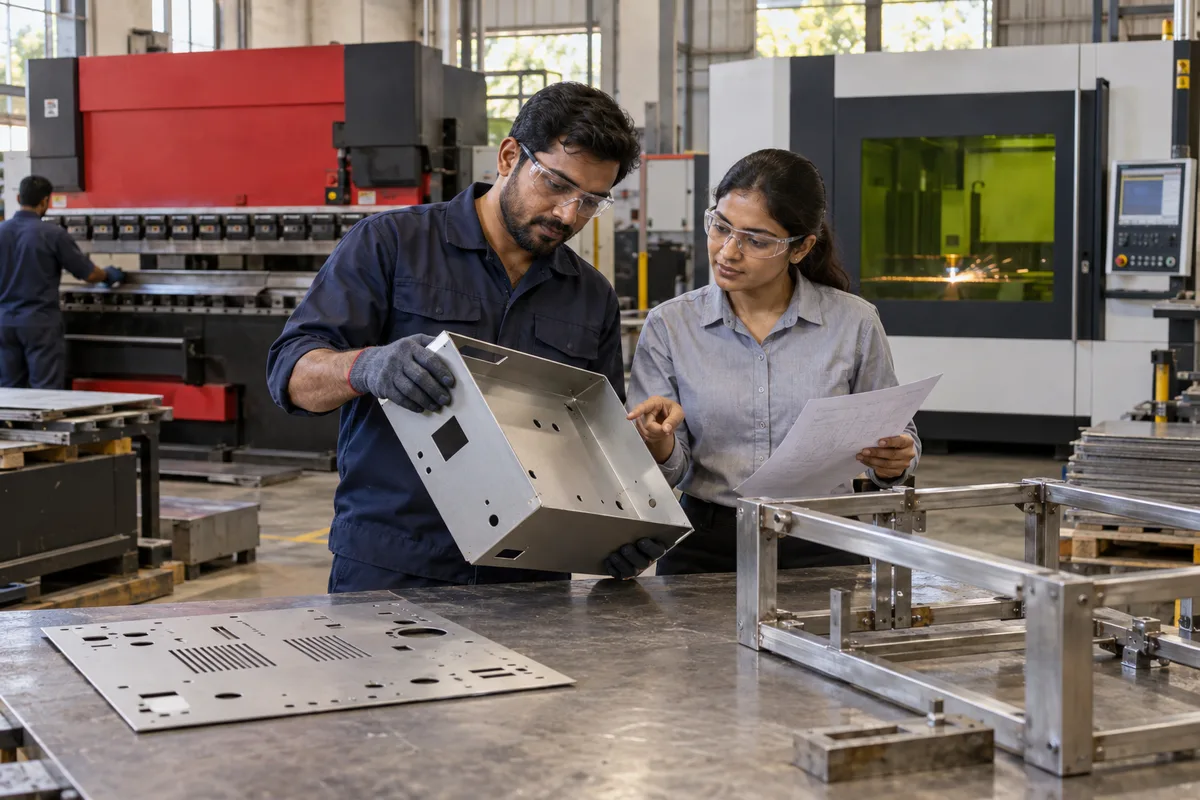
A welding shop builds and repairs gates, frames, tanks, machine bases and structural assemblies, running MIG, TIG and stick on mild steel, stainless or aluminium. A job arrives with a drawing or a sample piece. The fitter marks, cuts and tacks the parts, the welder runs the final beads, and the grinder dresses the seam. Some welders are sharp on thin stainless, others on heavy plate. Some are paid per job or per day, and a good one can be tempted away by a slightly better offer. Fume, spatter and arc flash are part of every shift, and a porous weld can fail at the customer's site months later. See also HR for manufacturing.
Plan→
Hire→
Onboard→
Manage→
Develop→
Perform→
Engage→
Retain→
Exit→
Improve
When HR is weak in welding shops, you may see
A small raise elsewhere is enough
Skill is judged by the owner's glance
Piece rates pay for speed, not for sound beads
The gap between fitter and welder turns to blame
Fume and arc flash are shrugged off
Helpers can see no way to the torch
These are the places the people side of this kind of business tends to give way. The rest of this page works through them.
Why GullyHR for welding shops
Welders paid for sound beads and proud to stay.
For welding shops where a small raise elsewhere can move a good welder and skill is judged by the owner's glance. Welders are graded by test piece, welds are checked before pay, and helpers see the route to the torch.
01
A test piece for each welder grade
Each grade has a set test piece in MIG, TIG or stick, so skill is shown on the bench and not judged by the owner's glance.
02
Weld checked before the job counts
A quick weld check before a job is counted for pay stops piece rates rewarding speed over sound beads, and cuts rework from the bay.
03
A weekly fit-up and weld review
Fitters and welders meet each week over last week's rework, so a gap in fit-up stops turning into blame.
04
A route from helper to welder
Helpers get listed steps from tacking to a full weld, with a named welder to teach and sign them off, so staying looks better than leaving.
Our services for welding shops
Start with any one of these. Scope and fee are agreed in writing after a free first conversation.
HR audit
We list the welders by process, MIG, TIG or stick, and mark who is strongest at each. Then we take last month's rework and tag each case as weld fault, fit-up fault or finish. We look at how welders are paid, whether per job, per day or by piece, and what the pay rewards. We count the number of welders who joined and left over twelve months, and the number who wear proper shields and use the fume hood through a full shift. Two helpers are asked whether they know how one becomes a welder here.
What you receive
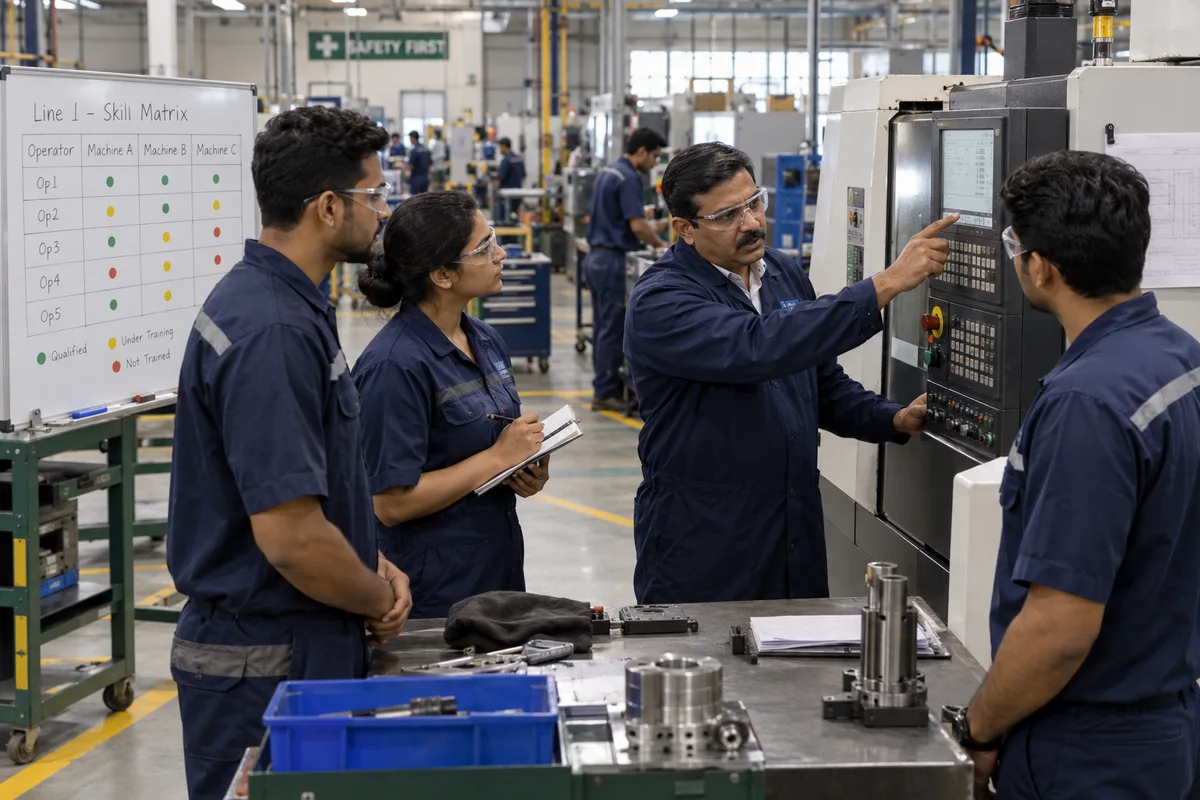
A welder skills map by process, material and thickness
A rework analysis tagging cases as weld, fit-up or finish faults
A pay method review showing what each scheme rewards
An example, not a client storyPicture a shop that lost its best TIG welder for a small raise and found a month later that no one else could do thin stainless. Nothing was written about the welder's skill. We would map the remaining welders by process and show where cover is thin. The owner would then see which welders cover which process.
We begin with the test pieces: one for each welder grade and process, scored by the same person against the same sheet. The pre-pay weld check comes next, naming who inspects, what they look for and what happens to a porous or undercut bead. Then the fit-up handover, which says what a fitter must have tacked and checked before the welder starts, so the gap between fitter and welder stops turning into blame. Last is the personal protection routine: shield, gloves and extraction checked at the start of the shift.
What you receive
A test piece and scoring sheet for each welder grade and process
A pre-pay weld check naming who inspects and what happens to a faulty bead
A fit-up handover checklist between fitter and welder
An example, not a client storySay a welder finishes a gate frame quickly and the porous seam is found at the customer's site months later. The pay was already counted. We would write a weld check that sits before the job counts and name who signs it. The owner and the welders would then agree on the same standard, and rework would be traced to its real cause.
We keep the welder grade sheet and helper progress list current, and run the weekly fit-up and weld review with the bay supervisors, fitters and welders. We track rework by cause and follow up with the right person. We check shield, glove and extraction use through the shift and record gaps. Cover is planned so a TIG or stick job is never promised when only one person can do it. When a welder gets an outside offer we make sure the owner hears about it early and has a plan.
What you receive
A weekly welder cover and helper progress page for the owner
A rework by cause summary reviewed with fitters and welders each week
A shield, glove and extraction check log for each bay
An example, not a client storySuppose the owner learns on a Friday that a welder is leaving at month end, with a heavy-plate order due. We would keep a cover chart ahead of time, so the owner knows who can take the order and what must be moved. The owner would then see the gap weeks ahead and plan hiring or training in time.
Welders are sharp in different areas, so each role card names the process, the material and the thickness. We screen on what the welder has done and then set the test piece: thin stainless for TIG, heavy plate for stick, or a repeat MIG joint. The bead is scored against the same sheet by the same assessor for every candidate. Fitters are tested on reading a drawing and tacking to it. For helpers and tack welders in training we look for care and willingness to be taught. We agree the pay scheme before the offer, so it is not a surprise.
What you receive
A role card for each welder seat naming process, material and thickness
A graded test piece with a shared scoring sheet for all candidates
A first-month plan pairing each new welder with an existing one
An example, not a client storyTake a shop that needs a TIG welder for stainless frames and has two candidates with similar years of experience. Neither has been tested. We would write the role card, set one test piece and score both beads on the same sheet. The owner would then have a clear, fair way to choose, and the loser could be told why.
Welding is learned beside someone, so we coach senior welders to teach in steps: tack, run a bead, check, then a full joint. We run a session for fitters and welders on fit-up, using last month's rework as the examples. A bay session covers fume, spatter and arc flash, with shields, gloves and extraction shown and checked. Bay supervisors learn to give feedback on a bead without turning it into a quarrel. Helpers see the test piece they are working towards and who will assess it.
What you receive
A coaching session for senior welders on teaching and signing off helpers
A fit-up session for fitters and welders built on the shop's rework cases
A bay session on fume, spatter and arc flash with equipment checks
An example, not a client storyPicture a helper who has tacked for a year and asks to try a full weld. The welders are busy and no one answers. We would run a coaching session, set the step list and name a welder to sign each step. The helper would then see a clear next step, and the welders would share the teaching.
A welding shop's handbook has to say how skill is graded and how pay follows it. We write the grade definitions and the pay scheme, whether per job or per day, with the weld check built in. A protective equipment section covers shields, gloves, extraction and the fume hood. In HR software we record test pieces, grades, helper steps, training and leaver history, so the owner sees patterns. The owner's adviser confirms shop registration, record-keeping and employment obligations. A short section covers rework: who fixes it and who pays.
What you receive
A handbook section on welder grades, pay scheme and the weld check
A protective equipment and extraction policy for each bay
An HR system setup holding test results, grades and helper progress
An example, not a client storySuppose two welders argue over who pays for a reworked seam because the rule was never written. The owner settles it in the moment. We would write the rework rule into the handbook and record each case, so the answer is the same each time. The owner would then point to the page, and the welders would trust the answer.
We cannot match every offer, but we can make staying clearer: a grade ladder tied to test pieces, a pay scheme that rewards sound welds, and a route for helpers. Regular one-to-ones surface problems early. Pay decisions stay yours, and your adviser confirms employment terms. Those one-to-ones also give each welder a place to ask about the next grade, which matters as much as a raise.
We set a test piece for each grade and process, scored by the same person against the same sheet. Welders see what they are assessed on and when. Your own judgement stays in the room, but it is backed by a sheet, so a welder can accept the grade. Each welder also learns what a better bead looks like, so grades feel earned.
We would add a weld check before a job counts for pay and review rework by cause each week. Whether to pay per job, per day or a mix is your call, and we write it plainly. Your adviser confirms how pay rules must be recorded. Welders who see sound beads valued are less likely to chase the next small raise.
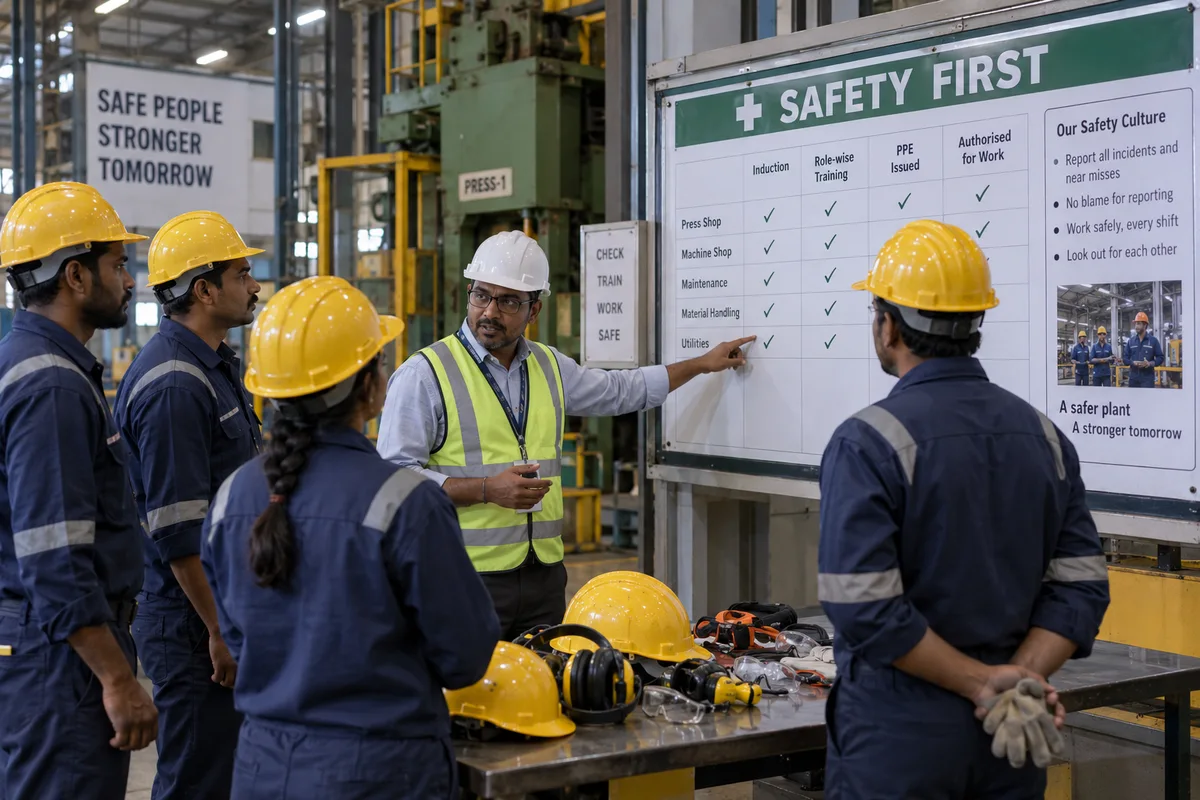
We write a short routine: shield, gloves and extraction checked at the start of every shift, with a log per bay. A bay session shows why it matters on real work. Supervisors check it weekly, and your adviser confirms the safety duties that apply. The log also gives the owner proof of the habit if a customer ever asks.
Who does the work in welding shops
MIG wire welders
TIG welders on stainless and aluminium
Stick (arc) welders on plate and structure
Fitters and layout markers
Grinders and seam finishers
Weld inspectors and checkers
Helpers and tack welders in training
Electrode, gas and consumables store keepers
Bay supervisors
Roles we help you hire in welding shops
GullyHR runs talent acquisition for permanent roles in welding shops. For each role we agree the job description with you, find and screen candidates against it, and support the offer through to joining. Tell us the role and the number of people, and we start there.
We recruit permanent employees. We do not supply contract or temporary staff.
Where HR strains in welding shops
A small raise elsewhere is enough
Good welders are known across the industrial area. A neighbouring shop that offers a little more takes them without a word.
Skill is judged by the owner's glance
Nobody tests a bead. A welder who can run a clean root pass and one who cannot may be paid the same, or by mood.
Piece rates pay for speed, not for sound beads
A welder paid by the job may hurry, leave porosity, skip slag removal and pass on the cleanup. Rework turns up a week later.
The gap between fitter and welder turns to blame
Poor tack alignment or an uneven root gap is blamed on the welder. The fitter never hears about it.
Fume and arc flash are shrugged off
Shields, gloves and extraction hoods are used unevenly. Welders treat coughing and sore eyes as part of the trade.
Helpers can see no way to the torch
A helper carries and grinds for years. No one has set out the steps from tacking to a full weld.
HR topics for welding shops
Start with the topics that matter most here: Retention and Attrition Management; Compensation, Payroll and Benefits; Health, Safety and Wellbeing. Then work through the rest. Each topic is written for manufacturing, not in general.
The pieces a welding shops business puts in place, in an order that makes each easier. Open any card for the detail.
Set a test piece for each welder grade
A coupon in the process your shop actually runs, judged against written criteria, to place each welder on a grade.
What this coversHide
A coupon in the process your shop actually runs, judged against written criteria, to place each welder on a grade. Link pay using compensation benchmarking.
Check the weld before the job is counted for pay
The supervisor or weld inspector looks at the joint before the piece rate is credited.
What this coversHide
The supervisor or weld inspector looks at the joint before the piece rate is credited. See performance management for tying pay to right-first-time work.
Hold a weekly fit-up and weld review
Ten minutes at the bench on the commonest faults, such as root gap, distortion and undercut, so fitters and welders hear each other.
What this coversHide
Ten minutes at the bench on the commonest faults, such as root gap, distortion and undercut, so fitters and welders hear each other.
Make shield, glove and extraction checks routine
Masks, lenses, gloves and fume hoods are looked at at the start of each shift.
List your welders by process and mark who is strongest at MIG, TIG or stick.
Take last month's rework and tag each case as weld fault, fit-up fault or finish.
Ask two helpers whether they know how one becomes a welder in your shop.
Count how many welders wear proper shields and use the fume hood through a full shift.
Note how many welders joined and how many left in the past twelve months.
Confirm with a qualified professional the shop registration, record-keeping and employment obligations that apply to your welding business.
Confirm with a qualified professional. What applies to you depends on your business, your state and your arrangements, and it changes. This page describes practice. It does not state a legal position.
Why the best operator can struggle as shift supervisor, what it costs the line, and a practical way to choose, prepare and back new supervisors in any kind of plant.
What really keeps mobile app and web developers in a small firm: stay conversations, growth paths, fair release rules and a risk sheet an owner can use this month.
Simple variable pay structures for product and engineering teams: four options, why individual metrics backfire, a build plan and a one page outline to adapt.
A shift, weekly and monthly safety routine for rubber plants that names who checks platen guards, mill trip bars, autoclave doors, burst-test cages and slings, and who acts on near misses.
Give a coupon in your own process, such as a fillet or butt joint, and mark it against written criteria. Place welders in grades from the result and retest from time to time.
Pay is only part of it. Clear grades, steady work, decent bay conditions and a say in which jobs they take all count. Check your rates against nearby shops now and then.
It works if a weld check comes before payment and rework is not paid twice. Without that check, piece rates produce rushed beads.
Run a short review of root gaps, alignment and weld defects on a fixed schedule, and let both sides suggest fixes. A shared target for rework helps more than blame.
A proper shield, gloves, apron, and extraction or ventilation at the bench. Check them every shift and ask about cough or eye strain.
We would sort your welders by process, read last month's rework causes and see how helpers learn to weld. A natural first job is a test-piece grade ladder with a check before pay. Once we have talked, the scope goes into writing.
Tell us your industry, team size and the issue you want to address. Bring one example of where work gets delayed or ownership is unclear, and the deadline or decision you are working towards.