HR for Rubber Gasket Makers: Die Cutting, Cut Gaskets and Moulded Seals
A gasket maker turns rubber, cork and fibre sheet into sealing parts for engines, pumps and pipework. Repeat customers stay when the part seals, arrives quickly and matches the drawing.
Make this work for your business. Share your team size, priorities and what you need help with. We’ll use your brief to prepare for the first conversation.
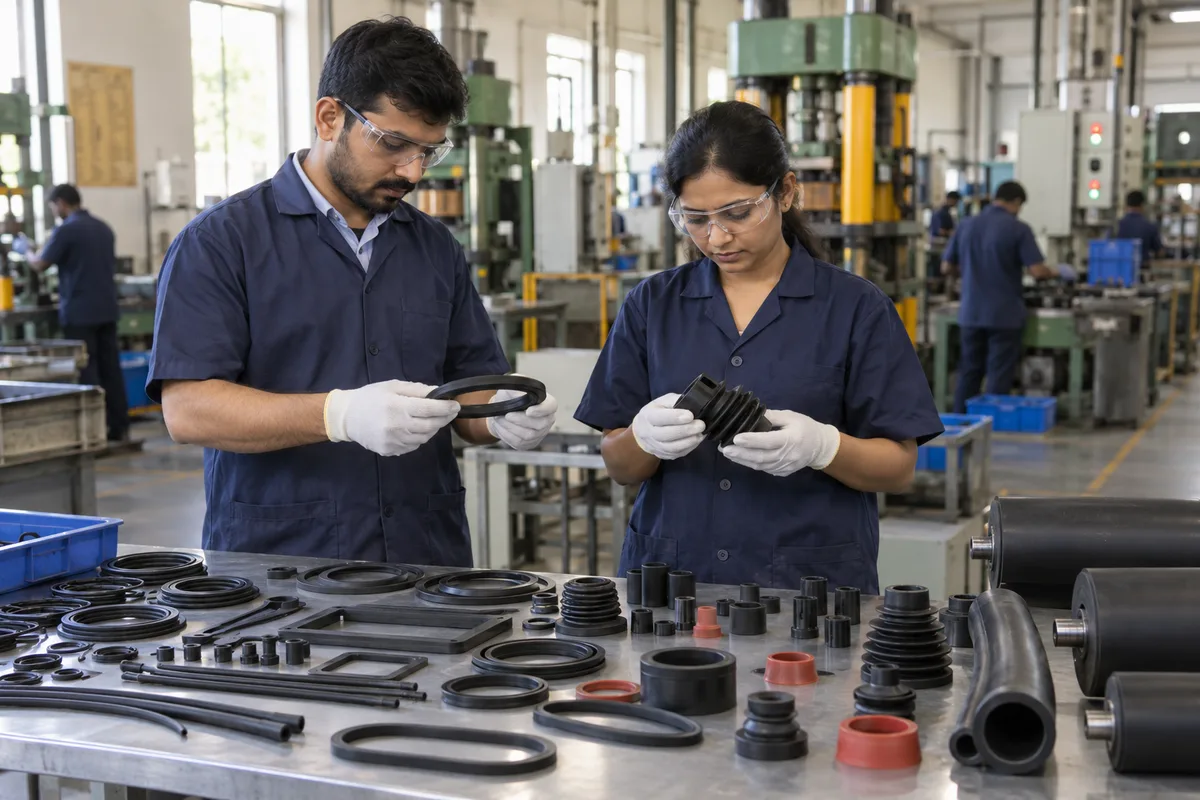
A rubber gasket maker supplies parts that seal the joint between two surfaces. Some are punched from sheet on die presses or cut by waterjet or laser. Others are moulded in a heated tool. The route runs from sheet or compound stock to die or mould, cutting or moulding, trimming, inspection against the drawing and packing by part number. Orders are small and frequent: repeat jobs with urgent changes for workshops, engine builders and pump firms. The toolroom makes and mends the dies. A gasket that leaks costs the customer's trust faster than it costs scrap. A busy week can mean thirty part numbers a day, each with its own check of hole position and thickness. For the wider sector, read the manufacturing overview.
Plan→
Hire→
Onboard→
Manage→
Develop→
Perform→
Engage→
Retain→
Exit→
Improve
When HR is weak in rubber gasket makers, you may see
Dozens of part numbers invite mix-ups
The die maker is rare and ageing
Inspection rests on a few trained eyes
Evening calls for parts upend the shift
Offcut waste is blamed on the press
New operators learn by trial
These are the places the people side of this kind of business tends to give way. The rest of this page works through them.
Why GullyHR for rubber gasket makers
Part numbers that stay straight and a die maker with a second pair of hands.
For owners of shops cutting and moulding gaskets for engine builders, pump firms and workshops. Start-of-job checks, a second die maker and tested inspectors keep a leak from reaching the customer.
01
A start-of-job check for every run
Operators confirm part number, thickness and hole position against the drawing before the first cut, so a day with dozens of part numbers stops producing mix-ups.
02
A second die maker in training
A younger fitter is paired with the senior die maker on repairs and sign-offs, so the toolroom no longer rests on one rare and ageing pair of hands.
03
Inspectors tested on drawings
Each inspector passes a short drawing and gauge test at set intervals, which spreads inspection beyond a few trained eyes and makes passing a part a recorded skill.
04
A cut-off for urgent orders
A written cut-off and an overtime rota decide who takes late calls for parts, so an evening request no longer upends the shift and the same two people.
Our services for rubber gasket makers
Start with any one of these. Scope and fee are agreed in writing after a free first conversation.
HR audit
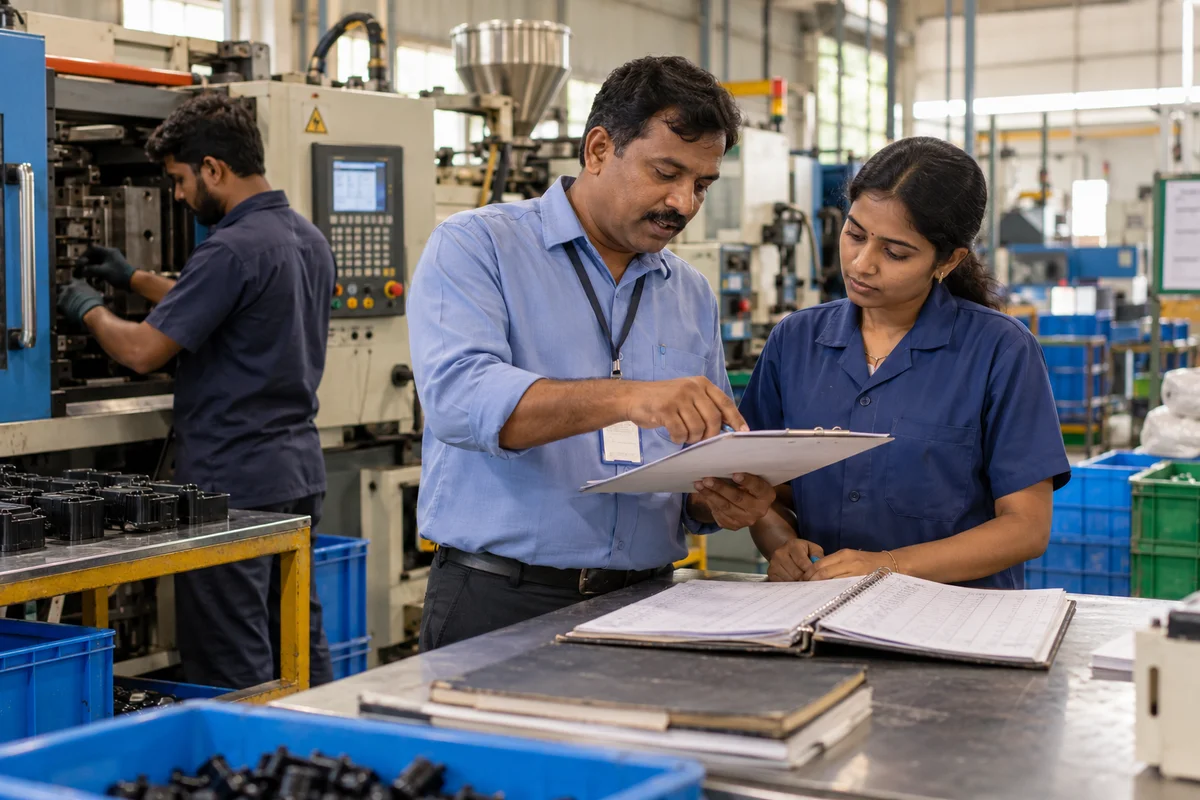
We take one working day and count the part numbers that ran, the changes between them and the mix-ups found. The scrap sheet is read to see whether it names causes or only people. We ask the senior die maker who could take over a repair today and read the dies' repair record. Inspectors are asked when each last passed a drawing test. Overtime sheets show who worked the urgent orders and on which days. Waterjet and laser operators, trimmers and the stores clerk for part numbers are included. Findings are ranked by the chance of a wrong or leaking part reaching a customer.
What you receive
A one-day part number and mix-up count with causes recorded
A toolroom dependency note on dies and repairs held by one person
An inspector skill list showing the last drawing test for each person
An example, not a client storySuppose an engine builder returns a box of gaskets with the wrong hole position and the supervisor blames the night press operator. The audit would count the part numbers run that night, read the start-of-job record and ask the inspector what was checked. The finding may be a missing check, not careless work.
The start-of-job check is a single card at each press: part number, drawing revision, material thickness, first piece measured and who signed. The die repair routine records who repairs, who checks and who signs the die back into service, with a second pair of hands named. Inspector testing is designed as a short exercise with real drawings and gauges. The urgent order cut-off sets the hour after which a request becomes next day, or is staffed by a named rota. Scrap recording is rewritten to name causes first and people second.
What you receive
A start-of-job check card for die cutting, waterjet, laser and moulding stations
A die repair and sign-off routine naming a second person
An urgent order cut-off rule with an overtime rota
An example, not a client storyPicture a repeat customer who rings at the end of the afternoon asking for a rush of thirty gaskets of an old part number. With the cut-off rule, the sales clerk knows whether to accept, who is on the rota and what the check card requires. The shift is not upended, and the order is sent.
Each week we sample check cards from each station and note where a field was left blank. The die maker cover plan is updated with the second person's progress on repairs. We keep the inspector test calendar and book the next test before the last lapses. Overtime sheets are reviewed to see whether the same two people carry urgent orders, and we propose changes to the rota. The scrap sheet is discussed with supervisors and the quality lead so that causes are found. Warnings or disputes follow a written route, with your adviser confirming any legal point.
What you receive
A weekly check card sample report with blank fields and repeats
A die maker cover plan with the second person's progress
An overtime and urgent order summary showing who carried each order
An example, not a client storySay the overtime review shows that the same two press operators covered every urgent order for a month. We would show the owner the pattern, propose a rota across four people, check the cut-off rule and arrange short training for the two who had not yet run the die cutting press on their own.
Die makers are rare, so the role card says what dies, what tolerances and what repair work the person will do, and how a second pair of hands fits. We source from toolrooms and gasket or seal firms nearby. Operators are screened for care with part numbers and comfort with drawings. Inspectors take a short exercise: reading a drawing, using a gauge, spotting a wrong hole position. Your senior die maker or inspector scores each candidate on the same sheet. We never supply contract staff, and your adviser confirms contract terms before an offer is made.
What you receive
A role card for die maker, operator and inspector stating tolerances and tools
A drawing and gauge exercise with scoring for inspector candidates
A candidate comparison note for the owner and senior die maker
An example, not a client storyTake a shop where the senior die maker is nearing retirement and the owner has no successor. We would write a role card for a toolroom fitter who can learn dies, source candidates from nearby toolrooms, run a drawing reading trial, and plan a handover period in which the senior hand coaches the newcomer.
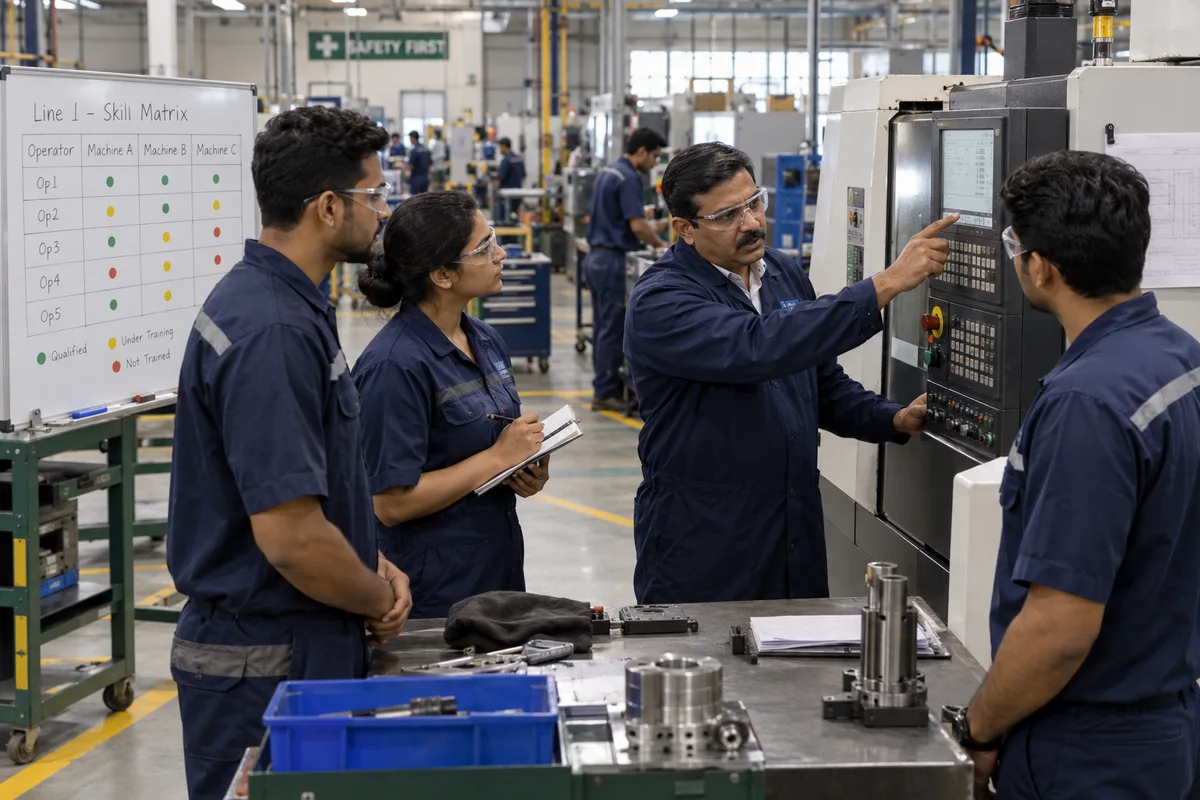
Operator sessions practise the start-of-job card on real part numbers until it feels quick, not slow. Inspectors work through drawings and gauges, using returned parts as examples of what a miss looks like. Supervisors learn to ask what happened before asking who did it, and to record scrap by cause. The senior die maker is coached to hand over repairs step by step to the second person. Press operators learn how to speak up when an urgent order breaks the cut-off. All sessions are short, repeated for each shift and held beside the press.
What you receive
An operator session on the start-of-job card using live part numbers
An inspector session on drawings and gauges using returned parts
A supervisor session on recording scrap by cause and not by person
An example, not a client storyPicture a new press operator who runs a thick sheet for a part drawn for a thin one because the part numbers are close. We would train on the check card using exactly that pair of numbers, so he learns to confirm thickness against the drawing. The mix-up becomes a story told in the session, not a repeat.
The handbook for a gasket maker is a short document: how a job starts, who may sign a die back into service, when inspectors are tested, how scrap is recorded and how urgent orders and overtime are decided. It adds a rule on quality holds when a part is doubtful. The people system holds each operator's station sign-offs, each inspector's test dates, the toolroom's cover plan and overtime history. Wording touching pay, safety or legal duties goes to your adviser before it is issued to the shop floor.
What you receive
A handbook chapter on start-of-job checks, die sign-off and scrap recording
An inspector test and station sign-off record in a people system
An overtime and urgent order policy with a rota and a cut-off
An example, not a client storySuppose an inspector is asked to pass a lot of a drawing he has never checked before. With the policy and the people record, he sees that he is not signed off for that part family, the supervisor assigns a signed-off colleague, and the lot is passed on a record that will stand up.
We would write a start-of-job check card for each station, covering part number, drawing revision, thickness and first piece, and train operators on it with your own numbers. A scrap sheet that names causes would show where mix-ups start. We do not change your stores layout or your production software, but we make the routine clear to the people who run it every day.
We would plan a second die maker: a role card, a recruitment of a permanent toolroom fitter, and a handover period where the senior hand coaches step by step with sign-offs. We would also record each repair so that what the senior hand knows sits on paper as well as in his head. Pay and retirement arrangements are your decision, and your adviser confirms contract terms.
We would write a short drawing and gauge test, run it for each inspector, and book retests on a calendar. Operators who show care are trained as inspectors in stages. The people system would show who is signed off for which part families. This spreads the skill without lowering the bar, and your quality lead keeps the final say on standards.
We would write an urgent order cut-off, with a rota across more than two people and a short check for rushed jobs. Overtime is reviewed monthly so the same operators do not carry every call. Overtime pay and rest rules are your decision with your adviser, and we would record what each rushed order cost the shift.
Who does the work in rubber gasket makers
Die cutting press operators
Waterjet and laser cutting operators
Toolroom die makers
Moulding press operators
Trimming and deflashing staff
Inspectors with gauges and drawings
Raw sheet cutting staff
Stores and part number clerks
Packing and dispatch crew
Roles we help you hire in rubber gasket makers
GullyHR runs talent acquisition for permanent roles in rubber gasket makers. For each role we agree the job description with you, find and screen candidates against it, and support the offer through to joining. Tell us the role and the number of people, and we start there.
We recruit permanent employees. We do not supply contract or temporary staff.
Where HR strains in rubber gasket makers
Dozens of part numbers invite mix-ups
Wrong die, wrong sheet thickness and mixed bins happen on a busy day, and nobody owns the cause afterwards.
The die maker is rare and ageing
Training a toolroom hand takes years, and one person may be the only one who knows how each worn die was last repaired.
Inspection rests on a few trained eyes
Reading hole position and thickness against a drawing is a learned skill, and a rushed inspector lets bad parts through.
Evening calls for parts upend the shift
A workshop customer ringing at four for parts by morning turns the shift over, and the same operators stay behind.
Offcut waste is blamed on the press
Operators answer for scrap that really comes from nesting, sheet quality or a worn die, because no shared record exists.
New operators learn by trial
Die setting, press stroke and sheet feed are picked up by guessing, and the scrap bin pays for the lesson.
HR topics for rubber gasket makers
Start with the topics that matter most here: Learning and Development; Employee Administration; Retention and Attrition Management. Then work through the rest. Each topic is written for manufacturing, not in general.
Take one day and count the part numbers that ran and the mix-ups found.
Ask your senior die maker who could take over a die repair today.
List who inspects and when each last passed a drawing test.
Count urgent overtime days last month and who worked them.
Read the scrap sheet and see whether it names causes or only people.
Confirm with a qualified professional the machine-safety, wage-record and employment duties that sit with a gasket-making unit.
Confirm with a qualified professional. What applies to you depends on your business, your state and your arrangements, and it changes. This page describes practice. It does not state a legal position.
Why the best operator can struggle as shift supervisor, what it costs the line, and a practical way to choose, prepare and back new supervisors in any kind of plant.
A founder's guide to hiring freshers and running a first-year programme: campus or open drives, a screening round, a training plan by quarter, mentors and checkpoints.
Payroll says one joining date, the personal file says another and the manager remembers a third. How to establish a single trustworthy employee record and keep it that way.
What really keeps mobile app and web developers in a small firm: stay conversations, growth paths, fair release rules and a risk sheet an owner can use this month.
Add a signed check of die, sheet and number at the start of each job, and keep bins separate by job. Look at mix-ups weekly with the crew.
Look inside first for a hand with patience for fine work, and pair them with the master. Hiring from outside is slow and uncertain.
Yes. A short test on drawings and gauges protects everyone, and it should be repeated when drawings or gauges change.
Keep a rotation list, record who stayed and agree limits with the crew. Have the employment terms checked by a qualified professional.
Record it by job and cause, then review it with the operator and the toolroom in the same room. A worn die or poor sheet is not the operator's fault.
We would see how many part numbers run in a day and where mix-ups occur, who could cover your die maker, and how inspectors are tested. A start-of-job check plus a second die maker plan is a sensible first project. We would write the scope down after we speak.
Tell us your industry, team size and the issue you want to address. Bring one example of where work gets delayed or ownership is unclear, and the deadline or decision you are working towards.