
HR for Rubber Products: press and cure cycles, heat and fumes, compound skill, small-batch custom work
Rubber plants mix, mould, extrude and cure products in hot, physical conditions. Their people problems are heat and fatigue, scarce compound and mould skill, hand-finishing volumes and holding experienced press operators.
Not sure what you need? Tell us about your business in six short steps and we will come to the first meeting prepared.
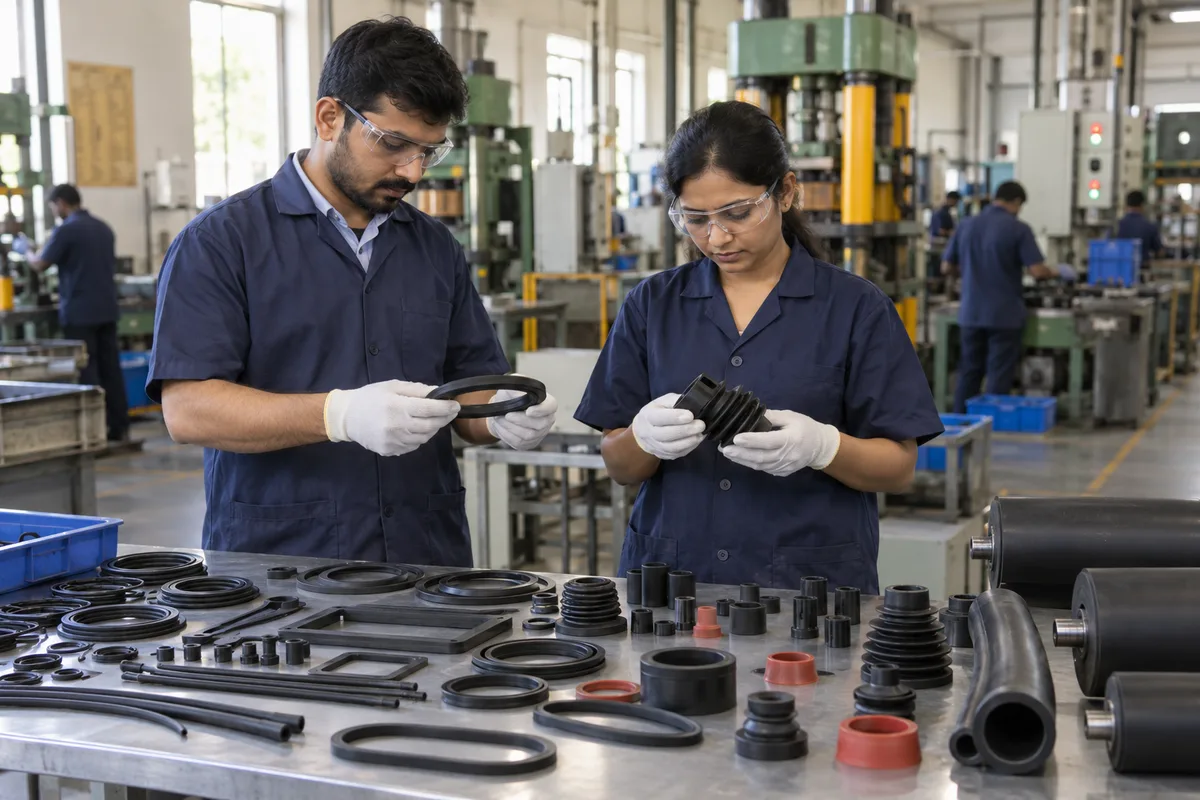
Share your requirementsRubber product makers turn compound into parts that seal, cushion, carry or grip. The compound is mixed, formed in a mould, extruded or built up on a roller, and cured under heat and pressure before being trimmed, inspected and packed. Customers include automotive, engineering, construction and process firms, with orders ranging from large repeat runs of small seals to one-off belts, hoses and bonded parts. Material cost and scrap are watched closely, and cure time sets the rhythm of the plant.
Work is hot, physical and repetitive, and a lot depends on feel. Press operators judge loading, timing and flash, mixing staff must follow recipes exactly, and tool room staff keep moulds in good shape. Finishing, trimming and inspection take a lot of hands and can be paid by output. Turnover is high among new hires, so onboarding and workplace safety matter from day one. Experienced operators and mould fitters are the group worth protecting.
What rubber products have in common
Heat and fatigue shape the shift
Presses, ovens and curing areas make long shifts hard. Rotation, breaks, water and fair overtime rules keep people present and careful. Ignoring this shows up as absences and scrap.
Compound handling is exact work
A wrong weight or a skipped step spoils a batch. Mixing staff need clear instructions, supervised practice and sign-off, and the role should be respected and paid accordingly.
Moulds and tools need a small expert group
A good tool room fitter keeps cavities clean and presses productive. Such people are rare. A growth path and a trained second person protect against sudden loss.
Hand finishing carries a large headcount
Deflashing, trimming and visual checks employ a large number of people, sometimes on output pay. Clear quality standards, rejection feedback and fair rates stop disputes and rework.
Custom work needs flexible, experienced crews
Short runs of special parts mean more setup and decisions. Role levels and a skill matrix show who can run which jobs without supervision.
Business types in rubber products
Choose the one closest to yours. Each page covers how that kind of unit is run, where its people processes strain, and the HR processes worth putting in place first.
- Rubber Moulding UnitsPress-centred plant with large finishing teams; the people mix is a few skilled press and tool staff and a big group of trimmers and inspectors.Explore HR guidance
- Rubber Gasket MakersSheet cutting and moulded gaskets side by side; skills spread across press, die and cutting machines, with steadier volumes than custom work.Explore HR guidance
- Seal and O-Ring MakersMulti-cavity moulds and tiny parts; visual checking, tumbling and tight tolerances make eyesight, patience and inspection rules the core people issues.Explore HR guidance
- Rubber Hose MakersExtrusion, braiding and autoclave curing; fewer people per line but heavier lifting, and long cycles reward steady, trained operators.Explore HR guidance
- Silicone Component MakersCleaner production, post curing and stricter customer standards; hygiene discipline and careful handling are more demanding than in general rubber work.Explore HR guidance
- Conveyor Belt MakersVery large machines, heavy rolls and long press cycles; physical strength, teamwork and strong safety practice dominate the people picture.Explore HR guidance
- Industrial Rubber Parts MakersCustom mixes of moulding, bonding and roller work; a wider skill spread and more decision-making from experienced crew leads than in standard moulding.Explore HR guidance
Roles we help you hire in rubber products
GullyHR runs talent acquisition for permanent roles in rubber products. For each role we agree the job description with you, find and screen candidates against it, and support the offer through to joining. Tell us the role and the number of people, and we start there.
- Moulding press operators
- Trimming and deflashing staff
- Mould cleaning and care staff
- Compression press operators
- Injection and transfer press operators
- Mould fitters and mould changers
- Compound mixing and preform cutting staff
- Deflashers and trimmers
- Gauge and hardness inspectors
- Tool room fitters
- Packing and dispatch hands
- Shift supervisors
- Die cutting press operators
- Waterjet and laser cutting operators
- Toolroom die makers
- Inspectors with gauges and drawings
- Raw sheet cutting staff
- Stores and part number clerks
- Packing and dispatch crew
- Compression and injection moulding press operators
- Rubber preform cutting and weighing staff
- Deflashing and tumbling machine operators
- Visual inspection and sorting staff
- Gauge, Shore hardness and size testers
Job descriptions for this sector
We recruit permanent employees. We do not supply contract or temporary staff.
We set up the interview and hiring process for rubber products
Every business interviews, but few have a written process that works the same way for every role and every interviewer. GullyHR designs yours, from the role brief to the offer, trains your managers to run it, and can run it for you on the roles you hand us.
1. Role brief and scorecard
We agree what the role must deliver, the must-have and nice-to-have skills, and how each will be scored.
2. Stages and sequence
Screening call, assessment, interview rounds and decision points, sized to the role and the number of people you hire.
3. Question bank and scoring
Structured questions for each role family and a rating guide, so two interviewers judge the same answer the same way.
4. Interviewer readiness
A short briefing for your managers on what to ask, what to avoid and how to give a clear yes or no.
5. Offer and follow-up
Who approves, how the offer is made, and how candidates are kept informed from first call to joining.
HR processes that matter most for rubber products
Each business-type page above goes into the processes that fit it best. These are the ones that come up most across the whole group.
- Workplace health, safety and wellbeing
Heat, fumes, hot moulds and heavy rolls make safety practice a daily people duty.
- Employee onboarding process
New hands face hot presses and exact procedures. A structured start cuts early exits and mistakes.
- Competency and talent management
A skill matrix shows who can run which press, mix or tool job and where cover is thin.
- Learning and development process
Compound mixing and press setting are learnt by doing. A plan makes it faster and safer.
- Employee retention and attrition management
Experienced operators and mould fitters are the ones to hold on to.
- Attendance, shift and leave process
Hot, long shifts need rotation and relief rules that crews see as fair.
Questions owners ask
Be honest about conditions at the hiring stage, give a structured first week with a buddy, rotate people through tougher areas and check in at fixed points in the first months. Most early exits can be traced to a poor start or an unclear job.
If output pay is used, tie it to accepted pieces, not just counted pieces, and share rejection feedback quickly. Keep rates written, review them when products change and avoid private side deals that cause disputes.
List the tasks only they can do, pair each with a junior, record key practices in short notes and photos, and give these roles a clear growth step. Recognition and pay matter as much as documents.
Agree rotation, breaks and water access, make safety briefings part of every shift start, and make supervisors responsible for stopping unsafe work. Review near misses with the crew and act on them visibly.
We would review how operators, mixers and finishers are hired, trained and rotated, where absence and attrition are highest, and how safety is handled day to day. We would then suggest priorities and agree scope in writing afterwards.