

















Industries
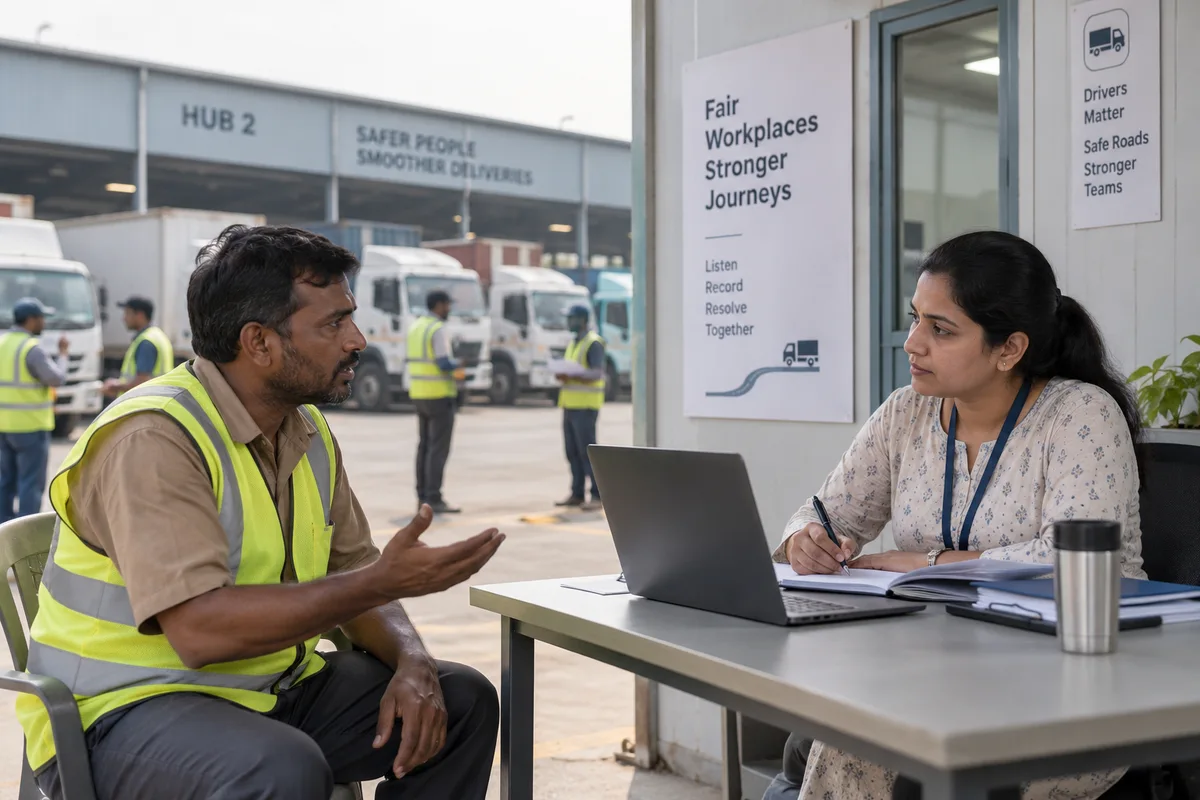
Why logistics employees leave and how to understand why
Drivers, warehouse staff and delivery teams can leave without a conversation. How to understand why, from routes and rosters to pay and supervisors.
7 min readRead articleA moving company sells trust: strangers in a family's home, handling everything they own. This is how to staff and run the crews who do the work.

Not sure what you need? Tell us about your business in six short steps and we will come to the first meeting prepared.
Share your requirementsA packers and movers company packs, loads, transports and unloads household and office goods, locally and between states. The team includes surveyors who visit and quote, packing crews led by a supervisor, loaders and helpers, drivers with their assistants, a dispatcher, a customer coordinator and sometimes a warehouse crew for storage. Work comes by the job and in clumps: month-end, the school transfer season and corporate relocation cycles put a crowd of moves on the same days, with lulls between. Some crew members are taken on for the day or for one job, and they work inside customers' homes among their belongings. One careless handler or a driver who does not show up damages the company's name. Related reading: HR for logistics and transportation.
These are the places the people side of this kind of business tends to give way. The rest of this page works through them.
HR here has to work for each of these groups, not only the office. The set-up below is written with all of them in mind.
GullyHR runs talent acquisition for permanent roles in packers and movers. For each role we agree the job description with you, find and screen candidates against it, and support the offer through to joining. Tell us the role and the number of people, and we start there.
We recruit permanent employees. We do not supply contract or temporary staff.
Every business interviews, but few have a written process that works the same way for every role and every interviewer. GullyHR designs yours, from the role brief to the offer, trains your managers to run it, and can run it for you on the roles you hand us.
We agree what the role must deliver, the must-have and nice-to-have skills, and how each will be scored.
Screening call, assessment, interview rounds and decision points, sized to the role and the number of people you hire.
Structured questions for each role family and a rating guide, so two interviewers judge the same answer the same way.
A short briefing for your managers on what to ask, what to avoid and how to give a clear yes or no.
Who approves, how the offer is made, and how candidates are kept informed from first call to joining.
Month-end and school transfer weeks bunch moves together, and the extra hands arrive with little briefing.
Crew manners, language and care vary widely, and one bad impression turns into a bad review.
After delivery it is unclear who wrapped which item, who loaded the truck and who carried it up.
Drivers spend days on the highway with unpredictable returns, and fatigue and time pressure both rise.
When crews are paid per job, speed beats care, and wrapping and padding quality slip.
A quote from a quick walk-through misses stairs, narrow lifts or fragile pieces, and the crew takes the argument at the door.
Good loaders work for the firm that rings first and pays promptly, and loyalty is thin.
Start with the topics that matter most here: Recruitment and Talent Acquisition; Performance Management; Onboarding and Probation. Then work through the rest. Each topic is written for logistics and transportation, not in general.
Requisition to joining, the same way every time.
Goals, reviews and ratings that hold up in a conversation.
A first day that is the same for the fifth joiner as the first.
How many people, in which roles, by when, and what they will cost.
Structure, reporting lines and who is allowed to decide what.
Records, attendance, leave and the day-to-day HR that must simply work.
Salary structure, payroll inputs and a month that closes on time.
Training planned from need rather than from the calendar.
Named backups for the roles that cannot be vacant.
Communication, recognition and the conditions people actually work in.
Two routes, one for complaints, one for conduct, kept separate.
Policies a manager can apply, and obligations with owners and dates.
Induction, records, incident reporting and follow-through.
Who leaves, when, why, and which of them mattered.
Resignation to relieving letter, in a defined order.
Records that survive people, and approvals that do not queue.
A short monthly pack management actually reads.
An HR function that runs the same way every month.
The pieces a packers and movers business puts in place, in an order that makes each easier. Open any card for the detail.
A steady core of supervisors and experienced packers, plus a list of briefed and rated helpers sized from your peak days.
A steady core of supervisors and experienced packers, plus a list of briefed and rated helpers sized from your peak days. The recruitment process can maintain it.
A five-minute huddle led by the supervisor on what the customer expects, fragile items, access limits and conduct inside the home.
A five-minute huddle led by the supervisor on what the customer expects, fragile items, access limits and conduct inside the home.
Inventory sheets signed at packing, loading and delivery, naming the crew each time, so a claim can be traced and settled quickly.
Inventory sheets signed at packing, loading and delivery, naming the crew each time, so a claim can be traced and settled quickly.
A job rate with a bonus tied to damage-free delivery and customer feedback.
A job rate with a bonus tied to damage-free delivery and customer feedback. See performance management and incentive design.
Trip schedules with realistic times, rest days after long hauls and a way to reach the dispatcher at any hour.
Trip schedules with realistic times, rest days after long hauls and a way to reach the dispatcher at any hour. See the health, safety and wellbeing work.
Before changing anything, find out what is true today. Work through the checks using a recent operating period. The time needed depends on the records you hold; note missing evidence and use the findings to choose a priority.
Share your requirementsConfirm with a qualified professional. What applies to you depends on your business, your state and your arrangements, and it changes. This page describes practice. It does not state a legal position.
The services below fit this kind of business best. Each starts by recording where you stand, and every later report compares against that. We do not promise outcomes.
A core crew and a briefed call-up list sized to your peak days.
Pay that rewards careful, damage-free work and not only speed.
Short training for crews and coordinators on conduct inside a customer's home and handling complaints.
A first-day routine so a new packer knows how to wrap, lift and behave before the first job.
Start with a free conversation, or see the paid HR Diagnostic.
Understand the business, its workforce, current processes and HR challenges.
Find the missing, weak, inconsistent or person-dependent processes.
Create the structure, processes, policies, SOPs, dashboards and systems needed.
Help HR and department managers actually adopt the new system.
Digitise repetitive and approval-based workflows where it is worth doing.
Track hiring, attendance, employee cost, performance, training and attrition.
Strengthen the people-management system continuously, not once.
From the GullyHR blog: one on HR in logistics and transportation, and one on each of the topics this page points to.

Drivers, warehouse staff and delivery teams can leave without a conversation. How to understand why, from routes and rosters to pay and supervisors.
7 min readRead article
How a D2C founder can test a performance marketing hire on real work, ignore weak signals such as dashboard screenshots, and run a fair process.
7 min readRead article
A practical design for an IT services appraisal cycle: when to run it, how to rate fairly across projects, and how to explain hikes so they hold.
7 min readRead article
A first-week plan for bringing in an outside specialist: what access to give, how to protect client data, and the confidentiality steps to settle on day one.
7 min readRead articleMore on the GullyHR blog.
Hold a steady core, keep a list of helpers who have worked with you and rate them after each job. Brief everyone before the first move of the day.
Train packers on materials and method, record items at each stage and tie part of the pay to damage-free delivery. Tracing who handled an item is fairer and teaches the crew.
Set simple conduct rules, brief before each job, keep a supervisor present and ask the customer for feedback on the day.
Plan trips with realistic times, give rest after long distances and keep the dispatcher reachable. A tired driver raises risk for the load and himself.
Use a standard survey checklist covering access, floors, lifts and fragile items, and review gaps with the surveyor, so the crew is not left arguing at the door.
We would ask about your busiest day last month, how many of that crew had worked for you before, and whether a damaged item can be traced to the person who wrapped it. A core crew with a call-up list and a short pre-job briefing could be the first job. After we have talked, we send the scope in writing for your approval.
All 51 business types in logistics and transportation · Find another business type
See all HR topics for logistics and transportation, or another industry.
Tell us your industry, team size and the issue you want to address. Bring one example of where work gets delayed or ownership is unclear, and the deadline or decision you are working towards.