Home Services & Maintenance · Appliance repair companies
HR for Appliance Repair Companies: Several Brands, Parts Waits and Technicians in Homes
An appliance repair company fixes washing machines, refrigerators, microwaves and more across a range of brands. Technicians must know a lot, wait for parts and still leave the customer satisfied, even on a second visit.
Make this work for your business. Share your team size, priorities and what you need help with. We’ll use your brief to prepare for the first conversation.
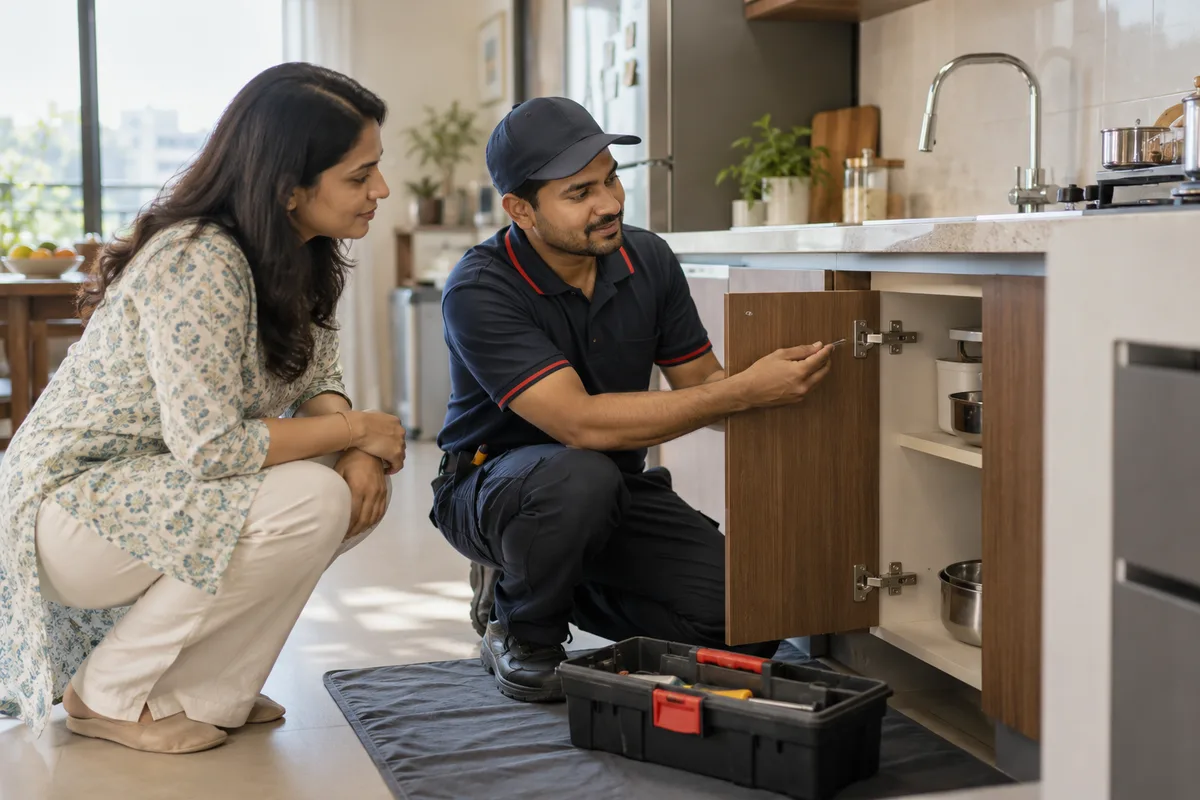
An appliance repair company works on washing machines, refrigerators, microwaves, geysers, chimneys and small kitchen equipment, either as a brand's authorised service partner or as an independent shop. Technicians visit homes with a bag of tools and a few common parts, diagnose the fault and either fix it or order a part and come back. Calls come by phone, app and brand dispatch, so a coordinator sits between the customer and the technician. Skills vary by product and brand, and new models arrive each year. The facility management sector and the home services hub cover what these firms share.
Plan→
Hire→
Onboard→
Manage→
Develop→
Perform→
Engage→
Retain→
Exit→
Improve
When HR is weak in appliance repair companies, you may see
One visit rarely finishes the job
Brand knowledge sits with a few people
Coordinators and technicians blame each other
Complaints arrive without facts
Pay depends on brand rules
Trainees learn by guessing
These are the places the people side of this kind of business tends to give way. The rest of this page works through them.
Why GullyHR for appliance repair companies
Technicians, booking desks and parts staff working from the same facts.
For repair companies that fix washing machines, refrigerators and kitchen equipment across brands. HR work is built around skills by product, call details, visit reports and a path for trainees.
01
A skills record by product and brand
Each technician's strong and weak appliances are recorded, so a geyser job goes to the right person and brand knowledge is not locked in one head.
02
Call details the desk always takes
Booking staff use one checklist for fault, model, age and address, so a technician arrives knowing the likely part and not guessing at the door.
03
A closing report for every visit
Each visit ends with a short report on cause, work done and parts needed, so a complaint is answered from the record and not from argument.
04
A separate path for trainees
New technicians spend defined time in the workshop with named seniors before home visits, so trainees stop learning by guessing in customers' kitchens.
Our services for appliance repair companies
Start with any one of these. Scope and fee are agreed in writing after a free first conversation.
HR audit
The audit starts with last month's visits that needed a second trip, and the reasons logged for each. We read ten recent complaints and note which had no record of the first visit. We sit with the booking desk and listen to how a call is taken, then check what detail is missing for the technician. Each technician is asked about strong and weak products and brands. We look at how long trainees spend in the workshop before home visits, and how brand terms affect pay. The report lists the gaps in order of cost.
What you receive
A repeat-visit review with reasons grouped by product and call detail
A map of technician strengths and avoided appliances by brand
A complaint file review showing which visits had no usable record
An example, not a client storyTake a company where one technician is sent to a split air conditioner and arrives without the right part because the call note said only the unit would not cool. The audit would trace which visits repeat this pattern and suggest the call detail to add. The technician could then carry the likely part on the first visit.
Four processes are written first. The call-detail checklist tells booking staff exactly what to ask: appliance, brand, model, age, fault and any earlier repair. The visit closing report is a short form or app entry on cause, work done, parts needed and the customer's sign-off. The skills record shows who is trained on which products. The trainee path sets workshop weeks, ride-alongs and a first solo visit. We draft each with the field supervisor and a senior technician, then test them on one team before the full roll-out.
What you receive
A call-detail checklist for the booking desk covering fault, model and age
A visit closing report form with cause, work done and parts needed
A trainee path with workshop weeks, ride-alongs and sign-off for solo visits
An example, not a client storyPicture a customer who says the technician did nothing on the first visit and wants a refund. With a closing report that records the cause and the part ordered, the supervisor can reply from the record and arrange the second visit calmly. The customer sees a company that keeps records and keeps its word.
Each week we update the technician skills record as people complete training or take on new brands. We review the visits that needed a second trip and sort them by cause: desk detail, parts, skill or customer. We check that every closed visit has its report and chase gaps with the supervisor. We follow trainees through their workshop weeks and note when each is ready for supervised visits. Complaints are read with the booking desk and the technician together, so each side hears the facts and the owner sees the pattern.
What you receive
A weekly repeat-visit summary of second trips sorted by cause
A trainee progress sheet showing workshop weeks and sign-offs
A complaint log with outcomes shared with desk, technician and owner
An example, not a client storySay the booking desk and the technicians blame each other for second visits, week after week. A weekly summary sorted by cause would show how much comes from missing call detail and how much from skills, and each group would be coached on its own part. Nobody is left defending a failure that belonged to someone else.
The hard seats are senior diagnostic technicians who can handle several brands, parts coordinators who keep a second visit short and field supervisors who coach. We write a role note for each, naming the product mix and the area covered. Technician candidates work through the same diagnosis exercise on a faulty unit or a described fault and are scored on method and on how they would speak to the customer. Interviews use set questions. We also help set a fair entry route for trainees so they join the workshop first.
What you receive
A role note for technicians, parts coordinators and supervisors by product mix
A diagnosis exercise with a marking sheet for technician candidates
An entry route for trainees showing workshop weeks and first duties
An example, not a client storySuppose the one technician who knows a popular brand's washing machines resigns. A skills record and a role note would show the gap at once, and the owner could recruit and train toward it before complaints mount. Customers would keep getting skilled help on the brand they bought, from a person who knows it.
Technicians learn to follow a set diagnosis order, record what they found and explain it to a customer in plain words, including when a part must be ordered and a second visit is needed. Booking staff practise taking call details that help the technician arrive prepared, and handling an upset caller. Parts coordinators learn how to tell customers about delays honestly. Supervisors learn to coach a technician after a repeat visit without blame and to read a complaint file. Trainees get a short orientation on workshop rules and home visit manners.
What you receive
A technician session on diagnosis order, closing reports and plain explanations
A booking desk workshop on complete call details and upset callers
A supervisor session on coaching after repeat visits and handling complaints
An example, not a client storyPicture a technician who finds the fault but leaves without explaining why a part must be ordered. After training, the same person tells the customer what was found, what the part does and when to expect the second visit, and the complaint never arises. The customer is also less likely to book a rival next time.
Technicians work alone in customers' homes, so written conduct matters. We draft a home-visit conduct note, covering identification, entering and leaving, handling a customer's property and what to do if a customer is unhappy. A warranty paperwork routine says who completes which form and when. The handbook covers hours, travel, tool and part accountability and leave. A trainee policy explains the workshop path. In HR software we hold technician records, skills, training dates and acknowledgements. Registration, warranty-related and employment rules go to your own adviser for confirmation.
What you receive
A home-visit conduct note covering identification, property and unhappy customers
A warranty paperwork routine naming who completes each form and when
A handbook with tool and part accountability and trainee terms
An example, not a client storySay a customer claims that an item went missing during a visit. A conduct note, a closing report and a signed tool and part record let the supervisor review the facts calmly, and the owner's adviser has already confirmed the wording of the rule. The technician is protected as well as the customer.
Questions owners of appliance repair companies ask us
We read last month's repeat visits and sort them by cause: missing call detail, missing parts, skill or customer. Then we fix the largest cause first, through a better call checklist, a closing report and a skills record. It will not remove second visits that depend on parts, but it makes each one planned, recorded and explained to the customer.
Yes. We ask each technician about strong and avoided products, check it against recent visits and record it by appliance and brand in one skills record. Training dates are added over time. The booking desk and supervisors then send the right person. We do not test certification; your own adviser confirms any rule that applies to registered work.
We set a trainee path: defined workshop weeks with a named senior, ride-alongs, a supervised first visit and a sign-off for solo work. Each step has a short record. Trainees stop learning by guessing in customers' kitchens. Terms for trainees, including pay while learning, are confirmed by your own adviser before they are issued, so everyone starts on a clear footing.
We cannot change the partner's terms, but we help you explain them openly to technicians, write down how brand rules affect pay, and set an internal routine that treats everyone alike. The owner and technicians then talk from one page, and questions about brand pay are answered the same way for everyone. Your own adviser confirms any employment or contract point that the brand's terms touch.
Roles we help you hire in appliance repair companies
GullyHR runs talent acquisition for permanent roles in appliance repair companies. For each role we agree the job description with you, find and screen candidates against it, and support the offer through to joining. Tell us the role and the number of people, and we start there.
We recruit permanent employees. We do not supply contract or temporary staff.
Where HR strains in appliance repair companies
One visit rarely finishes the job
A part is ordered, the technician returns later, and the customer remembers the first visit as a failure unless it was explained well.
Brand knowledge sits with a few people
Only one person knows a certain make of washing machine, so calls pile onto that person and the days run long.
Coordinators and technicians blame each other
A wrong address or missing fault detail from the desk meets a technician who says the call was badly taken.
Complaints arrive without facts
A customer says the technician was careless, and there is no record of what was found, said or charged.
Pay depends on brand rules
Authorised work pays per call under a brand's terms, and technicians feel the firm keeps too much while the firm feels the technician wastes calls.
Trainees learn by guessing
A newcomer opens a machine, tries parts and learns at the customer's expense, which costs both parts and trust.
HR topics for appliance repair companies
Start with the topics that matter most here: HR Analytics and Management Reporting; Employee Relations; Compensation, Payroll and Benefits. Then work through the rest. Each topic is written for facility management, not in general.
Count visits last month that needed a second trip, and the reasons.
Ask each technician which appliances they feel strong on and which they avoid.
Read ten recent complaints and note which had no record of the visit.
Ask the booking desk what detail they lack when they take a call.
Look at how long trainees spend in the workshop before home visits.
Confirm with a qualified professional the registration, warranty-related and employment duties that apply to an appliance repair business like yours.
Confirm with a qualified professional. What applies to you depends on your business, your state and your arrangements, and it changes. This page describes practice. It does not state a legal position.
Housekeeping, technician and security staff at client sites leave for reasons head office rarely hears. How to ask, what to look for and how to act on it.
An employee brings you a complaint about their supervisor. What happens next should not depend on who is in the room. A grievance procedure a small company can actually run.
Simple variable pay structures for product and engineering teams: four options, why individual metrics backfire, a build plan and a one page outline to adapt.
Find out why. It may be a lack of training, difficult parts supply or poor pay per call for that brand. Fix the reason, then plan practice and pairing instead of forcing the visit.
The desk offers a slot based on the technician's plan, and the technician confirms the day before. A shared view of the schedule cuts missed visits and arguments between the two.
Record each visit, explain the fault and the next step to the customer, and follow up by phone. Complaints fall when customers feel informed, even when a part is delayed.
Both have a place. Experienced people start sooner but may bring habits you do not want, while trainees cost more time but learn your way. Use a workshop stage to bring them up.
Sit down with a sample call and show what the brand pays, what the firm deducts and what the technician receives. Plain arithmetic ends most suspicion, even when the numbers are not welcome.
We would look at your repeat-visit count, who handles which brands and how the desk takes calls. A skills record by product with a standard closing report is a natural first piece, and scope goes into writing for your approval.
Tell us your industry, team size and the issue you want to address. Bring one example of where work gets delayed or ownership is unclear, and the deadline or decision you are working towards.