
Industries
Why agribusiness workers leave and how to understand why
Seasonal crews, field officers and processing staff leave for different reasons. How to ask what shaped their decision and act before next season.
7 min readRead articleA poultry operation runs in batches, and one careless day in a shed can cost a whole batch. Here is how to organise the people who look after birds and eggs.

Not sure what you need? Tell us about your business in six short steps and we will come to the first meeting prepared.
Share your requirementsA poultry business keeps layers for eggs, raises broilers for meat or runs a hatchery that incubates and sells day-old chicks. Work follows the batch: chicks arrive, are brooded, fed, vaccinated, weighed and sold or housed, and then the shed is cleaned and rested before the next lot. Sheds may be many and spread over a site or several villages, with a shed supervisor and a few workers in each. Hatcheries run controlled rooms with setters, hatchers, sexing and packing teams, often on shifts. Biosecurity is a daily discipline, and a veterinarian or technical adviser guides the programme. Confirm applicable licences and animal-health obligations with a qualified professional. See also HR for agriculture and agribusiness.
Who does the work
Biosecurity depends on habits, not signs
Footbaths, changing clothes and entry rules are skipped when people are tired or unobserved, and the damage shows weeks later.
Workers are mostly migrant and live on site
Many come from other states, live in farm housing and go home at festivals, so cover and retention swing together.
Batch timing makes work lumpy
Chick placement, vaccination and catching days need extra hands for a short period, while the weeks between need fewer.
Supervisors are promoted from workers
A good shed hand becomes supervisor with no training in recording mortality, feed use or managing a small crew.
Night checks and emergencies
Power failures, heat or ventilation faults need someone present at night, and who is on call is often unclear.
Hatchery work is precise and repetitive
Setting, candling and sexing demand steady attention across shifts, and errors reach customers as poor chick quality.
Make the biosecurity routine part of joining
A short, practical induction on entry, clothing and movement between sheds, with a supervisor's check in the first fortnight. The onboarding process can carry it.
Plan peak hands around the batch calendar
A calendar of placement, vaccination and catching dates with the extra hands needed, arranged ahead rather than the same morning.
Prepare supervisors for the role
A small programme on daily records, mortality and feed reporting, handling a crew and escalating problems. The manager development work can shape it.
Set a night and emergency rota
A named person on call for each site on each night, with a call tree for power and ventilation faults.
Document terms for migrant and live-in workers
Plain written terms for pay, housing, leave and travel at festival time, in the worker's language. The HR documentation service helps.
Confirm with a qualified professional. What applies to you depends on your business, your state and your arrangements, and it changes. This page describes practice. It does not state a legal position.
A first-week induction that makes entry rules and daily records habits from day one.
Practical preparation for shed supervisors who were promoted from the shed floor.
Simple written terms for pay, housing and leave for migrant and live-in workers.
A view of when workers leave, especially around festivals, and what would bring them back.
Every engagement starts by recording where you stand, and every later report compares against that. We do not promise outcomes. Start with a free conversation, or see the paid HR Diagnostic.
From the GullyHR blog: one on HR in agriculture and agribusiness, and one on each of the topics this page points to.
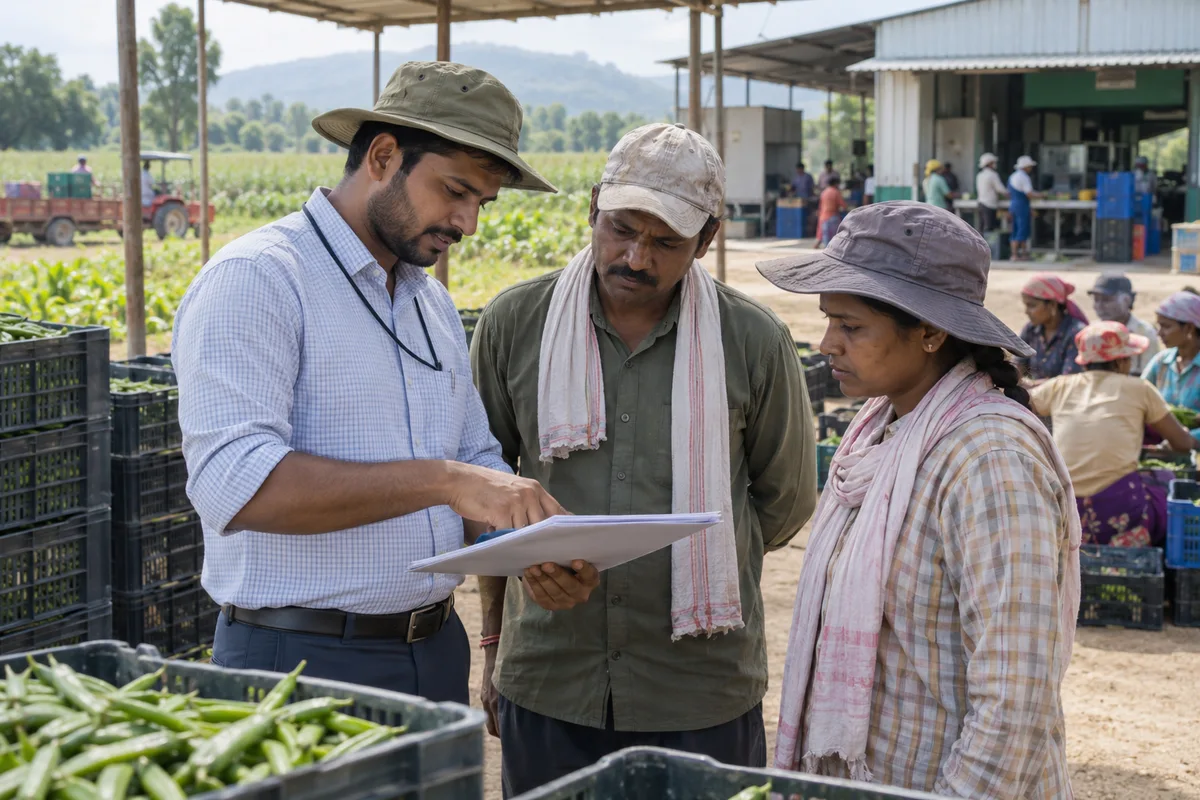
Seasonal crews, field officers and processing staff leave for different reasons. How to ask what shaped their decision and act before next season.
7 min readRead article
A practical joining checklist covering documents, assets, system access and statutory enrolments, with owners and timings, so nobody's first salary is wrong.
8 min readRead article
A laminated notice, an annual drill, and an incident register with three entries in two years. What workplace health and safety looks like when it is real.
7 min readRead article
How to spot an unmanageable workload before it becomes an exit or an error, what to look at, how to talk about it and what to change, without guessing.
5 min readRead articleMore on the GullyHR blog.
Teach it as a routine on the first day, put the steps where people work, and have supervisors check it without notice. Habits fail when only the owner cares.
Talk about it at joining: agree leave dates, travel help if any and expectations on return. Build a small standby group so absences do not stop the batch.
Yes, and often well, if the step is supported. Teach daily records, reporting problems early and managing a small crew before and after promotion.
A named person for each site, with a second person behind them and a short call list for power or ventilation faults. Write it on a rota, not by habit.
A hatchery is closer to a small factory: shifts, controlled rooms and repetitive precise tasks. It needs attendance, training records and handover between shifts more than a farm does.
We would talk through how biosecurity is taught when someone joins, how extra hands are planned around your batch calendar, and who is on call at night. How shed workers become supervisors, and how festival leave for migrant staff was handled, would follow. A natural first task is an induction routine plus a night rota. We then put the agreed scope in writing.
All 9 business types in agriculture and agribusiness · Find another business type
See all HR topics for agriculture and agribusiness, or another industry.
Identify payroll leaks, record gaps and hiring bottlenecks in a free first conversation, and leave knowing what to fix first.
Know what you need? Share your requirements in four short steps.
Want the full picture? See the paid HR Diagnostic.
Prefer a quick message? Chat on WhatsApp