
Industries
Why agribusiness workers leave and how to understand why
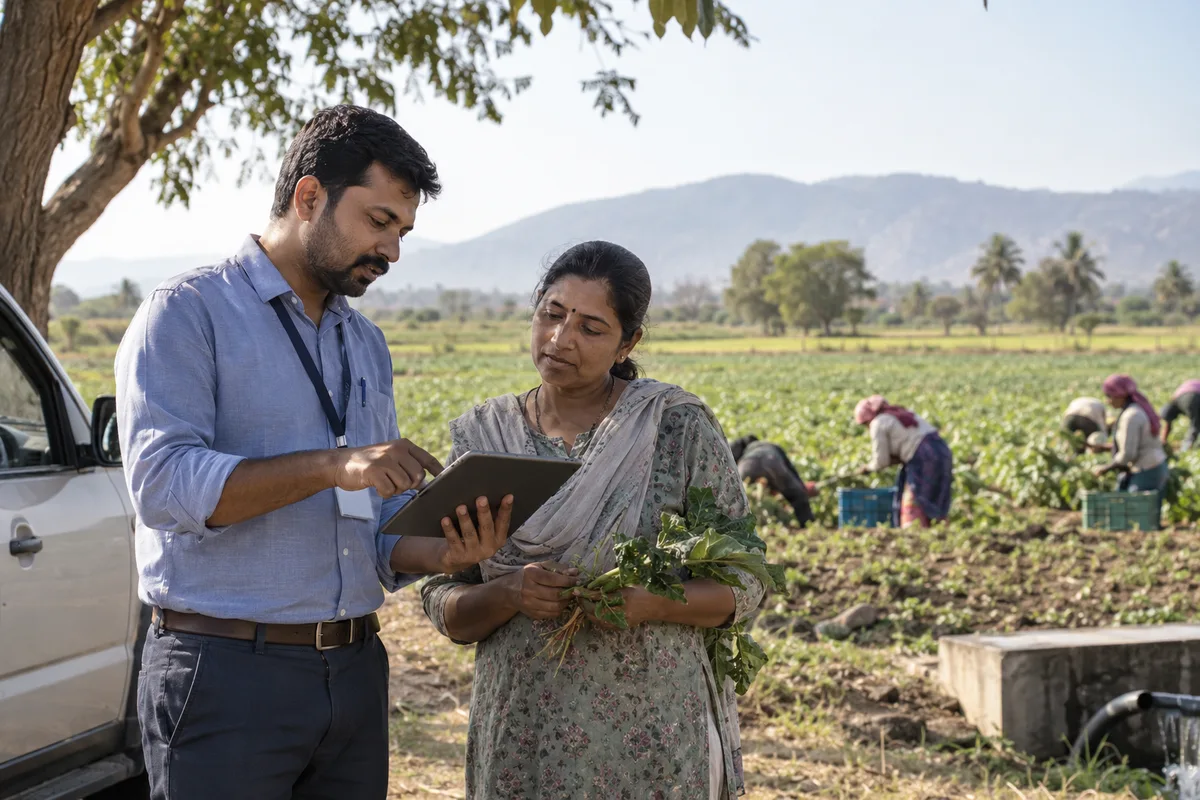
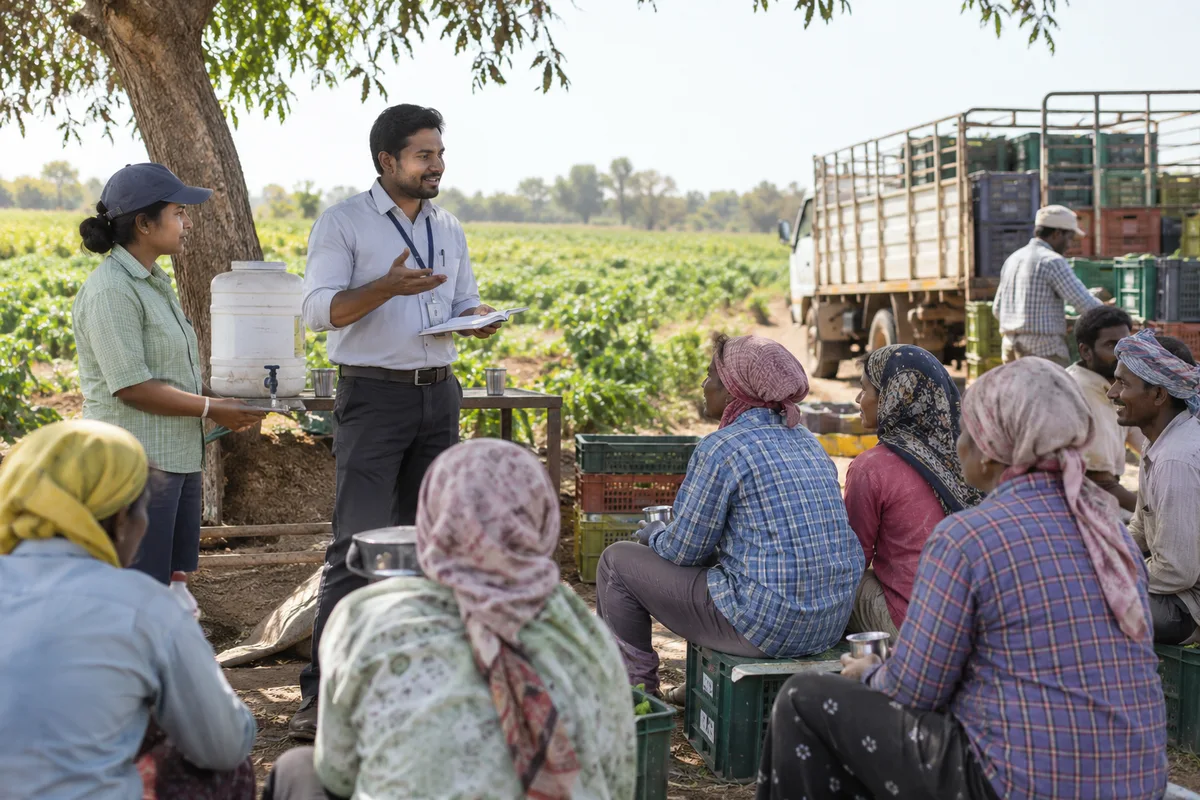
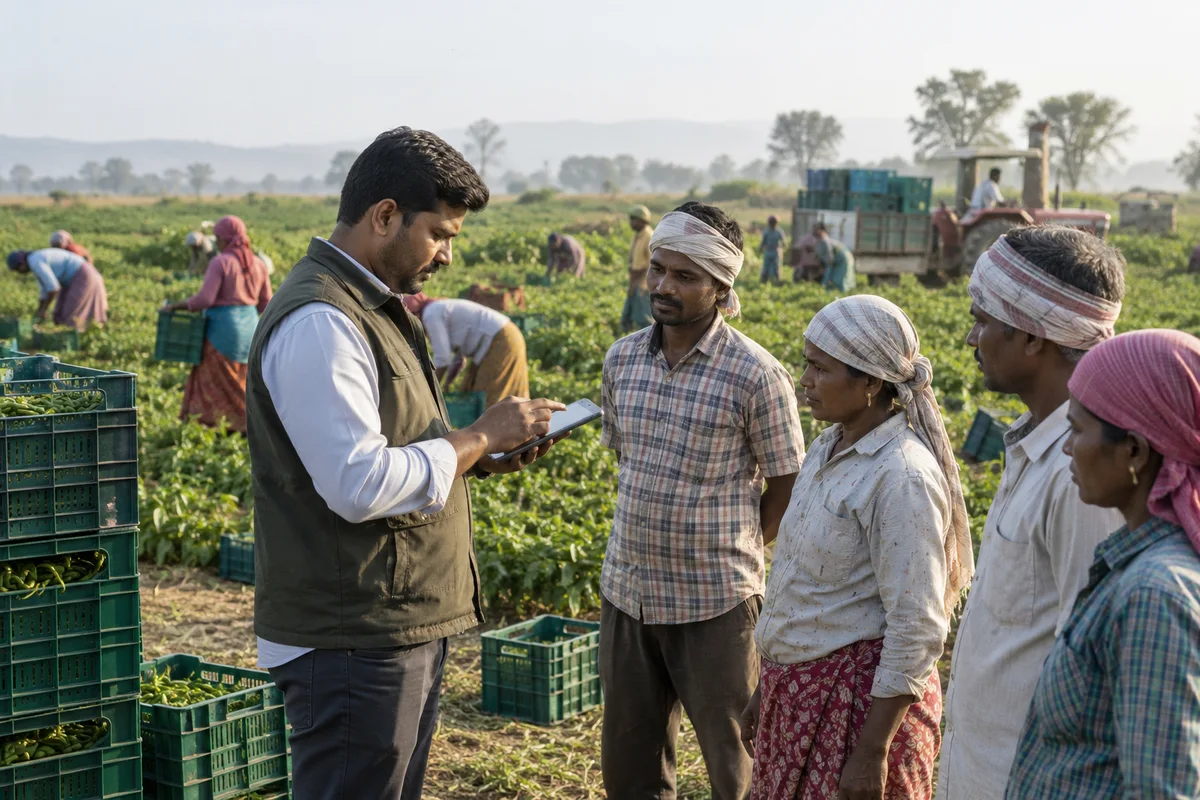
Seasonal crews, field officers and processing staff leave for different reasons. How to ask what shaped their decision and act before next season.
7 min readRead articleCows are milked at 4 a.m. and again in the evening, whatever the day or the festival. People work the shed, the collection centre and the chiller so that milk reaches the buyer before it turns.
Not sure what you need? Tell us about your business in six short steps and we will come to the first meeting prepared.
Share your requirementsA dairy business runs on a daily cycle: animals are milked twice a day, milk is tested for fat and weighed at a collection point, chilled in a bulk cooler and sent on to a plant before it spoils. A farm employs milkers, cattle handlers, fodder hands, a herd supervisor and a visiting veterinarian where needed. A cooperative or private collection network adds society secretaries, testers, chilling centre operators, tanker drivers and field staff who deal with hundreds of small farmers. Work continues every day of the year, and much of it is in villages where the choice of staff is limited. Confirm licences and animal-welfare duties with a qualified professional. See also HR for agriculture and agribusiness.
These are the places the people side of this kind of business tends to give way. The rest of this page works through them.
HR here has to work for each of these groups, not only the office. The set-up below is written with all of them in mind.
GullyHR runs talent acquisition for permanent roles in dairy farms and milk cooperatives. For each role we agree the job description with you, find and screen candidates against it, and support the offer through to joining. Tell us the role and the number of people, and we start there.
We recruit permanent employees. We do not supply contract or temporary staff.
Every business interviews, but few have a written process that works the same way for every role and every interviewer. GullyHR designs yours, from the role brief to the offer, trains your managers to run it, and can run it for you on the roles you hand us.
We agree what the role must deliver, the must-have and nice-to-have skills, and how each will be scored.
Screening call, assessment, interview rounds and decision points, sized to the role and the number of people you hire.
Structured questions for each role family and a rating guide, so two interviewers judge the same answer the same way.
A short briefing for your managers on what to ask, what to avoid and how to give a clear yes or no.
Who approves, how the offer is made, and how candidates are kept informed from first call to joining.
A gap at 4 a.m. is felt at once, and weekly offs are hard to give without a trained relief milker.
Handling, udder hygiene and machine milking are taught informally, so quality changes with whoever is on shift.
Fat and weight readings set what farmers are paid, so any slip or suspicion becomes a dispute within a day.
Housing comes with the job, which clouds notice, leave and what happens to a family when someone leaves.
A late tanker or a cooler breakdown puts a whole day's milk at risk, and operators and drivers work odd hours with little cover.
When yield or procurement price drops, wages are cut or delayed, and skilled handlers go to the farm that pays on time.
Start with the topics that matter most here: Employee Administration; Health, Safety and Wellbeing; Compensation, Payroll and Benefits. Then work through the rest. Each topic is written for agriculture and agribusiness, not in general.
Records, attendance, leave and the day-to-day HR that must simply work.
Induction, records, incident reporting and follow-through.
Salary structure, payroll inputs and a month that closes on time.
How many people, in which roles, by when, and what they will cost.
Structure, reporting lines and who is allowed to decide what.
Requisition to joining, the same way every time.
A first day that is the same for the fifth joiner as the first.
Goals, reviews and ratings that hold up in a conversation.
Training planned from need rather than from the calendar.
Named backups for the roles that cannot be vacant.
Communication, recognition and the conditions people actually work in.
Two routes, one for complaints, one for conduct, kept separate.
Policies a manager can apply, and obligations with owners and dates.
Who leaves, when, why, and which of them mattered.
Resignation to relieving letter, in a defined order.
Records that survive people, and approvals that do not queue.
A short monthly pack management actually reads.
An HR function that runs the same way every month.
The pieces a dairy farms and milk cooperatives business puts in place, in an order that makes each easier. Open any card for the detail.
A two-shift rota with a trained relief hand for milking and feeding, so no one works every day.
A two-shift rota with a trained relief hand for milking and feeding, so no one works every day. The attendance and leave process can structure it.
A short, illustrated routine for milking, teat cleaning and handling animals, taught to every new person and checked by the herd supervisor.
A short, illustrated routine for milking, teat cleaning and handling animals, taught to every new person and checked by the herd supervisor.
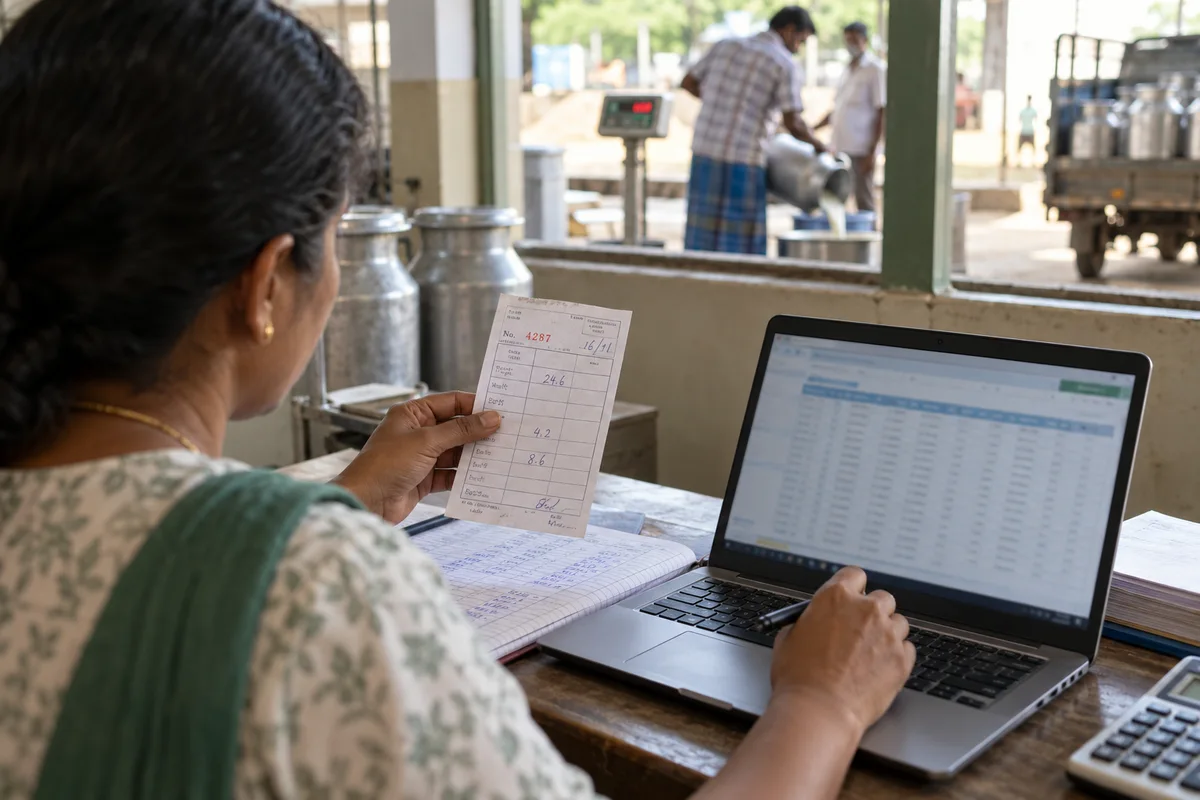
Readings shown to the farmer at the point of receipt, entered in a register that a second person checks, so disputes are settled by record.
Readings shown to the farmer at the point of receipt, entered in a register that a second person checks, so disputes are settled by record.
A plain written note for workers who live on site, covering what the housing is, how long they may stay after leaving and how notice works.
A plain written note for workers who live on site, covering what the housing is, how long they may stay after leaving and how notice works. The HR documentation service covers this.
For each chilling centre and route, a named second operator or driver who steps in when the first is away.
For each chilling centre and route, a named second operator or driver who steps in when the first is away.
Before changing anything, find out what is true today. Work through the checks using a recent operating period. The time needed depends on the records you hold; note missing evidence and use the findings to choose a priority.
Share your requirementsConfirm with a qualified professional. What applies to you depends on your business, your state and your arrangements, and it changes. This page describes practice. It does not state a legal position.
The services below fit this kind of business best. Each starts by recording where you stand, and every later report compares against that. We do not promise outcomes.
Two daily shifts, weekly offs and relief cover set out so no one works seven days a week.
Simple written terms for workers, including those who live on the farm, in plain language.
Safe handling of animals, wet floors and machinery, taught and recorded.
A fixed pay date and clear allowance rules, so pay does not swing with the milk rate.
Start with a free conversation, or see the paid HR Diagnostic.
Understand the business, its workforce, current processes and HR challenges.
Find the missing, weak, inconsistent or person-dependent processes.
Create the structure, processes, policies, SOPs, dashboards and systems needed.
Help HR and department managers actually adopt the new system.
Digitise repetitive and approval-based workflows where it is worth doing.
Track hiring, attendance, employee cost, performance, training and attrition.
Strengthen the people-management system continuously, not once.
From the GullyHR blog: one on HR in agriculture and agribusiness, and one on each of the topics this page points to.
Seasonal crews, field officers and processing staff leave for different reasons. How to ask what shaped their decision and act before next season.
7 min readRead article
Payroll says one joining date, the personal file says another and the manager remembers a third. How to establish a single trustworthy employee record and keep it that way.
7 min readRead article
A shift, weekly and monthly safety routine for rubber plants that names who checks platen guards, mill trip bars, autoclave doors, burst-test cages and slings, and who acts on near misses.
7 min readRead article
Simple variable pay structures for product and engineering teams: four options, why individual metrics backfire, a build plan and a one page outline to adapt.
6 min readRead articleMore on the GullyHR blog.
Train a relief hand for milking and feeding and put the name on the rota. Without a trained substitute, offs are simply not given and people leave.
What housing is provided, what it costs if anything, how notice works and how long a worker may stay after leaving. Have the wording checked by a qualified professional.
Show the reading to the farmer as the milk is received, enter it and have a second person check the register. Disputes then rest on a record, not on memory.
Yes. Fat testing, record keeping and dealing with farmers are seldom taught. A short routine with a periodic check protects both the farmer and the business.
Pay on a fixed date, give a weekly off and show a path to supervisor. Handlers leave more over irregular pay and no rest than over a small gap in rate.
We would ask who covers each milking when someone is away, how weights and fat readings are written and checked at collection, and what has been agreed with workers who live on site. Pay timing when the milk rate moves would come up too. A first piece might be a roster with weekly offs and named relief hands. Scope is set down in writing afterwards.
All 58 business types in agriculture and agribusiness · Find another business type
See all HR topics for agriculture and agribusiness, or another industry.
Tell us your industry, team size and the issue you want to address. Bring one example of where work gets delayed or ownership is unclear, and the deadline or decision you are working towards.