
Industries
Why agribusiness workers leave and how to understand why
Seasonal crews, field officers and processing staff leave for different reasons. How to ask what shaped their decision and act before next season.
7 min readRead articleTractors, tillers, sprayers and pump sets are sold on village visits and then must run through sowing and harvest. HR work is staffing the season, building workshop skill and keeping field sales honest.
Make this work for your business. Share your team size, priorities and what you need help with. We’ll use your brief to prepare for the first conversation.
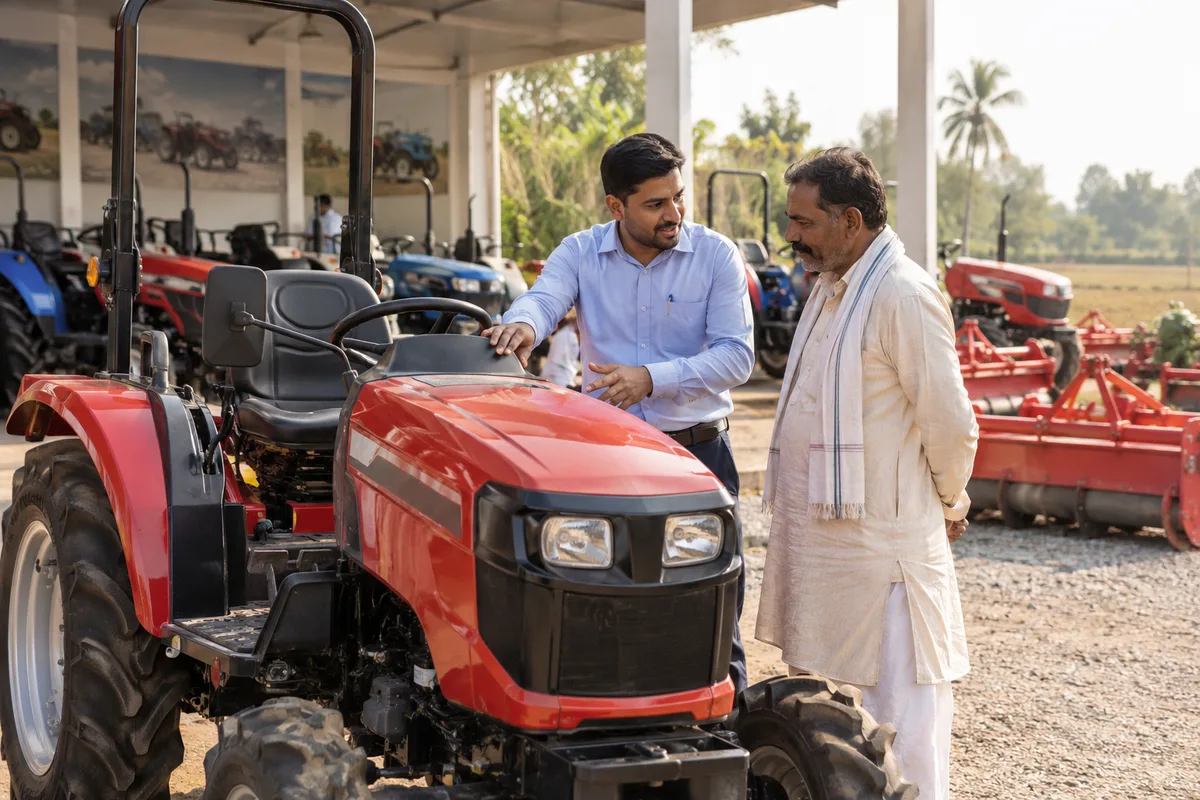
Share your requirementsA farm equipment dealer sells tractors, tillers, harvesters, sprayers, pump sets, drip systems and implements, for one or more manufacturers, and services them. The team includes sales executives who visit villages and fairs, staff for finance and subsidy paperwork, workshop mechanics, a spares counter, and sometimes demonstration and delivery crews. Demand follows the cropping calendar: sowing, harvest, and the months after a good crop when farmers have money. A tractor down at harvest cannot wait, so the workshop and spares shelf must be ready when everyone needs them at once. Staff live in villages, travel far and keep irregular hours. See also HR for agriculture and agribusiness.
These are the places the people side of this kind of business tends to give way. The rest of this page works through them.
Why GullyHR for farm equipment suppliers and dealers
For dealers who sell tractors, tillers and pump sets on village visits and then service them through the cropping year. The season, the workshop and the sales files each get an owner and a plan.
A calendar marks sowing and harvest, shows who is free for each, and sets leave rules, so a tractor down at harvest meets a ready mechanic rather than a closed door.
A ladder takes helpers up to technicians machine by machine, with a record of who is trained on which tractor, harvester or sprayer, so skill does not sit in one head.
A phone log of each village visit sits beside the enquiries that followed, so field sales executives are judged on visits that happened and leads that were worked.
Each finance and subsidy file gets a named owner and a checklist of papers, so a sale does not stall because one document was never collected.
Start with any one of these. Scope and fee are agreed in writing after a free first conversation.
The audit starts with the season. We lay your leave records, overtime and job cards over the last sowing and harvest, and find the weeks when the workshop ran short of mechanics or the spares counter had one person. We then sit with the branch manager, a senior mechanic, a field sales executive and the person who handles subsidy and finance files. We read how village visits are recorded, who owns each file, and how a part is matched to a model. The result is a plain picture of where the dealership leans on one person.
What you receive
An example, not a client storySuppose a dealer found that three tractors waited a week at harvest because the one mechanic trained on a particular model was on leave. The audit would trace the leave approvals, the training record and the spares stock, and show where a second trained hand and a season leave rule were missing.
How the hr audit works →Process design begins with the four routines that fail first under season pressure. We map how a village enquiry becomes a sale, who collects the finance and subsidy papers, how a delivery crew is told the job, and how a tractor is booked into the workshop. Each routine is drawn as a short sequence with an owner at every step and a note on what is recorded. We test the draft with a field sales executive and a workshop supervisor before it is fixed. The aim is a dealership where a new joiner can follow the steps without asking the one person who knows.
What you receive
An example, not a client storySay a dealer sells a run of sprayers after a good crop, but delivery dates slip because the finance file sits half done. A process written with one owner per file, a checklist of papers and a handover to the delivery crew would show where the file stalls and who must move it.
How the hr process design works →Ongoing management means a steady weekly rhythm. We keep the season roster current, chase the visit logs, and check that each subsidy file has an owner and a next step. We hold a monthly meeting with the branch manager and workshop manager, going through leave, absences, mechanic skills and any complaint from the spares counter or a delivery run. Joiners get an induction, and each probation is followed up. Where a field sales executive is under or over target, we prepare the conversation. You get one short report each month, and your own adviser confirms any employment point.
What you receive
An example, not a client storyPicture a dealership with two branches where the workshop manager is busy repairing during sowing and never finds time for staff reviews. Managed HR would book short review slots outside peak days, record each mechanic's trained machines, and bring the owner a single page of what needs a decision. The branch manager would then see in one page who needs a decision before the next peak.
How the hr management works →Mechanics are the scarce hire, so we look beyond the applicant pool. We write a role card for each position that lists the machines, the villages covered and the hours that harvest demands. For a mechanic we set a fault-finding task on a real machine or a photographed problem, scored by your senior technician. For a field sales executive we use a short village pitch and a review of how they would log visits. Every candidate gets the same questions and a written score, so the choice can be explained. We also help you plan grow-from-helper hires.
What you receive
An example, not a client storySuppose a dealer needs a tractor mechanic before harvest and has only three weak applicants. The search would widen to nearby workshops and trade colleges, set a fault-finding task scored by the senior technician, and offer a helper a route into the role if the market stays thin. Each applicant would then be scored on the same task, so the offer rests on what they did.
How the recruitment for permanent roles works →Training is short and practical, set around the cropping calendar rather than against it. Branch and workshop managers learn how to plan a peak, brief a team before a rush, and hold a clear conversation about a missed visit or a repeat repair. Field sales executives practise the village visit routine, how to log it, and how to hand a file to finance. Spares counter staff and helpers work through the parts-to-model guide with real part numbers on the shelf. Each session ends with one habit to try before the next.
What you receive
An example, not a client storyTake a workshop supervisor who is an excellent mechanic but has never led a team through harvest. A short session on briefing, job allocation and handling a mechanic who skips a check would give him a routine to use on the first day of the next rush. The mechanics would also see the same routine written on the workshop wall.
How the manager and team training works →The handbook is written for people who work in villages and workshops, so it is plain and short. It covers season leave rules, field visit and expense records, use of demonstration vehicles, workshop safety and tool care, and how complaints from farmers are logged and answered. We set up HR software for attendance, leave, training records and documents, so a mechanic's machine skills and a sales executive's visit log sit in one place. Your own adviser confirms the registration, record-keeping and employment duties that bind a dealership like yours.
What you receive
An example, not a client storySay a field sales executive uses a demonstration tractor for a village fair and returns it damaged, with no record of who had it. A vehicle policy with a sign-out sheet and a damage report would settle who is responsible and how the dealership responds. The same policy would give the manager a fair basis for a conversation, rather than an argument over memory.
How the policies, handbook and hr software works →Yes. We lay the cropping calendar over your leave, attendance and job card records, mark the weeks that run short, and set season leave rules, standby cover and overtime arrangements before the peak. The plan names who covers the workshop and the spares counter. Your own adviser confirms working-hours and overtime duties that apply to your dealership.
We build a ladder from helper to technician, with each step tied to machines the person has been shown and signed off on by your senior mechanic. Trade college links and referrals from nearby workshops feed the intake. A skills register shows who covers which tractor or harvester, so a leave day no longer stops a repair.
We set up a simple phone log where each visit is recorded with the village, the farmer met and the next step, then compare it with the enquiries and quotations that followed over a fortnight. The log is introduced as a tool for follow-up, not for suspicion, and managers are trained to review it fairly.
Each file gets a named owner, a checklist of papers and a handover note at every stage, from the farmer's first enquiry to delivery. We write the checklist with your finance staff and test it on live files. Your own adviser confirms which papers and records the scheme and your lenders require. This keeps a sale from waiting on one absent colleague, and the owner can see every open file at a glance.
GullyHR runs talent acquisition for permanent roles in farm equipment suppliers and dealers. For each role we agree the job description with you, find and screen candidates against it, and support the offer through to joining. Tell us the role and the number of people, and we start there.
We recruit permanent employees. We do not supply contract or temporary staff.
New sales and breakdowns arrive together, so mechanics and sales staff are stretched in the same fortnight.
Technicians who know one maker's machines are hard to find, and rival dealers approach them with offers.
Demonstrations, fair stalls and farm calls leave no trace, and attendance and travel claims turn into arguments.
Documents need accuracy and patience, and a wrong entry delays delivery and annoys the farmer.
The spares counter hand carries the part-to-model map in memory, and the shop struggles on the days that person is away.
Start with the topics that matter most here: HR Strategy and Workforce Planning; Learning and Development; Employee Administration. Then work through the rest. Each topic is written for agriculture and agribusiness, not in general.
How many people, in which roles, by when, and what they will cost.
Training planned from need rather than from the calendar.
Records, attendance, leave and the day-to-day HR that must simply work.
Structure, reporting lines and who is allowed to decide what.
Requisition to joining, the same way every time.
A first day that is the same for the fifth joiner as the first.
Salary structure, payroll inputs and a month that closes on time.
Goals, reviews and ratings that hold up in a conversation.
Named backups for the roles that cannot be vacant.
Communication, recognition and the conditions people actually work in.
Two routes, one for complaints, one for conduct, kept separate.
Policies a manager can apply, and obligations with owners and dates.
Induction, records, incident reporting and follow-through.
Who leaves, when, why, and which of them mattered.
Resignation to relieving letter, in a defined order.
Records that survive people, and approvals that do not queue.
A short monthly pack management actually reads.
An HR function that runs the same way every month.
The pieces a farm equipment suppliers and dealers business puts in place, in an order that makes each easier. Open any card for the detail.
Mark sowing and harvest windows, set leave rules around them and arrange temporary help or cover from nearby branches.
Mark sowing and harvest windows, set leave rules around them and arrange temporary help or cover from nearby branches. See HR strategy and workforce planning.
A route from helper to mechanic to senior technician, with skill checks, manufacturer training and a visible pay step.
A route from helper to mechanic to senior technician, with skill checks, manufacturer training and a visible pay step. The learning and development process can set it out.
A daily visit entry, plus clear travel rules, tied to enquiries.
A daily visit entry, plus clear travel rules, tied to enquiries. The attendance, shift and leave software can support field records.
A checklist for finance and subsidy documents, a named person for every file and a weekly look at what is stuck.
A checklist for finance and subsidy documents, a named person for every file and a weekly look at what is stuck.
Put the part and model map on paper, kept at the counter, and train a second person on the counter so a day off does not stall the workshop.
Put the part and model map on paper, kept at the counter, and train a second person on the counter so a day off does not stall the workshop.
Confirm with a qualified professional. What applies to you depends on your business, your state and your arrangements, and it changes. This page describes practice. It does not state a legal position.
Staffing built around sowing and harvest rather than an average month.
A mechanic pathway that builds skill within the dealership.
Field attendance and visit records captured from a phone.
Why mechanics and field staff leave, and what that costs at harvest.
Start with a free conversation, or see the paid HR Diagnostic.
Understand the business, its workforce, current processes and HR challenges.
Find the missing, weak, inconsistent or person-dependent processes.
Create the structure, processes, policies, SOPs, dashboards and systems needed.
Help HR and department managers actually adopt the new system.
Digitise repetitive and approval-based workflows where it is worth doing.
Track hiring, attendance, employee cost, performance, training and attrition.
Strengthen the people-management system continuously, not once.
From the GullyHR blog: one on HR in agriculture and agribusiness, and one on each of the topics this page points to.
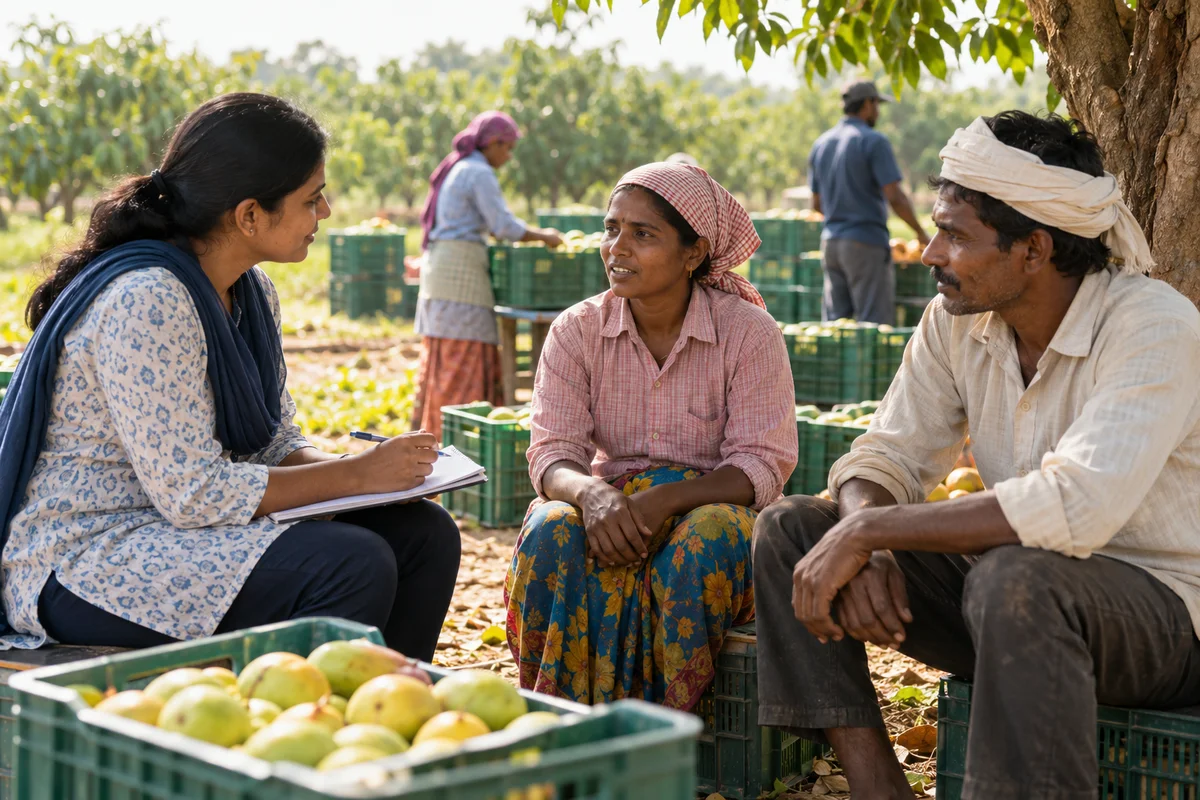
Seasonal crews, field officers and processing staff leave for different reasons. How to ask what shaped their decision and act before next season.
7 min readRead article
How a D2C founder can decide which digital marketing work to hire for, which to buy from an agency, and which to split, with a worksheet and a five step plan.
6 min readRead article
A founder's guide to hiring freshers and running a first-year programme: campus or open drives, a screening round, a training plan by quarter, mentors and checkpoints.
6 min readRead article
Payroll says one joining date, the personal file says another and the manager remembers a third. How to establish a single trustworthy employee record and keep it that way.
7 min readRead articleMore on the GullyHR blog.
Give a growth path, manufacturer training, fair pay steps and respect for the craft. Mechanics leave when no step exists above the one they are on.
Plan leave around the peak, train a second shift if needed and agree support from nearby branches. Settle it before the rush, not during it.
A daily visit log tied to enquiries and sales, reviewed weekly, is enough to begin with. Look at results and patterns.
The product range, finance and subsidy basics, how to demonstrate and how to log enquiries. Pair them with a senior for the first season.
We would begin with your peak-season calendar, the mechanics you rely on and how village visits are logged against enquiries. A season staffing plan with a simple workshop skills list is a sensible opening job, and counter spares knowledge would come up too.
All 58 business types in agriculture and agribusiness · Find another business type
See all HR topics for agriculture and agribusiness, or another industry.
Tell us your industry, team size and the issue you want to address. Bring one example of where work gets delayed or ownership is unclear, and the deadline or decision you are working towards.