Aerospace and Defence Components · Aerospace Tooling Makers
HR for Aerospace Tooling Makers: Jigs, Fixtures, Gauges and Tool Room Skills
Aerospace tooling makers build the jigs, fixtures, gauges and moulds that hold and check parts in other aerospace plants. Hand-fitting craft takes about a decade to learn, and very few people hold it.
Make this work for your business. Share your team size, priorities and what you need help with. We’ll use your brief to prepare for the first conversation.
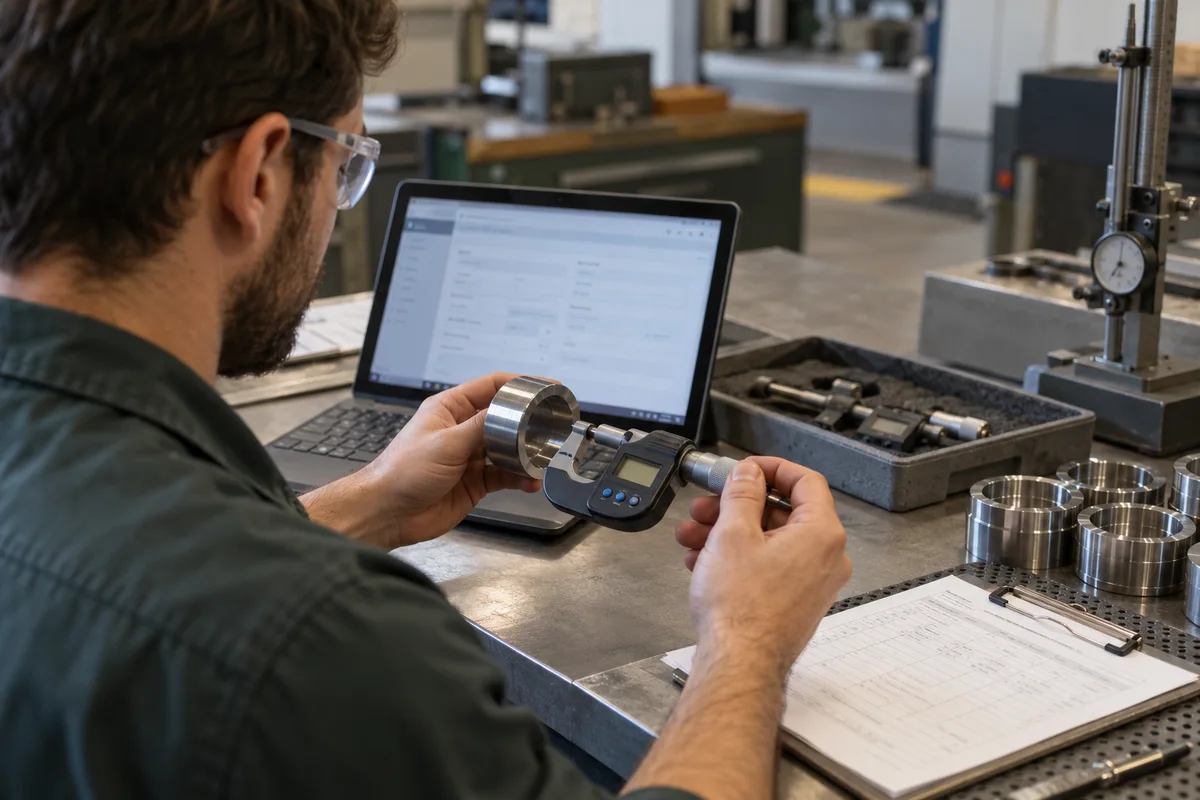
An aerospace tooling maker designs and builds assembly jigs, drilling fixtures, inspection gauges, forming dies and moulds. A job follows the customer's part drawing through tool design, cutting of plate and block, rough and finish machining, wire EDM or grinding, hand fitting and bench scraping, a trial on a sample part and a final measurement. Every tool is a one-off. A few master craftsmen fit and finish by hand and judge by feel. Delivery is by project, with a long quiet design stretch followed by a hard push to meet the customer's trial date. Apprentices take years to become useful, and in some shops the masters are near retirement. For the wider sector, read the manufacturing overview.
Plan→
Hire→
Onboard→
Manage→
Develop→
Perform→
Engage→
Retain→
Exit→
Improve
When HR is weak in aerospace tooling makers, you may see
The master toolmaker is near retirement
Apprenticeship is long and loosely run
Trial dates bunch the work
Machinists and fitters judge quality differently
Pay hides the difference between craft and routine
Designers seldom visit the bench
These are the places the people side of this kind of business tends to give way. The rest of this page works through them.
Why GullyHR for aerospace tooling makers
Master craft captured and apprentices who stay to learn.
For tool rooms making jigs, fixtures, gauges and dies for aerospace plants. GullyHR sets up written apprenticeships, craft capture and trial-date planning, so skill passes on before the master retires.
01
The master's craft written down
Sessions with each master toolmaker record how they fit, scrape and judge by feel, on real tools. The craft stays in the shop after the master retires.
02
A written multi-year apprenticeship
A plan lists what an apprentice learns each year, who teaches and how it is checked. A long, loose apprenticeship becomes something the apprentice can see.
03
Trial-date peaks planned from the start
A project plan puts the hard push before the trial date into the first week's staffing. The quiet design stretch is used to prepare, not to wait.
04
Fit reviews linking machinist, fitter and designer
A short review after rough machining brings the machinist, fitter and designer together over the block. Designers also visit the bench during a build.
Our services for aerospace tooling makers
Start with any one of these. Scope and fee are agreed in writing after a free first conversation.
HR audit
The audit starts with the age of each master toolmaker and the apprentice working beside them. We read apprentice notes to see what each has learned and how long they have stayed. A list of tools that went out late is matched to the stage where the slip began. Masters, fitters, wire EDM and grinding operators, CNC machinists, designers and project coordinators each get a conversation. Pay records are compared with the difference between hand craft and routine machining. The report names which skills rest on one person nearing retirement.
What you receive
A craft risk map naming skills held by one master nearing retirement
A late tools review tracing each slip to the stage where it began
An apprentice progress check showing what each can now do alone
An example, not a client storyTake a tool room where the longest-serving master is near retirement and the owner is not sure what the apprentice beside them can do alone. An audit reads the apprentice's notes and the late tools list, and shows which crafts rest on one person. A capture plan follows from the findings.
Process design follows one tool from the customer drawing through design, plate cutting, rough and finish machining, wire EDM or grinding, hand fitting, trial on a sample part and final measurement. We add a fit review after rough machining, where the machinist, fitter and designer meet over the block. A craft capture routine is written for sessions with each master. The apprenticeship plan is set out stage by stage. Project coordinators get a trial-date staffing sheet that begins in the first week, not the last.
What you receive
A tool route sheet from drawing to final measurement
A fit review card for the block after rough machining
A trial-date staffing sheet that starts in the first week
An example, not a client storyPicture a block that comes off the machine slightly off and needs hours of hand fitting. A fit review after rough machining brings machinist, fitter and designer to the block before the finish cuts. The next block is corrected before it ever reaches the bench. The same review is then used on every block.
Each month we sit with each apprentice and their master to review what has been learned, and update the plan. Craft capture sessions are scheduled during the quiet design stretch, so the masters' time is not taken from a trial push. Project staffing sheets are updated as trial dates firm up. Fit reviews after rough machining are sampled, and designer visits to the bench are recorded. Grading for hand craft versus routine machining is reviewed twice a year with the owner. The owner receives a short note after each monthly round.
What you receive
A monthly apprentice and master review note with agreed next skills
A craft capture schedule set in the quiet design stretch
A project staffing sheet updated as trial dates firm up
An example, not a client storySuppose a customer moves a trial date forward and the tool room, quiet on design for weeks, is suddenly flooded. A fractional HR manager updates the project staffing sheet, schedules craft capture in the next quiet weeks and checks overtime. The push is shared among the team, not carried by two people.
Toolmakers and fitters who can finish by hand are rare and move slowly between shops. We write the role with the owner and a master, then set a fitting exercise on a sample block, a drawing-reading task and a conversation about how the candidate learned. For apprentices we look at patience and care in a simple bench task, not only at school marks. Panels score on a single sheet. Offers include a written plan for the first year. Recruitment is for permanent roles; we do not supply contract tool room staff.
What you receive
Role cards for toolmaker, fitter, wire EDM operator and apprentice
A fitting exercise and drawing task with a scoring sheet
A first-year plan attached to each offer, naming the master who teaches
An example, not a client storySay the room has no apprentice behind its youngest fitter. We write the role card, set a bench task that rewards patience, score applicants on one sheet and write the first-year plan. The owner offers with confidence, and the owner's adviser confirms any apprentice terms. The first-year plan names the master who teaches.
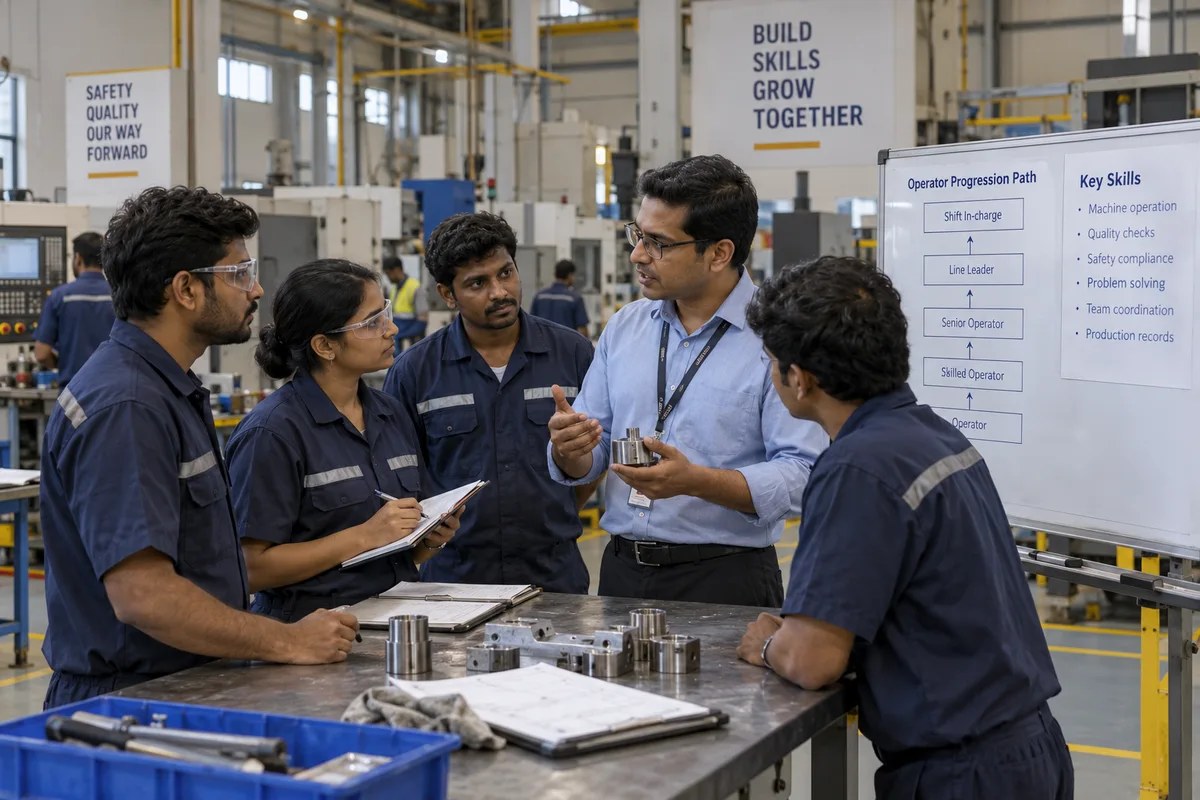
A master who can fit by feel may never have explained it. We coach the master to break one skill into steps, show it on a real tool and let the apprentice try under watch. Project coordinators learn to plan the push before a trial date. Designers join a session at the bench to see how their drawings are fitted. Apprentices get a short course on machine safety, records and how to ask for help. Machinists and fitters practise giving each other a clear comment on a block.
What you receive
A master's teaching guide for hand fitting and scraping in steps
A designer session at the bench on how drawings are fitted
An apprentice course on machine safety, records and asking for help
An example, not a client storyPicture a master who scrapes a surface perfectly but cannot say how. A short coaching session in the quiet design stretch breaks the skill into steps, and the apprentice tries each under watch. The apprentice then scrapes a first surface with the master standing by, and the steps are written down afterwards.
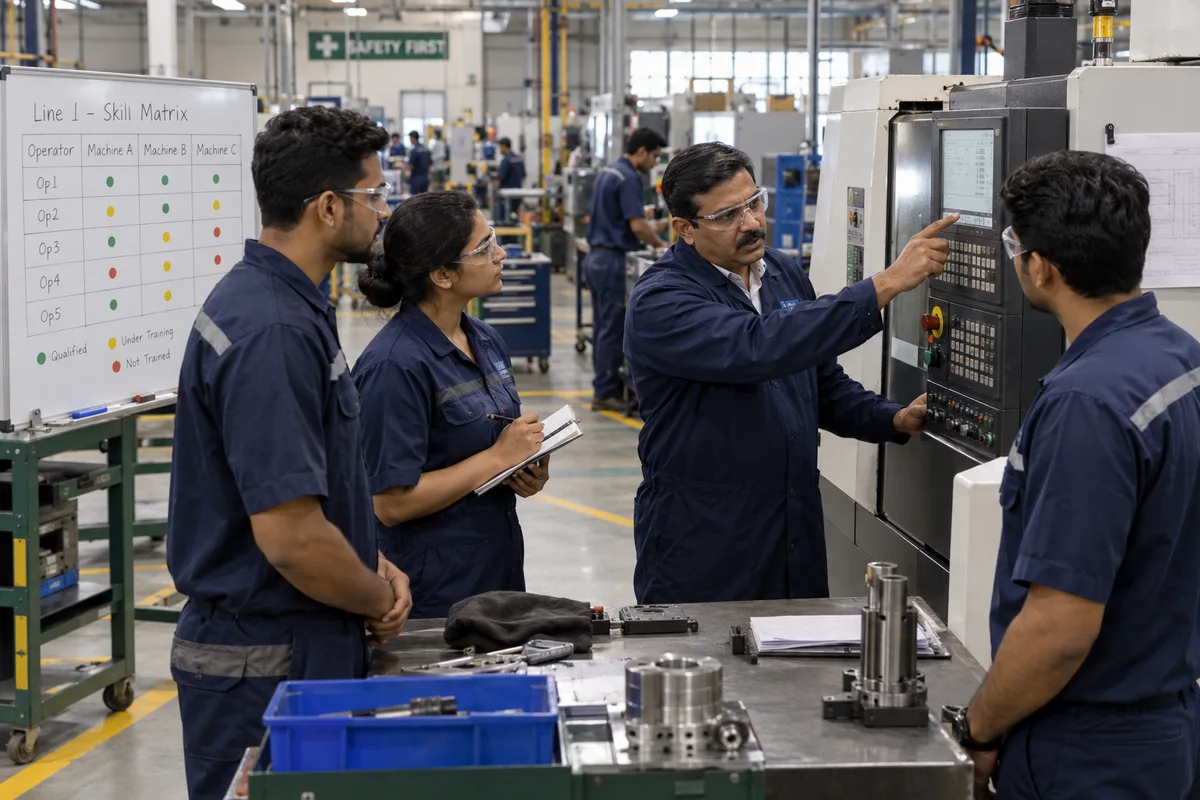
The set begins with an apprenticeship policy that sets stages, teacher, check and how long the plan runs. A craft grading policy separates hand fitting from routine machining, with a note on how pay reflects it. A project staffing rule links trial dates to people and overtime. Machine-safety, wage-record and employment points are left for the owner's adviser to confirm. In HR software we keep stages passed, teaching sessions held and the craft capture notes, for each person. Each rule fits on a page, in plain words, for the bench.
What you receive
An apprenticeship policy with stages, teacher and check
A craft grading policy separating hand fitting from routine machining
Stage and teaching records held in HR software
An example, not a client storySuppose an apprentice leaves after two years and the owner cannot show what was taught. An apprenticeship policy with stages, and the training record in HR software, show what the apprentice learned and from whom. The owner's adviser confirms any wage or training terms before the record is shared. The record also shows the owner which stage the next apprentice should start with.
Questions owners of aerospace tooling makers ask us
We schedule sessions with the master in the quiet design stretch, working on real tools, and write down how the master judges fit, scrapes and chooses to stop. Notes and a short checklist per skill follow, and the apprentice repeats each under watch. We do not replace the master's time. Your adviser confirms any retirement terms.
We write a staged plan with what is learned each year, the teacher, a practical check and a review with the owner. Apprentices see where they stand and what comes next. Masters get protected time to teach. A long apprenticeship becomes a set of steps. Pay steps, apprentice terms and any training scheme duties are confirmed by your own adviser.
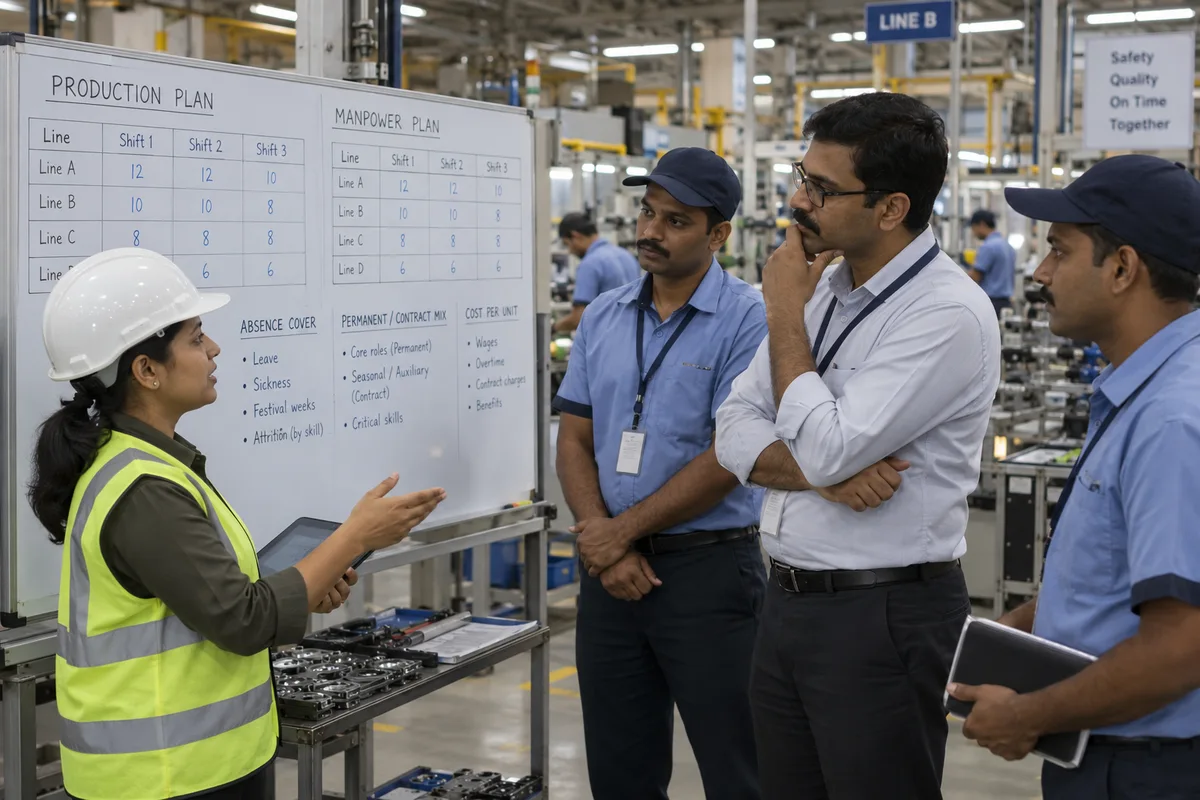
We plan it from the first week: a project staffing sheet shows who is needed at each stage and when, and the quiet design stretch is used to prepare fixtures and train. Overtime is watched so it is shared across the team. We do not supply contract workers. Working-time rules are confirmed by your own adviser.
We introduce a fit review after rough machining where both look at the block with the designer, and agree what to change before finish cuts. Comments are recorded as facts, not blame, and both sides see the same notes. Over time the review shows which tolerances or fixtures need attention. Your adviser confirms any disciplinary point.
Roles we help you hire in aerospace tooling makers
GullyHR runs talent acquisition for permanent roles in aerospace tooling makers. For each role we agree the job description with you, find and screen candidates against it, and support the offer through to joining. Tell us the role and the number of people, and we start there.
We recruit permanent employees. We do not supply contract or temporary staff.
Where HR strains in aerospace tooling makers
The master toolmaker is near retirement
Hand fitting and judging by feel sit with one or two people, and nobody has learned it from them in any planned way.
Apprenticeship is long and loosely run
A trainee may spend years fetching and sweeping before being taught, and the best can leave before they become useful.
Trial dates bunch the work
Design runs long, then machining, fitting and trial must all squeeze into the few weeks before the customer's date.
Machinists and fitters judge quality differently
A machined block inside drawing tolerance can still be hard to fit, and the fitters carry the extra hours.
Pay hides the difference between craft and routine
A toolmaker hand fitting a fixture and a machinist loading blocks may be paid close together, so the craft feels unrewarded.
Designers seldom visit the bench
Designers and fitters work apart, so details that cause rework at assembly never travel back to the drawing.
HR topics for aerospace tooling makers
Start with the topics that matter most here: Career and Succession Management; Learning and Development; HR Strategy and Workforce Planning. Then work through the rest. Each topic is written for manufacturing, not in general.
The pieces a aerospace tooling makers business puts in place, in an order that makes each easier. Open any card for the detail.
Capture the master's craft while the master is here
Plan a series of recorded fitting and scraping jobs with a named apprentice beside the senior fitter.
What this coversHide
Plan a series of recorded fitting and scraping jobs with a named apprentice beside the senior fitter. Fold it into the tool room's succession planning.
Run a written apprenticeship over several years
Set skills year by year, with a monthly check by a named mentor.
What this coversHide
Set skills year by year, with a monthly check by a named mentor. A training route can supply the frame.
Plan the trial-date peak from the first week
Break each tool into stages with dates and a staffing view so the final push is no surprise.
What this coversHide
Break each tool into stages with dates and a staffing view so the final push is no surprise. Workforce planning shows how.
Hold a fit review after rough machining
A short meeting where the fitter says what will be hard to fit, so fixes happen before finish machining.
What this coversHide
A short meeting where the fitter says what will be hard to fit, so fixes happen before finish machining.
Grade hand craft apart from routine machining
Separate scales for hand fitting and gauge work, with their own pay, show that the craft is valued.
What this coversHide
Separate scales for hand fitting and gauge work, with their own pay, show that the craft is valued. See compensation benchmarking.
Write down each master toolmaker's age and the apprentice sitting beside them.
Check how long each apprentice has stayed and what they can now do alone.
List tools that went out late last year and the stage where the slip began.
Ask a fitter which machined blocks were hardest to fit and why.
Ask designers when they last stood at the bench during a build.
Confirm with a qualified professional the machine-safety, wage-record and employment duties that apply to a tool room supplying aerospace plants.
Confirm with a qualified professional. What applies to you depends on your business, your state and your arrangements, and it changes. This page describes practice. It does not state a legal position.
Why the best operator can struggle as shift supervisor, what it costs the line, and a practical way to choose, prepare and back new supervisors in any kind of plant.
A founder's guide to hiring freshers and running a first-year programme: campus or open drives, a screening round, a training plan by quarter, mentors and checkpoints.
How a D2C founder can decide which digital marketing work to hire for, which to buy from an agency, and which to split, with a worksheet and a five step plan.
Start early. Put a named apprentice beside them on live jobs, record the method with photographs and notes, and give them a recognised teaching role. Skill moves slowly, so plan over years.
Because training is vague and pay stands still. A written plan with visible steps, a mentor and a pay review at each step keeps more of them.
Break each tool into dated stages, review progress weekly and move people early to the stage that is slipping. A planned peak is far easier on a small team.
Several tool rooms do, because hand fitting is rarer and slower to learn than routine machining. Write the grades clearly and review them each year.
Hold a short fit review after rough machining, and ask designers to spend a morning at the bench each quarter. Small contacts cut the design faults that cost time later.
We would ask who the master toolmakers are and who learns from each, which tools shipped late and where the slip began, and how apprentices are progressing. A written apprenticeship with a craft grade scale is a likely first job. Scope follows in writing once we have talked.
Tell us your industry, team size and the issue you want to address. Bring one example of where work gets delayed or ownership is unclear, and the deadline or decision you are working towards.