
















Industries
Why automotive employees leave and how to understand why
Technicians, service advisors and sales consultants leave for different reasons. How to ask what shaped their decision and act on it across every outlet.
7 min readRead articleA body shop repairs crash-damaged cars, with denters, painters and fitters passing each car along a line. One skilled painter or panel beater can hold up the whole flow, and insurance deadlines leave little room for delay.

Make this work for your business. Share your team size, priorities and what you need help with. We’ll use your brief to prepare for the first conversation.
Share your requirementsA body shop repairs vehicles after accidents, from small dents to major structural work. A car arrives after an estimate, through an insurer or directly, then moves through stripping, panel beating, filling, priming, painting, polishing and refitting. Each stage needs different hands, and a delay at one stage holds up the rest. Painters and panel beaters carry years of skill that is hard to replace, and they are well aware of it. Insurers and customers press for dates, and the owner has to balance quality, speed and cost. See also the automotive sector page and the vehicle service centres hub.
These are the places the people side of this kind of business tends to give way. The rest of this page works through them.
Why GullyHR for body shops
For body shop owners whose flow depends on a few skilled hands and insurer deadlines. GullyHR sets up skill records, succession for key trades and rework rules that keep cars moving.
Panel work, filling, painting and colour matching graded by what each person can do alone shows where the shop depends on one pair of hands.
For each key trade, a person learns alongside the master with a path to step up, so a single exit does not stop the line.
Rates for panel beaters, painters and polishers compared with other body shops stop key hands being lost over a small gap.
A plain, fair way to decide who bears the cost of redo work, and how it is recorded, ends the argument after a faulty paint job.
Start with any one of these. Scope and fee are agreed in writing after a free first conversation.
The audit begins with the senior painter, asking which part of the skill is hardest to pass on and who is learning it. We list the trades that depend on a single person across stripping, panel work, filling, painting, polishing and refitting. We compare piece rates with what two other body shops pay, and count the cars redone in the last quarter and who paid. We ask craftsmen which area of the shop worries them for their health, check how insurer deadlines turn into overtime, and read joining papers and complaint records.
What you receive
An example, not a client storyPicture a shop where the only painter who can match a pearl finish has said he may go back to his home town. Every colour-critical job waits on him. The audit lists the jobs, names a learner and shows the owner what a gradual handover involves before the departure date is announced.
How the hr audit works →Process design begins with the job flow from estimate through stripping, panel beating, filling, priming, painting, polishing and refitting, with who owns each handover and what is checked. We write the skill grading routine so each person's level is recorded the same way. The rework rule follows, deciding in plain steps who bears the cost of a redo and how it is noted. We add a complaint route for craftsmen and an insurer deadline plan showing when extra hands or overtime are agreed rather than assumed.
What you receive
An example, not a client storySay a car comes back from the paint booth with a flaw and the painter says the filler did poor prep. The filler says the panel was uneven. Without a rule, tempers rise and the cost is argued for days. A rework sheet records the stage and the check, and the supervisor settles it the same afternoon.
How the hr process design works →Week to week, we sit with the floor supervisor over the jobs due and see which trades are stretched by insurer dates. We record overtime and who took it, log rework cases with cause and cost, and check piece pay calculations against the job cards. Learners paired with masters are reviewed each week on what they were allowed to do alone. Complaints about fumes, dust and noise are logged and taken to the owner. We maintain the skill record and send a brief note on which trade is closest to a gap.
What you receive
An example, not a client storySuppose a few insurer-approved cars land in the same week and all need the same painter. The supervisor promises dates to the insurer without asking him. The weekly floor note shows the clash first, overtime is agreed with the painter in advance, and a learner takes the prep so the master keeps to the booth.
How the hr management works →The hard seats are the painter who can colour match by eye, the panel beater who restores shape without heavy filler, the estimator who writes a fair survey and the supervisor who keeps the line moving. We write the role paper stating trade, grade and what is expected alone. The scorecard weighs a practical test on a sample panel or colour task, a scenario about rework, a conversation on working with fumes and dust and a question on how the candidate teaches others. The owner gathers references from previous shops. Offers show the grade and the path to the next level.
What you receive
An example, not a client storyTake a shop that has lost its only colour matcher and now sends difficult jobs to another workshop. The role paper sets out the grade and what must be done alone, the practical test uses a real colour task, and the offer shows how a learner will be placed beside the new person.
How the recruitment for permanent roles works →Floor supervisors learn to plan the day against insurer dates, hand jobs between stages and decide rework fairly. Masters learn to teach: how to break a skill into steps, watch a learner and give a clear correction. Learners work through graded tasks in panel work, filling, priming and polishing before touching a customer car. All craftsmen practise safe habits in painting and grinding areas, with masks, ventilation and breaks. Insurance coordinators learn to explain a delay to a customer and a survey change to an insurer. We use real rework records with names removed.
What you receive
An example, not a client storyPicture a master painter who has never taught and a learner who is told simply to watch. After months, the learner still cannot match a colour. A short session on teaching in steps gives the master a method, and the learner a graded set of tasks to try on scrap panels.
How the manager and team training works →Policy work starts with the skill grade and pay policy, which says how a craftsman moves up and how rates are compared with nearby shops. The rework policy follows, then the health and safety rules for painting and grinding areas, including masks, ventilation, breaks and reporting a problem. We write the complaint route and the overtime rule for insurer deadlines. In HR software we keep skill records, grades, learners, training and signed acknowledgements for each person. Wording on shop registration, hazardous material handling and employment goes to the shop's own adviser before release.
What you receive
An example, not a client storySuppose a painter says fumes are affecting his health and asks to move to lighter work, while the owner cannot spare him. Both feel stuck. A written health rule and a complaint route give the conversation a start, and any legal point about hazardous work goes to the owner's adviser.
How the policies, handbook and hr software works →We record what only the master can do, name a learner for each part and write a gradual handover with graded tasks on scrap panels first. We also compare his pay with other shops so a small gap does not tip the decision. Whether he stays is his choice. Your own adviser confirms any notice or restraint terms.
We write how jobs are given out, how hours are valued and how the supervisor records it, then agree it with the craftsmen before it starts. A job board makes the order visible. Disputes go through a short complaint route. You decide the rates. Your own adviser confirms wage and payment rules for piece work.
We write a rework rule that records the stage, the check done and the cause, then states in plain steps who decides and how any cost is shared. It applies the same way to every craftsman. The owner agrees the rule first. Your own adviser confirms what deductions or cost sharing are lawful before it is used.
We ask craftsmen which areas worry them for their health, then write health rules for painting and grinding areas covering masks, ventilation, breaks and a way to report a problem, plus a rotation to lighter tasks where the shop can offer one. Your own adviser confirms the hazardous material and workplace safety duties that apply to the shop.
GullyHR runs talent acquisition for permanent roles in body shops. For each role we agree the job description with you, find and screen candidates against it, and support the offer through to joining. Tell us the role and the number of people, and we start there.
We recruit permanent employees. We do not supply contract or temporary staff.
One senior painter or panel beater sets the pace for the shop, and an absence or exit stops the flow.
Colour matching and panel work take a long time to build, so replacing a master is slow and expensive.
Dates are set by survey approvals and customer pressure, and the shop feels it in overtime and sloppy handovers.
Craftsmen paid by the job fight over which cars come to them and what the hours are worth.
Painting and grinding areas are hard on health, and experienced hands leave for lighter work.
When a panel or paint job is faulty, the shop is unsure who bears the cost, and tempers rise.
Start with the topics that matter most here: Career and Succession Management; Compensation, Payroll and Benefits; Employee Relations. Then work through the rest. Each topic is written for automotive, not in general.
Named backups for the roles that cannot be vacant.
Salary structure, payroll inputs and a month that closes on time.
Two routes, one for complaints, one for conduct, kept separate.
How many people, in which roles, by when, and what they will cost.
Structure, reporting lines and who is allowed to decide what.
Requisition to joining, the same way every time.
A first day that is the same for the fifth joiner as the first.
Records, attendance, leave and the day-to-day HR that must simply work.
Goals, reviews and ratings that hold up in a conversation.
Training planned from need rather than from the calendar.
Communication, recognition and the conditions people actually work in.
Policies a manager can apply, and obligations with owners and dates.
Induction, records, incident reporting and follow-through.
Who leaves, when, why, and which of them mattered.
Resignation to relieving letter, in a defined order.
Records that survive people, and approvals that do not queue.
A short monthly pack management actually reads.
An HR function that runs the same way every month.
The pieces a body shops business puts in place, in an order that makes each easier. Open any card for the detail.
Panel work, filling, painting and colour matching, graded by what each person can do alone.
Panel work, filling, painting and colour matching, graded by what each person can do alone. See competency and talent management.
For each key trade, name a person to learn alongside the master and a path for that person to step up.
For each key trade, name a person to learn alongside the master and a path for that person to step up. Succession planning guides this.
Rates for panel beaters, painters and polishers set against other body shops, so key hands are not lost for a small gap.
Rates for panel beaters, painters and polishers set against other body shops, so key hands are not lost for a small gap. Benchmarking shows how.
A fair and plain way to decide who bears the cost of redo work, and how it is recorded.
A fair and plain way to decide who bears the cost of redo work, and how it is recorded.
A place and a person for craftsmen to raise concerns before quarrels reach the floor.
A place and a person for craftsmen to raise concerns before quarrels reach the floor. The grievance and disciplinary process sets the steps.
Confirm with a qualified professional. What applies to you depends on your business, your state and your arrangements, and it changes. This page describes practice. It does not state a legal position.
A skill record by trade, so work goes to the right hands and gaps are visible.
A named learner beside each master painter or panel beater.
Piece rates and wages for key trades set against nearby body shops.
A fair route for complaints and for dealing with conduct on the floor.
Start with a free conversation, or see the paid HR Diagnostic.
Understand the business, its workforce, current processes and HR challenges.
Find the missing, weak, inconsistent or person-dependent processes.
Create the structure, processes, policies, SOPs, dashboards and systems needed.
Help HR and department managers actually adopt the new system.
Digitise repetitive and approval-based workflows where it is worth doing.
Track hiring, attendance, employee cost, performance, training and attrition.
Strengthen the people-management system continuously, not once.
From the GullyHR blog: one on HR in automotive, and one on each of the topics this page points to.
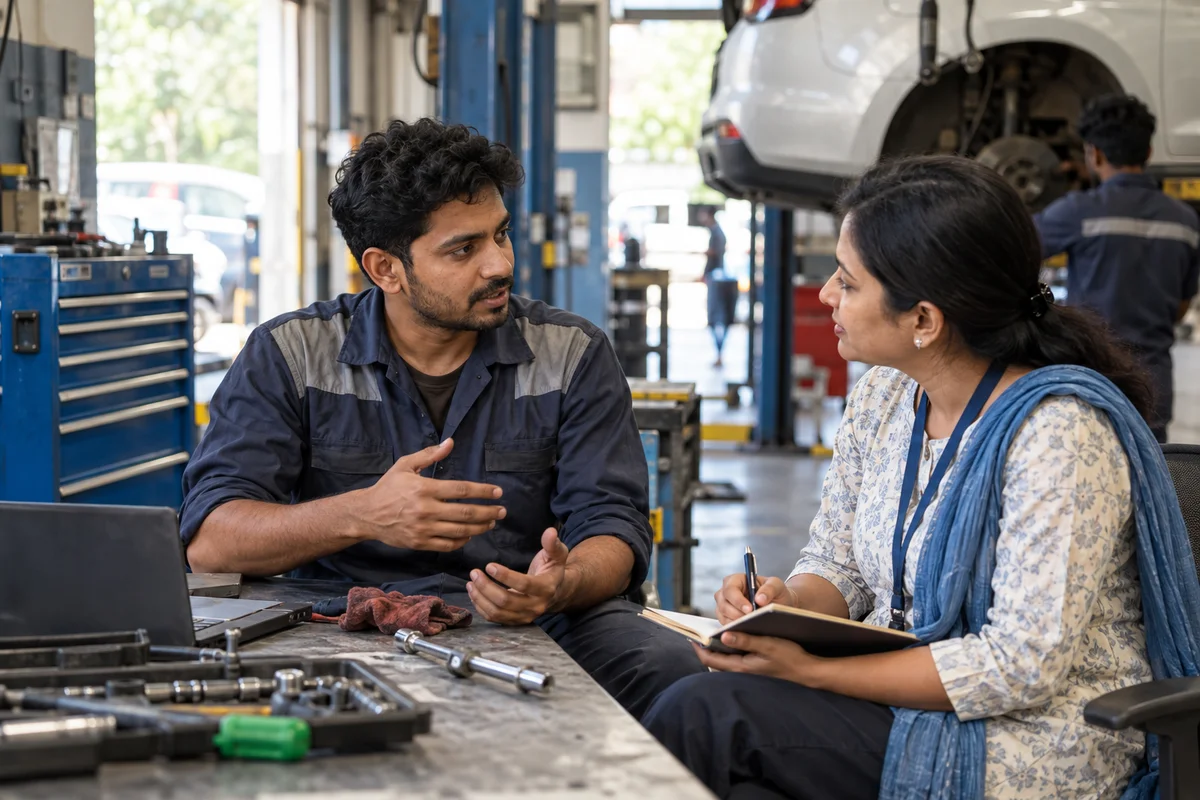
Technicians, service advisors and sales consultants leave for different reasons. How to ask what shaped their decision and act on it across every outlet.
7 min readRead article
A two-hour exercise that names the roles you could not fill quickly, who could cover them, and what readiness would actually require.
7 min readRead article
Simple variable pay structures for product and engineering teams: four options, why individual metrics backfire, a build plan and a one page outline to adapt.
6 min readRead article
An employee brings you a complaint about their supervisor. What happens next should not depend on who is in the room. A grievance procedure a small company can actually run.
8 min readRead articleMore on the GullyHR blog.
Pair them with a learner early, record their methods in simple notes and show a path for the learner. Treat the master well, since the best protection is a reason to stay.
Job rates reward output but cause quarrels over allocation. A base with a job-linked part is common. Publish the rates, explain the working and spot check quality so speed does not cost finish.
Agree a written rule in advance covering how faults are traced, who decides and how cost is shared. Record each case the same way. A known rule prevents most arguments on the day.
Ask craftsmen what bothers them, review the equipment and routines, plan breaks and rotate tasks where possible. Confirm what rules apply to your premises with a qualified professional.
Share the dates with the floor early, plan the line around them and keep a margin for rework. Talk to the insurance coordinator regularly so supervisors are not surprised by approvals.
We would ask your senior painter and panel beater what is hardest to pass on, list trades held by one person and compare your rates with nearby shops. A skill record with a succession plan is a good first job, and scope is written for your approval.
All 7 business types in vehicle service centres · Find another business type
Tell us your industry, team size and the issue you want to address. Bring one example of where work gets delayed or ownership is unclear, and the deadline or decision you are working towards.