
Industries
Why hospitality employees leave and how to understand why
Hotel, restaurant and banquet staff leave for reasons that vary by department and season. How to ask what sits behind the first answer and act on it.
8 min readRead articleA unisex salon serves men, women and families under one roof, so it needs stylists for every kind of hair, a front desk that sorts the queue, and clear rules on who does what and who earns from which customer.
Not sure what you need? Tell us about your business in six short steps and we will come to the first meeting prepared.
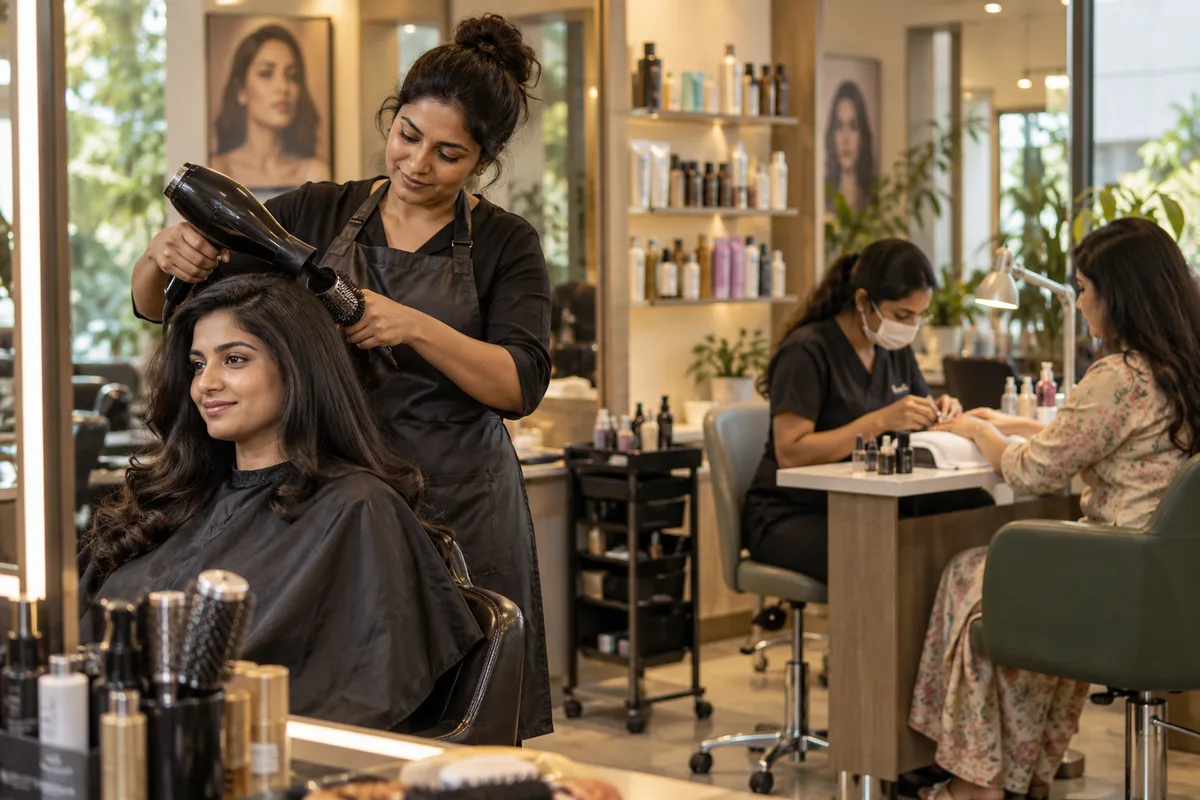
Share your requirementsA unisex salon takes the barber's walk-ins and the beauty parlour's appointments in the same space. One stylist may cut a school boy's hair, colour a mother's and trim a father's beard before lunch. The team is mixed in gender, age and skill. The owner must keep roles clear: who handles men's grooming, who handles skin, who handles bridal and who runs the desk. Customers expect good manners and privacy in every service. Policies on conduct, dress and customer-staff boundaries matter more here than in a single-gender shop. Read about the wider hospitality hub.
These are the places the people side of this kind of business tends to give way. The rest of this page works through them.
HR here has to work for each of these groups, not only the office. The set-up below is written with all of them in mind.
GullyHR runs talent acquisition for permanent roles in unisex salons. For each role we agree the job description with you, find and screen candidates against it, and support the offer through to joining. Tell us the role and the number of people, and we start there.
We recruit permanent employees. We do not supply contract or temporary staff.
Every business interviews, but few have a written process that works the same way for every role and every interviewer. GullyHR designs yours, from the role brief to the offer, trains your managers to run it, and can run it for you on the roles you hand us.
We agree what the role must deliver, the must-have and nice-to-have skills, and how each will be scored.
Screening call, assessment, interview rounds and decision points, sized to the role and the number of people you hire.
Structured questions for each role family and a rating guide, so two interviewers judge the same answer the same way.
A short briefing for your managers on what to ask, what to avoid and how to give a clear yes or no.
Who approves, how the offer is made, and how candidates are kept informed from first call to joining.
Without role lines, a stylist is pulled from men's cuts to women's colour, and nobody builds depth in one area.
The desk fits a walk-in in front of a booked customer, and the booked stylist feels cheated.
Mixed teams and mixed customers need clear norms on touch, language and privacy, yet most shops rely on common sense.
Men's cuts bring lower bills than bridal work, so commission feels uneven and arguments follow.
A stylist good at fades is hired for a team that also needs colour and facials, and the gap shows later.
Children, elders and couples are served in one room, and service manner varies widely by stylist.
Tools, towels and surfaces serve all customers, so hygiene slips when no one is named responsible.
Start with the topics that matter most here: Organisation Design; Recruitment and Talent Acquisition; Policies, Compliance and Governance. Then work through the rest. Each topic is written for hospitality, not in general.
Structure, reporting lines and who is allowed to decide what.
Requisition to joining, the same way every time.
Policies a manager can apply, and obligations with owners and dates.
How many people, in which roles, by when, and what they will cost.
A first day that is the same for the fifth joiner as the first.
Records, attendance, leave and the day-to-day HR that must simply work.
Salary structure, payroll inputs and a month that closes on time.
Goals, reviews and ratings that hold up in a conversation.
Training planned from need rather than from the calendar.
Named backups for the roles that cannot be vacant.
Communication, recognition and the conditions people actually work in.
Two routes, one for complaints, one for conduct, kept separate.
Induction, records, incident reporting and follow-through.
Who leaves, when, why, and which of them mattered.
Resignation to relieving letter, in a defined order.
Records that survive people, and approvals that do not queue.
A short monthly pack management actually reads.
An HR function that runs the same way every month.
The pieces a unisex salons business puts in place, in an order that makes each easier. Open any card for the detail.
Stylist, barber, beautician, assistant and desk, with tasks and hand-overs.
Stylist, barber, beautician, assistant and desk, with tasks and hand-overs. Role design shows the pattern.
When a walk-in may be placed ahead of a booking, and who decides.
When a walk-in may be placed ahead of a booking, and who decides. Staff and customers see the same rule.
A short code on language, touch, dress, phones and customer privacy.
A short code on language, touch, dress, phones and customer privacy. Read through it with the whole team. See HR policies.
Slabs that recognise different bill sizes and effort, tested on past bills before launch.
Slabs that recognise different bill sizes and effort, tested on past bills before launch.
A trial on more than one service, with a senior watching, and a note of what training the person would need.
A trial on more than one service, with a senior watching, and a note of what training the person would need. The recruitment process can hold the steps.
Before changing anything, find out what is true today. Work through the checks using a recent operating period. The time needed depends on the records you hold; note missing evidence and use the findings to choose a priority.
Share your requirementsConfirm with a qualified professional. What applies to you depends on your business, your state and your arrangements, and it changes. This page describes practice. It does not state a legal position.
The services below fit this kind of business best. Each starts by recording where you stand, and every later report compares against that. We do not promise outcomes.
One page per role so stylists, barbers and beauticians know their lane and their hand-overs.
Hiring tests that check range, not just one style, and find people for the gaps you have.
A short code on conduct, privacy and dress for a mixed team and a family clientele.
Reviews that cover service quality, teamwork and customer feedback across the chair types.
Start with a free conversation, or see the paid HR Diagnostic.
Understand the business, its workforce, current processes and HR challenges.
Find the missing, weak, inconsistent or person-dependent processes.
Create the structure, processes, policies, SOPs, dashboards and systems needed.
Help HR and department managers actually adopt the new system.
Digitise repetitive and approval-based workflows where it is worth doing.
Track hiring, attendance, employee cost, performance, training and attrition.
Strengthen the people-management system continuously, not once.
From the GullyHR blog: one on HR in hospitality, and one on each of the topics this page points to.

Hotel, restaurant and banquet staff leave for reasons that vary by department and season. How to ask what sits behind the first answer and act on it.
8 min readRead article
A founder's guide to building job grades, titles and billing levels for a growing IT services firm, with a step-by-step method and a grade description outline.
6 min readRead article
How a D2C founder can test a performance marketing hire on real work, ignore weak signals such as dashboard screenshots, and run a fair process.
7 min readRead article
How an India head can sort a global parent's HR policies into apply, adapt or replace, write an India addendum with advisers, and keep headquarters on side.
7 min readRead articleMore on the GullyHR blog.
Not always. Some unisex salons keep one team with defined skills. What matters is that roles are clear and customers are matched to the right stylist.
Use a written rule based on skill, turn and customer request, and let the desk apply it. Fairness that people can see calms most arguments.
Language, touch, dress, phone use, customer privacy and how to raise a concern. Keep it short, explain it in a team meeting and ask each person to confirm they understood it.
Name the gap first, such as colour or bridal. Use a practical trial on that service with a senior watching, and judge manner with the customer as well as technique.
Yes, with a plan. Give them a progression through simple tasks on each side, with sign-offs, so they build range without being overstretched.
First we would ask each stylist what they spent last week doing, count how many times walk-ins jump bookings and read whatever conduct rules exist. A role page for each position and a booking rule are a natural first job, and scope goes into writing for your sign-off.
All 7 business types in salons & beauty businesses · Find another business type
Tell us your industry, team size and the issue you want to address. Bring one example of where work gets delayed or ownership is unclear, and the deadline or decision you are working towards.