HR for Rigid Packaging Manufacturers: Moulds, Machine Setters and Bottle or Jar Lines
A rigid packaging unit moulds bottles, jars, tubs and closures for brands that order in long runs. A setter who can swap a mould fast is hard to find, and the machines rarely stop.
Make this work for your business. Share your team size, priorities and what you need help with. We’ll use your brief to prepare for the first conversation.
A rigid packaging manufacturer makes bottles, jars, tubs, caps and closures that keep their shape. In plastic units, injection and blow moulding machines run round the clock, with a mould change between jobs and a weight or neck-fit check every few cycles. Glass or metal units add furnaces, forming machines or presses with their own heat and handling risks. Brands order in big runs against forecasts that shift, and a late closure can stop a customer's filling line. The setter matters most: a good mould change saves hours, a bad one scraps resin and damages the cavity. Operators watch the cycle, trim, inspect and pack, while palletising crews turn over fast. For the wider sector picture, read HR for manufacturing.
Plan→
Hire→
Onboard→
Manage→
Develop→
Perform→
Engage→
Retain→
Exit→
Improve
When HR is weak in rigid packaging manufacturers, you may see
The mould change sets the day
Setters learn at the machine and seldom note it
Operators load and watch, no more
Nights run the longest batches with least cover
Hot barrels and heavy moulds hurt people
Packing is the revolving door
These are the places the people side of this kind of business tends to give way. The rest of this page works through them.
Why GullyHR for rigid packaging manufacturers
Mould changes that go right and parts that pass first time.
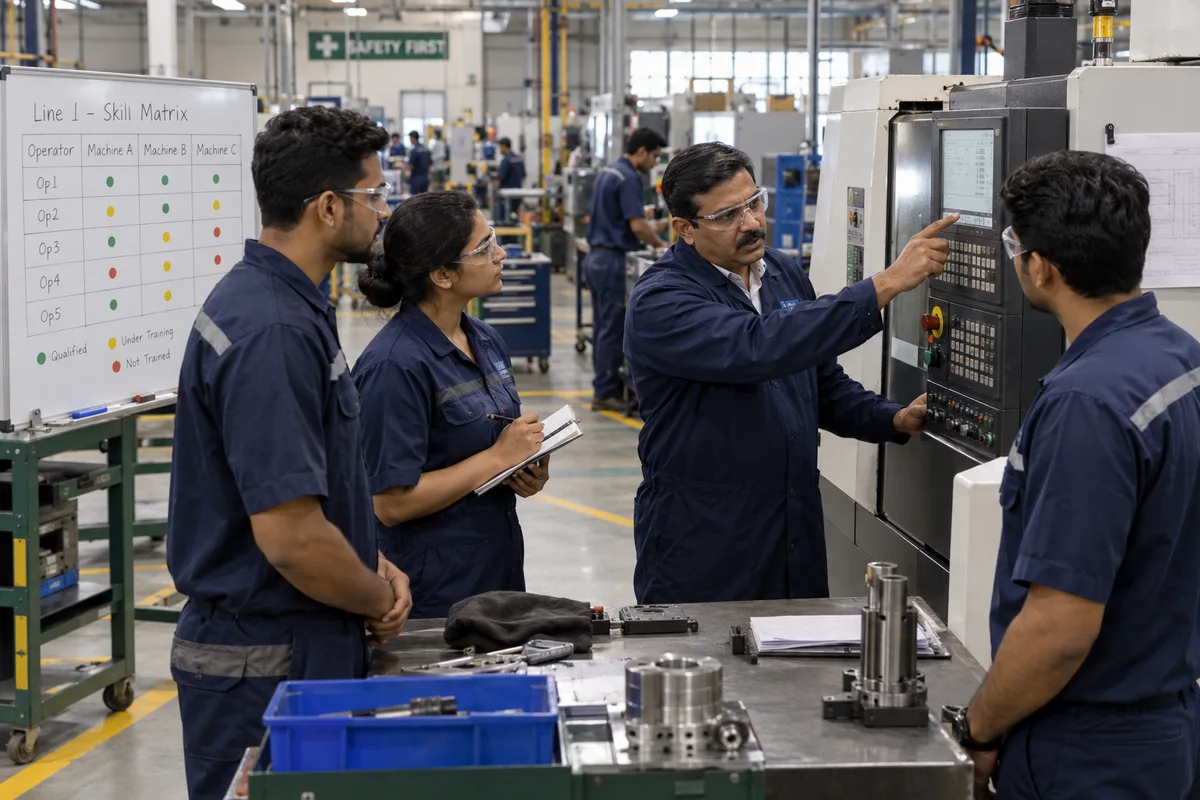
For rigid packaging owners whose day is set by mould changes and setters who learn at the machine. What changes: setters are graded, settings are written and night leads get backing.
01
Setters graded by moulds mastered
A simple grade showing which moulds each setter can change alone, and which need a partner. Pay and cover plans follow what a person can actually do at the machine.
02
One setting sheet per mould
A sheet kept with each mould listing cavity, cooling and cycle notes and the date it was last updated. A setter on leave no longer takes the knowledge home.
03
A short hourly operator check
A card that tells operators what to look at each hour, from weight and neck fit to trim, and where to write it. Loading and watching become real inspection.
04
A night lead backed by the day team
A named night shift lead with an agreed route to day-side help for long batches. The longest runs stop having the least cover.
Our services for rigid packaging manufacturers
Start with any one of these. Scope and fee are agreed in writing after a free first conversation.
HR audit
We list your mould setters and mark which moulds each can change unaided, then check whether every mould has a setting sheet and when it was last touched. We take last month's rejected lots and see which shift made them. We ask your night lead what support they miss from the day team, and count the packers who joined and left over the past three months. In the toolroom we look at how mould repairs are logged and who is told. Operators are asked what they actually inspect each hour.
What you receive
A grid of setters against moulds each can change alone
A rejected lot trace by shift, mould and operator
A packer joiner and leaver count with exit reasons gathered
An example, not a client storyPicture a unit where the best setter leaves, and two moulds that only he could change sit idle for a week while orders wait. The audit shows exactly which moulds depend on a single person, and the owner sees the risk laid out as a grid rather than a hunch.
We watch a mould change from the last good part to the first approved one, then write the steps in the order the best setter follows them, with the checks that protect the cavity. Next the setting sheet for each mould, with a place to record updates. We then draft the hourly operator check and a simple sample board showing a good part. Finally a handoff routine between shifts so the night lead starts each batch informed. Each is tried on live runs and cut back until it is quick to follow.
What you receive
A mould change step list with cavity protection checks
A setting sheet template and a sample board of good parts
A shift-to-shift batch handoff card for supervisors and leads
An example, not a client storySuppose a new setter changes a mould in a hurry and skips the cavity check. A cavity is damaged, resin is scrapped and the customer's closures arrive late. A written change routine, followed by someone who watched it done once, would have made the check a habit rather than a memory.
Each week we update the setter grid as people learn new moulds, and plan who is paired with whom. We review rejected lots with the shift in-charge and look at whether the hourly check is being done. We make sure new packers are shown what a good part looks like in their first shift and speak with those who leave. The night lead gets regular calls and a direct line to the day team. The owner receives a short note covering cover risks, rejects by shift and packer turnover.
What you receive
A weekly setter grid with a plan for who is paired
A review note on rejected lots for each shift
A log of packer onboarding and exit conversations
An example, not a client storySay the packing floor loses three people in one month. Each tells us the first week was confusing and nobody showed them a good part. We set up a short first-shift routine with a sample board, and the next batch of packers settle in because someone shows them what is expected.
For setters we use a practical exercise on a mould change sequence and on reading a bad part, scored by your best setter. Toolroom fitters are tested on mould repair judgement. Operators and inspectors are assessed on attention to weight and neck fit, not speed alone. For shift in-charge roles we look at how a candidate would run a night batch and ask for the support they would need. Packers are hired with a clear picture of pace and repetition. We do not supply contract workers or verify backgrounds.
What you receive
A mould change sequence exercise with scoring sheet
An inspector attention task with weight and neck-fit samples
A shift in-charge interview guide covering night batches
An example, not a client storyTake a plant that needs a shift in-charge and has promoted its fastest operator before. The result was a good operator and a worried lead. This time, a scored interview asks how the candidate would run a long batch at night and what help they would want, and the owner chooses with those answers in hand.
We run a coaching session for setters on explaining a mould change step by step and signing off a colleague on a mould. Operators practise the hourly check on live parts, learning why each number matters. Packers are shown good and bad parts at the sample board in their first shift, and repeat it a week later. Night leads learn to hand over, escalate and keep a crew steady through a long batch. A short safety session covers hot barrels and heavy moulds. Every session uses your own moulds and your own rejects.
What you receive
A setter coaching session with a sign-off sheet
An operator hourly check practice on live parts
A packer sample board session repeated after one week
An example, not a client storyPicture a newly graded setter who is quick but cannot explain what he does. A coaching session on teaching, using one mould as the example, gives him the steps to pass on. Two weeks later a second person can change that mould, and the first setter can finally take leave.
The grading policy explains how setters move up by moulds they can change alone, and how that links to cover planning. The sheet rule says who updates a setting sheet, at what interval it is reviewed and where it is kept. The night lead rule sets the support route and who can be called. Safety rules cover hot barrels, heavy mould lifting and trimming. Training and acknowledgement records sit in your HR system. Your own adviser confirms the labour, safety and record-keeping duties that apply to a moulding and packing plant like yours.
What you receive
A policy on setter grading and cover planning
A rule on updating and reviewing setting sheets
A safety rule for hot and heavy work with signed acknowledgements
An example, not a client storySuppose a customer audit asks who is allowed to change a given mould and how that is recorded. With a grading policy and a grid in the HR system, the owner answers in minutes. Without them, it turns into a search through memory, and the auditor writes down what they saw.
Questions owners of rigid packaging manufacturers ask us
We watch a mould change from the last good part to the first approved one, then write the steps with your best setter and test them with a second setter. We keep one setting sheet per mould and record who has been signed off. It takes a few cycles, but it turns leave and resignations into a planning matter and not an emergency.
Yes. We write a short hourly check, such as weight, neck fit and trim, put it on a card at the machine and train operators on why each point matters. We also show them a sample board of good and bad parts. Supervisors then review the cards each shift, so the check is something people notice being read and acted on.
We count joiners and leavers over recent months and talk with those who left. Then we set up a first-shift routine with a sample board, a named buddy and a check-in after one week. Pace and repetition cannot be removed, but a clear start changes how people feel about them. Pay and incentives stay your decision, and we only write down what you choose.
We begin by asking your night lead what support they miss from the day team, then agree a named route for help, a handover card and a rule on when a batch is escalated. We also look at staffing and rest on those nights. Your own adviser confirms any working-hours duties that apply to your site.
Who does the work in rigid packaging manufacturers
Roles we help you hire in rigid packaging manufacturers
GullyHR runs talent acquisition for permanent roles in rigid packaging manufacturers. For each role we agree the job description with you, find and screen candidates against it, and support the offer through to joining. Tell us the role and the number of people, and we start there.
We recruit permanent employees. We do not supply contract or temporary staff.
Where HR strains in rigid packaging manufacturers
The mould change sets the day
A skilled setter swaps a mould quickly and gets good parts in the first cycles, so a gap in setter cover shows straight in output and scrap.
Setters learn at the machine and seldom note it
Barrel temperatures, cooling times and each mould's quirks sit in memory, and they walk out when the setter does.
Operators load and watch, no more
When the operator only feeds and observes, drift in bottle weight or neck finish goes unseen until the inspector finds a stack of rejects.
Nights run the longest batches with least cover
Long runs mean the night crew makes the biggest lot with the thinnest supervision and the fewest hands to call on.
Hot barrels and heavy moulds hurt people
Burns, pinch points at the platen and mould lifting injuries come with the job, and new helpers face them before learning the habits.
Packing is the revolving door
Packing and palletising roles turn over quickly, and quality slips when a new packer has never seen what a good part looks like.
HR topics for rigid packaging manufacturers
Start with the topics that matter most here: Retention and Attrition Management; Compensation, Payroll and Benefits; Health, Safety and Wellbeing. Then work through the rest. Each topic is written for manufacturing, not in general.
The pieces a rigid packaging manufacturers business puts in place, in an order that makes each easier. Open any card for the detail.
Grade setters by moulds they can change alone
Levels from assistant to senior setter based on mould changes completed and faults solved.
What this coversHide
Levels from assistant to senior setter based on mould changes completed and faults solved. Pair it with a compensation review so the grades carry weight.
Keep one setting sheet for every mould
A one-page record of temperatures, cycle times, known faults and the last change, kept up to date by the setter.
What this coversHide
A one-page record of temperatures, cycle times, known faults and the last change, kept up to date by the setter. It cuts start-up time and holds the knowledge.
Hand operators a short hourly check
A quick look at weight, fit or finish each hour, recorded by the operator.
What this coversHide
A quick look at weight, fit or finish each hour, recorded by the operator. See performance management to link it with recognition.
Back the night shift lead
Choose night leads, give them a clear escalation route and hold a morning review with the day team.
What this coversHide
Choose night leads, give them a clear escalation route and hold a morning review with the day team. The attendance, shift and leave process helps with rotas.
Show packers what a good part looks like
A sample board of accepted and rejected parts at each packing table and a brief talk on day one.
What this coversHide
A sample board of accepted and rejected parts at each packing table and a brief talk on day one.
List your mould setters and mark which moulds each can change unaided.
Check whether every mould has a setting sheet and when it was last touched.
Ask your night lead what support they miss from the day team.
Count how many packers joined and left over the past three months.
Take last month's rejected lots and see which shift made them.
Confirm with a qualified professional the labour, safety and record-keeping rules that bind your moulding and packing plant.
Confirm with a qualified professional. What applies to you depends on your business, your state and your arrangements, and it changes. This page describes practice. It does not state a legal position.
Why the best operator can struggle as shift supervisor, what it costs the line, and a practical way to choose, prepare and back new supervisors in any kind of plant.
What really keeps mobile app and web developers in a small firm: stay conversations, growth paths, fair release rules and a risk sheet an owner can use this month.
Simple variable pay structures for product and engineering teams: four options, why individual metrics backfire, a build plan and a one page outline to adapt.
A shift, weekly and monthly safety routine for rubber plants that names who checks platen guards, mill trip bars, autoclave doors, burst-test cages and slings, and who acts on near misses.
Enough that no shift runs without someone who can swap your most common moulds. Study last month's mould changes and who did them.
Several units do, provided the skill is defined and tested. Without a clear test, allowances become a source of complaint.
Give them a short check to record, share reject results with them and recognise clean runs. Ownership grows when people see their own numbers.
A clear first day, a buddy and a short chat after two weeks help most. A route to machine roles gives packers a reason to stay.
Guards and interlocks in use, gloves and sleeves worn, and safe mould lifting. Check them at shift start, not only at audits.
We would ask who can change which moulds, whether setting sheets exist and are used, and how many packers have left recently. A practical opening project is a setter grade ladder with a simple hourly operator check. Scope is put in writing once we have talked.
Tell us your industry, team size and the issue you want to address. Bring one example of where work gets delayed or ownership is unclear, and the deadline or decision you are working towards.