














GullyHR

Forging and Metal Forming · Roll Forming Units

HR for Roll Forming Units: Coil Lines, Roll Sets and Profile Changes

Roll forming units pass steel coil through sets of rollers to make roof sheets, purlins, shutters and door frames. Runs are fast, but roll changes, coil handling and length checks rest on a few skilled hands.

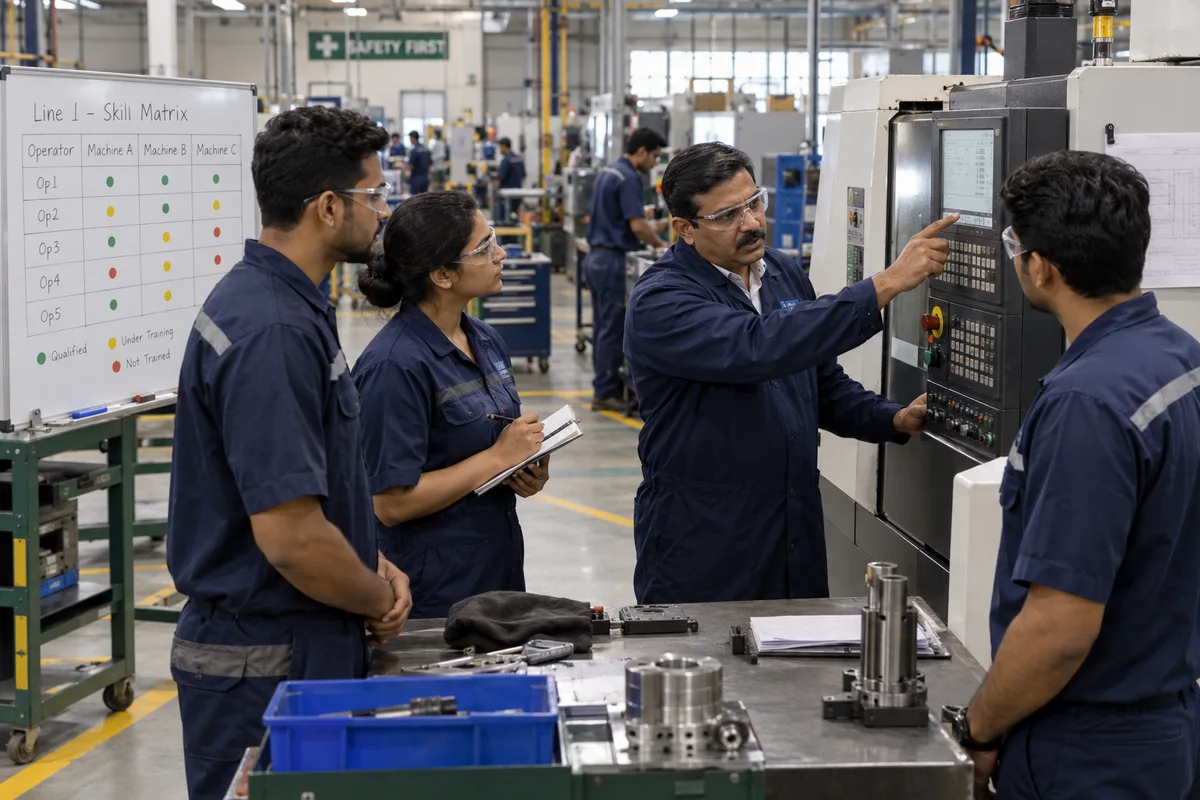
Workplace scene for Roll Forming Units: Coil Lines, Roll Sets and Profile Changes

Not sure what you need? Tell us about your business in six short steps and we will come to the first meeting prepared.

Share your requirements

A roll forming unit feeds steel or aluminium coil through paired rollers that bend it stage by stage into roof sheets, purlins, studs, shutters and frames. The line decoils, forms, punches or notches, shears to length and stacks. Each profile needs its own roll set, and a changeover means swapping and aligning rollers, which takes skill and time. Orders come from builders, dealers and project contractors, with length and quantity fixed by the site, and delivery pressure rises around construction peaks. Overhead cranes, razor edges and long sheet stacks add handling risk for a small crew. Related reading: manufacturing HR.

  1. Plan
  2. Hire
  3. Onboard
  4. Manage
  5. Develop
  6. Perform
  7. Engage
  8. Retain
  9. Exit
  10. Improve

When HR is weak in roll forming units, you may see

  • The roll setter decides how long the line sits idle
  • Lifting coils is the riskiest job
  • Orders come in odd lengths and small lots
  • Stackers handle cut edges all day
  • Wrong lengths reach the site
  • Construction peaks mean overtime and thin cover

These are the places the people side of this kind of business tends to give way. The rest of this page works through them.

Who does the work in roll forming units

HR here has to work for each of these groups, not only the office. The set-up below is written with all of them in mind.

  • Roll forming line operators
  • Roll setters
  • Decoiler and coil handling crew
  • Punching and shearing operators
  • Stacking and bundling staff
  • Tool room fitters
  • Length and profile inspectors
  • Dispatch and loading staff

Roles we help you hire in roll forming units

GullyHR runs talent acquisition for permanent roles in roll forming units. For each role we agree the job description with you, find and screen candidates against it, and support the offer through to joining. Tell us the role and the number of people, and we start there.

We recruit permanent employees. We do not supply contract or temporary staff.

We set up the interview and hiring process for roll forming units

Every business interviews, but few have a written process that works the same way for every role and every interviewer. GullyHR designs yours, from the role brief to the offer, trains your managers to run it, and can run it for you on the roles you hand us.

  1. 1. Role brief and scorecard

    We agree what the role must deliver, the must-have and nice-to-have skills, and how each will be scored.

  2. 2. Stages and sequence

    Screening call, assessment, interview rounds and decision points, sized to the role and the number of people you hire.

  3. 3. Question bank and scoring

    Structured questions for each role family and a rating guide, so two interviewers judge the same answer the same way.

  4. 4. Interviewer readiness

    A short briefing for your managers on what to ask, what to avoid and how to give a clear yes or no.

  5. 5. Offer and follow-up

    Who approves, how the offer is made, and how candidates are kept informed from first call to joining.

Where HR strains in roll forming units

  • The roll setter decides how long the line sits idle

    Aligning a new roll set needs a trained eye, and a good setter can halve the time a poor one takes.

  • Lifting coils is the riskiest job

    Heavy coils, crane slings and sharp edges are handled by helpers who may get little training.

  • Orders come in odd lengths and small lots

    Site requirements keep shifting the run lengths, and frequent changes wear out the crew and cause counting errors.

  • Stackers handle cut edges all day

    Razor edges and long sheets injure hands and backs, and glove use and lifting habits vary from person to person.

  • Wrong lengths reach the site

    A bad cut length is found only at the building, and the operator takes the blame, though the order sheet may have been wrong.

  • Construction peaks mean overtime and thin cover

    Demand surges before the monsoon or a handover date, and a small crew runs long hours.

HR topics for roll forming units

Start with the topics that matter most here: Health, Safety and Wellbeing; HR Strategy and Workforce Planning; Compensation, Payroll and Benefits. Then work through the rest. Each topic is written for manufacturing, not in general.

Health, Safety and Wellbeing

Induction, records, incident reporting and follow-through.

HR Strategy and Workforce Planning

How many people, in which roles, by when, and what they will cost.

Compensation, Payroll and Benefits

Salary structure, payroll inputs and a month that closes on time.

Organisation Design

Structure, reporting lines and who is allowed to decide what.

Recruitment and Talent Acquisition

Requisition to joining, the same way every time.

Onboarding and Probation

A first day that is the same for the fifth joiner as the first.

Employee Administration

Records, attendance, leave and the day-to-day HR that must simply work.

Performance Management

Goals, reviews and ratings that hold up in a conversation.

Learning and Development

Training planned from need rather than from the calendar.

Career and Succession Management

Named backups for the roles that cannot be vacant.

Employee Engagement and Experience

Communication, recognition and the conditions people actually work in.

Employee Relations

Two routes, one for complaints, one for conduct, kept separate.

Policies, Compliance and Governance

Policies a manager can apply, and obligations with owners and dates.

Retention and Attrition Management

Who leaves, when, why, and which of them mattered.

Exit and Alumni Management

Resignation to relieving letter, in a defined order.

HR Technology and Automation

Records that survive people, and approvals that do not queue.

HR Analytics and Management Reporting

A short monthly pack management actually reads.

HR Operations and Governance

An HR function that runs the same way every month.

What a working HR set-up looks like

The pieces a roll forming units business puts in place, in an order that makes each easier. Open any card for the detail.

Grade roll setters and record each changeover

A short sheet per profile listing the alignment checks, and a grade for setters who can change over alone.

What this covers

A short sheet per profile listing the alignment checks, and a grade for setters who can change over alone. See pay benchmarking.

Train coil handlers before they touch a coil

A practical course on crane signals, slings and edges, with sign-off before working alone.

What this covers

A practical course on crane signals, slings and edges, with sign-off before working alone. It belongs under health and safety.

Tidy up the order sheet

One sheet with length, count and profile, checked by dispatch before the line starts, so length errors are caught at source.

What this covers

One sheet with length, count and profile, checked by dispatch before the line starts, so length errors are caught at source.

Plan the peak months ahead

Review confirmed orders with sales each month and arrange temporary hands and overtime early, using workforce planning.

What this covers

Review confirmed orders with sales each month and arrange temporary hands and overtime early, using workforce planning.

Give stackers gloves, lifting aids and short rotations

Move stacking between jobs, check gloves and aids at each shift start, and replace worn gear without argument.

What this covers

Move stacking between jobs, check gloves and aids at each shift start, and replace worn gear without argument.

Start by checking where you stand

Before changing anything, find out what is true today. Work through the checks using a recent operating period. The time needed depends on the records you hold; note missing evidence and use the findings to choose a priority.

Share your requirements
  • List your roll setters and time each one's last three changeovers.
  • Check who handles coils and when each last had practical training.
  • Read the last five length complaints and see how many came from a wrong order sheet.
  • Count cut and lifting injuries in the last six months.
  • Take last year's busiest month and total the extra hours worked per person.
  • Confirm with a qualified professional the registration, record-keeping and employment obligations that cover coil handling, line work and dispatch, and note which need action.

Confirm with a qualified professional. What applies to you depends on your business, your state and your arrangements, and it changes. This page describes practice. It does not state a legal position.

How GullyHR helps

The services below fit this kind of business best. Each starts by recording where you stand, and every later report compares against that. We do not promise outcomes.

Start with a free conversation, or see the paid HR Diagnostic.

Our HR transformation approach

  1. 1

    Assess

    Understand the business, its workforce, current processes and HR challenges.

  2. 2

    Identify gaps

    Find the missing, weak, inconsistent or person-dependent processes.

  3. 3

    Design

    Create the structure, processes, policies, SOPs, dashboards and systems needed.

  4. 4

    Implement

    Help HR and department managers actually adopt the new system.

  5. 5

    Automate

    Digitise repetitive and approval-based workflows where it is worth doing.

  6. 6

    Measure

    Track hiring, attendance, employee cost, performance, training and attrition.

  7. 7

    Improve

    Strengthen the people-management system continuously, not once.

Blogs worth reading first

From the GullyHR blog: one on HR in manufacturing, and one on each of the topics this page points to.

More on the GullyHR blog.

Questions owners ask

Write a sheet for each profile, train a second setter and record every changeover time. Most time is lost in alignment, and a good checklist trims it.

Start with your business need

What does your HR team need to solve?

Tell us your industry, team size and the issue you want to address. Bring one example of where work gets delayed or ownership is unclear, and the deadline or decision you are working towards.

  • A free first conversation with an HR practitioner
  • A clear scope and fee before any paid work
  • A practical next step for your business

Let’s start with your business

Share your contact details and the HR challenge on your mind. We’ll help you find the right starting point.

10-digit Indian mobile, without +91.

Your details stay private. Privacy policy