
Industries
Why agribusiness workers leave and how to understand why
Seasonal crews, field officers and processing staff leave for different reasons. How to ask what shaped their decision and act before next season.
7 min readRead articlePlants, flowers and vegetables grown under cover need steady skilled hands and a lot of careful routine work. Here is how to run the team behind them.

Not sure what you need? Tell us about your business in six short steps and we will come to the first meeting prepared.
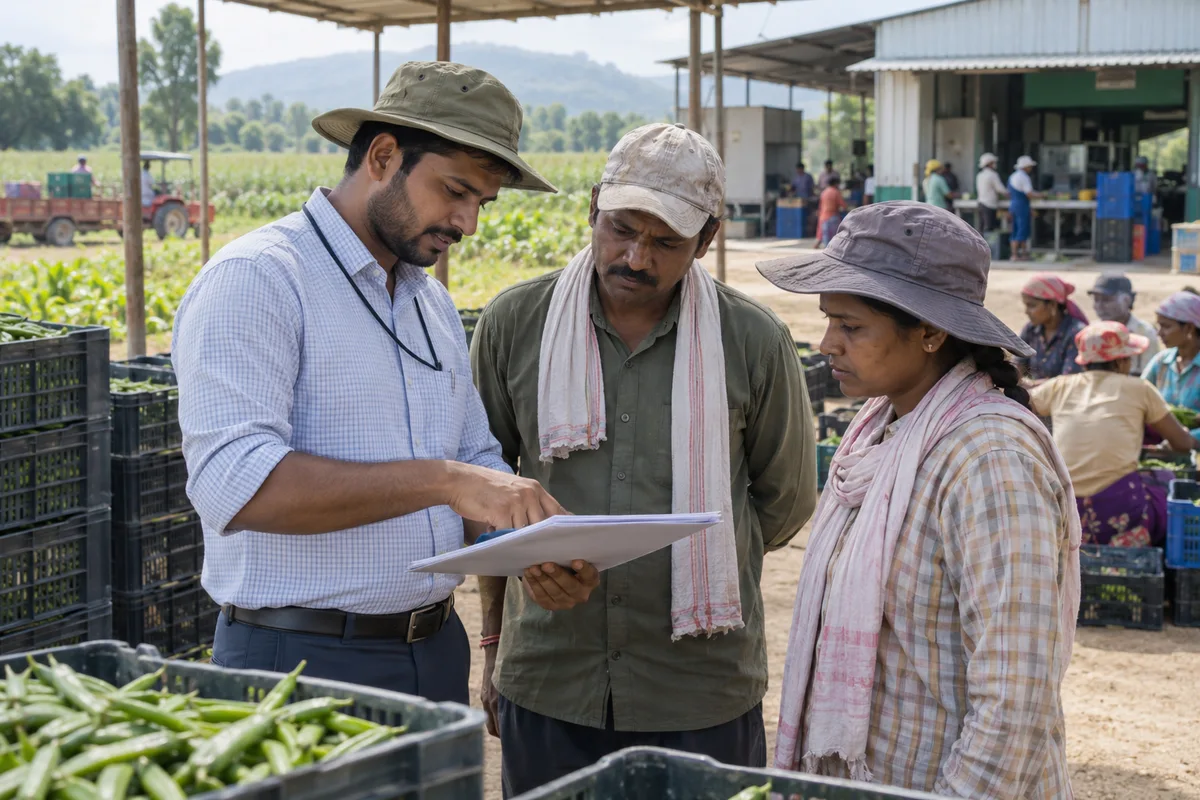
Share your requirementsA nursery grows saplings, ornamental plants or vegetable seedlings; a greenhouse farm grows flowers, capsicum, tomatoes or cucumbers in controlled conditions; a horticulture farm grows fruit or vegetables in the open. Daily work is planting, grafting, watering, pruning, spraying, picking and grading, followed by packing and dispatch for markets or buyers. Greenhouses are hot and humid, and spray and fertigation tasks need trained hands. Many pickers, graders and packers are women who work close to home, and demand peaks around festivals, weddings and planting seasons. A head grower or farm manager carries the crop knowledge. Confirm obligations for pesticide handling and employment with a qualified professional. See also HR for agriculture and agribusiness.
Who does the work
Crop knowledge sits with the head grower
Timing of spray, pruning and fertiliser is carried in one person's head, and their absence or exit disrupts the crop.
Festival peaks need a large crew at short notice
Cut flower and plant demand spikes around a few dates, and teams must be assembled and trained within days.
Heat and humidity tire people
Greenhouse work is exhausting in hot months, and absences and early exits rise just when picking is at its peak.
Pesticide handling is learned loosely
Spray operators may mix and apply chemicals without formal training, protective gear or records of who did what.
Piece rates for picking vary by crop
Rates per kilo, per bunch or per tray differ between crops and quality levels, and workers feel the calculation is unclear.
Women workers face practical barriers
Travel, timings, toilets and childcare affect who can work, and a farm that ignores them struggles to hold a team.
Write the crop calendar and share it
A simple calendar of tasks by crop and week, built with the head grower and available to a second person who can run it. The competency work can help map who can do what.
Prepare a trained festival crew
A list of people who can work peak weeks, a short briefing on handling and grading, and a plan for extra transport. The workforce planning service helps.
Adjust greenhouse hours to the heat
Earlier starts, water and rest points and rotation between hot and cooler tasks in the hottest months.
Train and record spray operators
Training on mixing, application and protective gear, with a record of who has been taught and who sprayed which block. The health and safety work covers this.
Publish piece rates
A simple rate card by crop and quality that every picker can read, with one person to ask about a calculation.
Confirm with a qualified professional. What applies to you depends on your business, your state and your arrangements, and it changes. This page describes practice. It does not state a legal position.
A skills map of who can graft, spray, grade or run a greenhouse, and a plan to widen it.
Peak-date planning so crews are ready before festival demand arrives.
Safe chemical handling and heat routines that are taught, recorded and followed.
Practical changes to timings, transport and facilities that help women stay in the workforce.
Every engagement starts by recording where you stand, and every later report compares against that. We do not promise outcomes. Start with a free conversation, or see the paid HR Diagnostic.
From the GullyHR blog: one on HR in agriculture and agribusiness, and one on each of the topics this page points to.
Seasonal crews, field officers and processing staff leave for different reasons. How to ask what shaped their decision and act before next season.
7 min readRead article
Hiring decisions made one request at a time, in the month the pain is worst. What a workforce plan contains and why a twelve-month view changes what you hire.
7 min readRead article
A laminated notice, an annual drill, and an incident register with three entries in two years. What workplace health and safety looks like when it is real.
7 min readRead article
A two-hour exercise that names the roles you could not fill quickly, who could cover them, and what readiness would actually require.
7 min readRead articleMore on the GullyHR blog.
Write the crop calendar, name a deputy and have the grower train them on live tasks. The aim is a second person who can run the week, not a replacement.
Keep a standing list of people who worked before, brief them on handling and grading on the first day and arrange transport in advance. Do not start the search the week of the peak.
Mixing, application, protective equipment, re-entry and cleaning. Have a qualified professional confirm the content and keep a record of who was taught.
By crop and quality, written on a card and shown to workers. Compare with what nearby farms pay so the rate is competitive.
Predictable hours, transport, clean toilets, a safe route and supervisors who treat people respectfully. Small changes decide whether a team stays.
Typical starting points are who could run the crop programme if your head grower were away, how large a crew you need for festival dates, and how spray operators are trained and equipped. Greenhouse heat and picking piece rates would be considered. A useful first piece of work is a shared crop calendar with a festival crew plan. Scope is agreed in writing afterwards.
All 9 business types in agriculture and agribusiness · Find another business type
See all HR topics for agriculture and agribusiness, or another industry.
Identify payroll leaks, record gaps and hiring bottlenecks in a free first conversation, and leave knowing what to fix first.
Know what you need? Share your requirements in four short steps.
Want the full picture? See the paid HR Diagnostic.
Prefer a quick message? Chat on WhatsApp