















GullyHR
Solar and Renewable Energy Equipment · Energy Storage System Makers

HR for Energy Storage System Makers: Containers, Integration and Commissioning

An energy storage maker integrates battery racks, power conversion and cooling into containers or cabinets and commissions them on site. It needs systems engineers and site teams more than a large assembly floor.

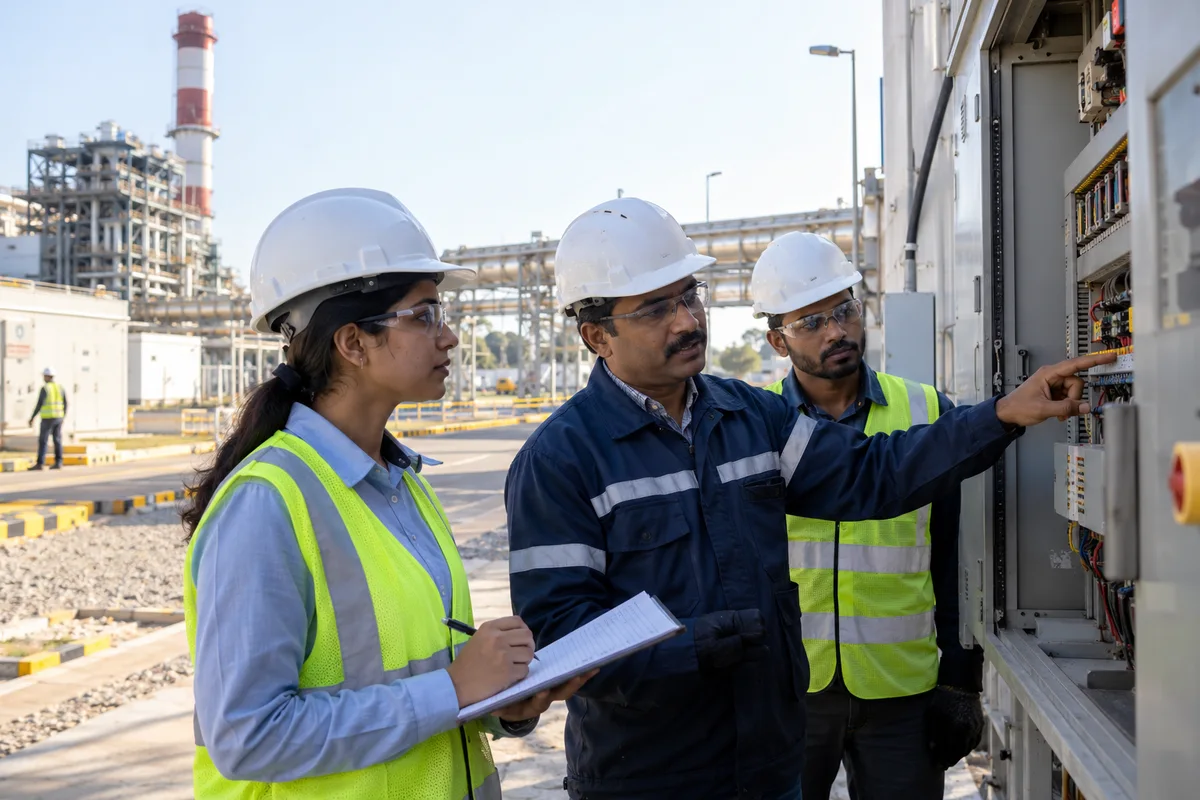
A power facility supervisor and HR coordinator checking technician records with solar panels outside

Not sure what you need? Tell us about your business in six short steps and we will come to the first meeting prepared.

Share your requirements

An energy storage system maker builds large battery installations for factories, solar plants and grid users. The unit buys packs or cells, inverters, cooling and control systems, then integrates them into a cabinet or container, tests it in the yard and ships it for site installation. A project team plans each order, and a commissioning crew visits the site to connect, configure and hand over. Work arrives as projects with different specs, so no two builds are quite alike. Integration technicians, electrical fitters and commissioning engineers are few. The crews travel, often at short notice, and a late site can hold up payment for the whole project. See also HR for energy and utilities.

  1. Plan
  2. Hire
  3. Onboard
  4. Manage
  5. Develop
  6. Perform
  7. Engage
  8. Retain
  9. Exit
  10. Improve

When HR is weak in energy storage system makers, you may see

  • Every project is a little different
  • Commissioning crews travel constantly
  • Few people can both design and commission
  • Site delays push work onto the yard crew
  • High-voltage work needs strict habits
  • Handovers between yard and site lose detail
  • Project coordinators are overloaded

These are the places the people side of this kind of business tends to give way. The rest of this page works through them.

Who does the work in energy storage system makers

HR here has to work for each of these groups, not only the office. The set-up below is written with all of them in mind.

  • Systems and design engineers
  • Integration technicians
  • Electrical and wiring fitters
  • Commissioning engineers
  • Container fabrication and fit-out staff
  • Factory acceptance test staff
  • Project coordinators
  • Stores and logistics staff
  • Site safety officers

Where HR strains in energy storage system makers

  • Every project is a little different

    Technicians build to a project spec, and without written steps each build depends on who is on the job.

  • Commissioning crews travel constantly

    Engineers spend long spells away from home, and fatigue and attrition follow.

  • Few people can both design and commission

    Engineers with systems and site experience are scarce, and the firm leans on the same few for every project.

  • Site delays push work onto the yard crew

    A customer's site not being ready leaves the system in the yard and the team idle, then rushed.

  • High-voltage work needs strict habits

    Large battery and power systems carry electrical risk, and shortcuts under deadline are tempting.

  • Handovers between yard and site lose detail

    What the integration team learned does not always reach the commissioning team, so faults are found twice.

  • Project coordinators are overloaded

    They chase suppliers, drawings and site dates with few tools, and errors show late.

HR topics for energy storage system makers

Start with the topics that matter most here: Retention and Attrition Management; Learning and Development; Health, Safety and Wellbeing. Then work through the rest. Each topic is written for energy and utilities, not in general.

Retention and Attrition Management

Who leaves, when, why — and which of them mattered.

Learning and Development

Training planned from need rather than from the calendar.

Health, Safety and Wellbeing

Induction, records, incident reporting and follow-through.

HR Strategy and Workforce Planning

How many people, in which roles, by when — and what they will cost.

Organisation Design

Structure, reporting lines and who is allowed to decide what.

Recruitment and Talent Acquisition

Requisition to joining, the same way every time.

Onboarding and Probation

A first day that is the same for the fifth joiner as the first.

Employee Administration

Records, attendance, leave and the day-to-day HR that must simply work.

Compensation, Payroll and Benefits

Salary structure, payroll inputs and a month that closes on time.

Performance Management

Goals, reviews and ratings that hold up in a conversation.

Career and Succession Management

Named backups for the roles that cannot be vacant.

Employee Engagement and Experience

Communication, recognition and the conditions people actually work in.

Employee Relations

Two routes — one for complaints, one for conduct — kept separate.

Policies, Compliance and Governance

Policies a manager can apply, and obligations with owners and dates.

Exit and Alumni Management

Resignation to relieving letter, in a defined order.

HR Technology and Automation

Records that survive people, and approvals that do not queue.

HR Analytics and Management Reporting

A short monthly pack management actually reads.

HR Operations and Governance

An HR function that runs the same way every month.

What a working HR set-up looks like

The pieces a energy storage system makers business puts in place, in an order that makes each easier. Open any card for the detail.

Write build and test steps for each system type

A short checklist per type, updated after every project.

What this covers

A short checklist per type, updated after every project. See documentation process.

Make a travel and rest policy for site crews

Clear limits on days away, rest after return and fair allowances, applied in the same way for all.

What this covers

Clear limits on days away, rest after return and fair allowances, applied in the same way for all. See attendance, shift and leave.

Grow commissioning engineers from the yard

Rotate integration technicians through a site visit as a junior, with a written skill list.

What this covers

Rotate integration technicians through a site visit as a junior, with a written skill list. The learning and development process can shape this.

Hold a yard-to-site handover meeting

A short meeting with notes on faults, settings and open points before each dispatch.

What this covers

A short meeting with notes on faults, settings and open points before each dispatch.

Keep a safety briefing for high-voltage work

Briefing before each project step with isolation checks signed.

What this covers

Briefing before each project step with isolation checks signed. See health, safety and wellbeing.

Start by checking where you stand

Before changing anything, find out what is true today. These checks take an afternoon and tell you which of the topics above to start with.

Share your requirements
  • Ask each commissioning engineer how many nights away they had last month.
  • List the faults found on site that could have been caught in the yard.
  • Count how many people can both build and commission a system alone.
  • Check whether the last handover from yard to site was written down.
  • Ask the coordinators what they track on paper or in their head.
  • Confirm with a qualified professional the registration, record-keeping and employment obligations that apply to your energy storage system makers business.

Confirm with a qualified professional. What applies to you depends on your business, your state and your arrangements, and it changes. This page describes practice. It does not state a legal position.

How GullyHR helps

The services below fit this kind of business best. Each starts by recording where you stand, and every later report compares against that. We do not promise outcomes.

Start with a free conversation, or see the paid HR Diagnostic.

Our HR transformation approach

  1. 1

    Assess

    Understand the business, its workforce, current processes and HR challenges.

  2. 2

    Identify gaps

    Find the missing, weak, inconsistent or person-dependent processes.

  3. 3

    Design

    Create the structure, processes, policies, SOPs, dashboards and systems needed.

  4. 4

    Implement

    Help HR and department managers actually adopt the new system.

  5. 5

    Automate

    Digitise repetitive and approval-based workflows where it is worth doing.

  6. 6

    Measure

    Track hiring, attendance, employee cost, performance, training and attrition.

  7. 7

    Improve

    Strengthen the people-management system continuously, not once.

Blogs worth reading first

From the GullyHR blog: one on HR in energy and utilities, and one on each of the topics this page points to.

HR Management

The safety poster nobody reads

A laminated notice, an annual drill, and an incident register with three entries in two years. What workplace health and safety looks like when it is real.

7 min readRead article

More on the GullyHR blog.

Questions owners ask

Limit continuous days away, give time off after a trip and recognise their skill with a clear grade. Also give them a route to a stable role in time.

Let’s find your next step

Is your HR process ready to scale?

Identify payroll leaks, record gaps and hiring bottlenecks in a free first conversation, and leave knowing what to fix first.

Book a free consultation

Know what you need? Share your requirements in four short steps.

Want the full picture? See the paid HR Diagnostic.

Prefer a quick message? Chat on WhatsApp

Talk to an HR consultant

Tell us where to reach you. All fields are required unless marked optional.

10-digit Indian mobile, without +91.

Your details stay private. Privacy policy


