Electronics and Embedded Systems · Electronic Manufacturing Services Providers
HR for Electronic Manufacturing Services Providers: Multiple Customers, Multiple Products, One Floor
An electronic manufacturing services provider builds boards and boxed units for several brands on shared lines. Constant changeovers and each customer's own rules ask more of the floor than a single-product plant does.
Make this work for your business. Share your team size, priorities and what you need help with. We’ll use your brief to prepare for the first conversation.
An electronic manufacturing services provider assembles boards, cable harnesses and finished units for brands that own no factory. One floor may serve several customers, each with its own drawings, bill of materials, test steps, labels and packing rules. Work moves from the component store through solder paste printing and pick-and-place, reflow, hand soldering, box build, functional test and packing. Volumes follow each brand's season, so a line is full one month and thin the next. Customers audit the floor and ask for training records by name. Operators switch products, and the people who run changeovers, test fixtures and customer reviews carry the unit. For the wider sector picture, read HR for manufacturing.
Plan→
Hire→
Onboard→
Manage→
Develop→
Perform→
Engage→
Retain→
Exit→
Improve
When HR is weak in electronic manufacturing services providers, you may see
One operator, three customers' products
Customer audits test the people record
Volume jumps between customers
Line leaders were promoted operators
Nobody owns a defect found at the customer
Few people can run the test fixtures
These are the places the people side of this kind of business tends to give way. The rest of this page works through them.
Why GullyHR for electronic manufacturing services providers
One floor, several customers, and operators who know the difference.
For providers building boards and boxed units for several brands on shared lines. HR is set up around skill matrices by customer, first-build sign-offs and customer-ready training records, so changeovers stop depending on memory.
01
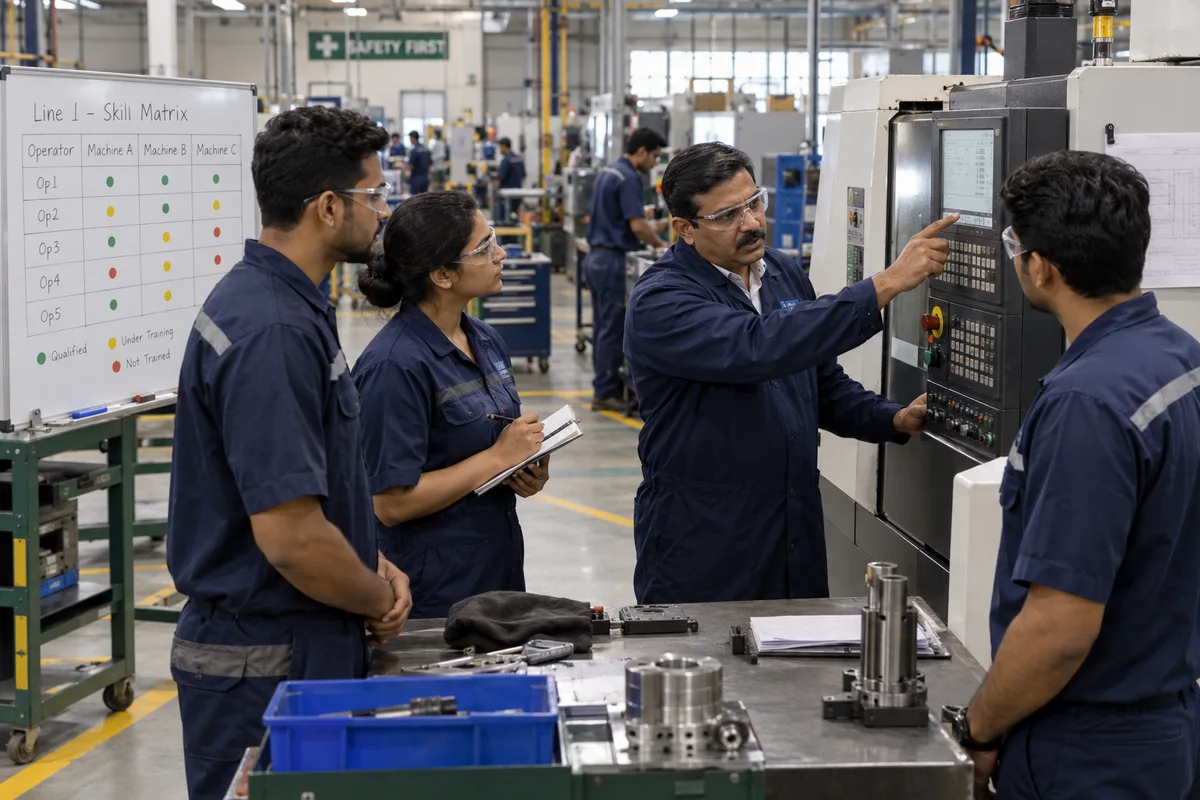
A skill matrix by customer and task
A grid of operators against each customer's products and tasks shows who may build what, so a changeover is staffed deliberately and not by guesswork.
02
Sign-off before a first build
A short check that training, drawings, labels and test steps are in place before a new product starts, with a name against each, protects the customer's audit.
03
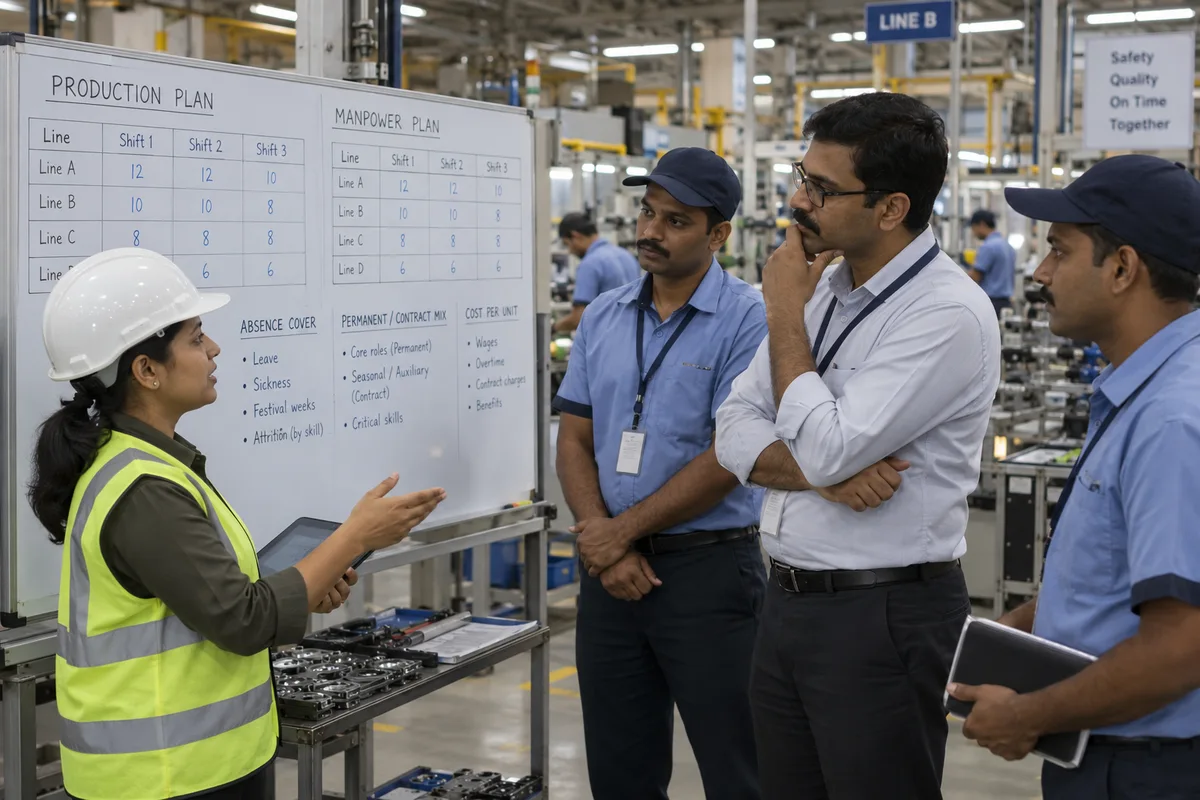
Hiring against each brand's forecast
Headcount is read against each customer's order season, so one brand's peak and another's gap are planned for instead of discovered.
04
Line leaders ready for people decisions
A short programme prepares promoted operators for warnings, rotas and fair allocation, so the line leader's first hard week is not unsupported.
Our services for electronic manufacturing services providers
Start with any one of these. Scope and fee are agreed in writing after a free first conversation.
HR audit
We start with the training sheet for your busiest customer and check whether each operator has signed it. Then we count the number of people can run each customer's test fixture and compare headcount with each brand's recent order volume. We ask line leaders what they find hardest, and take the latest customer complaint to find who owned each check along the way. Customer audit questions are read as a checklist for the people record. The report separates gaps in records, gaps in skill and gaps in ownership.
What you receive
Customer training record review with unsigned sheets listed by operator
Test fixture cover map by customer and shift
Complaint ownership trace showing who held each inspection stage
An example, not a client storyPicture a customer arriving to audit and asking for training records by operator name for one product. The audit would show in advance which sheets are signed, which are missing, and who built the product without the training. The owner would also learn which customer's file needs attention first, and why.
We begin with the skill matrix, listing each operator against each customer's products and tasks. The first-build sign-off follows: drawings, bill of materials, labels, test steps and trained people, each with a named signer. The changeover handover covers what the leaving customer's product leaves behind, and what the next customer's product needs. Last, we name an owner for each inspection stage, including goods in, in-process, final test and packing. Each is tried over a real build and corrected by the leaders who use it. Nothing is final until a line leader signs it.
What you receive
Skill matrix by customer, product and task with training status
First-build sign-off sheet with a named signer for each item
Inspection stage ownership list from goods in to packing
An example, not a client storySay a new product starts on a line that built a different customer's boards the day before. A first-build sign-off would check labels, fixtures, drawings and trained people before the first unit is built. The sheet would also tell the line leader which operators are cleared, so nobody is moved onto a product by guesswork alone.
For providers who want HR run for them, we take the weekly routine. We update the skill matrix as operators are signed off, read customer forecasts against headcount, and flag a thin week before it arrives. Training sheets for each customer are kept ready for audit, and gaps are chased with the line leaders. We meet new line leaders regularly to coach them through rotas, warnings and fair allocation. A plain weekly note covers coverage, gaps, absences and open people issues. Your adviser confirms any formal step.
What you receive
Weekly note on coverage, training gaps and open people issues
Updated skill matrix with training status per customer
Line leader coaching log kept privately for the owner
An example, not a client storySuppose a customer's forecast jumps for the coming month while another brand's work slows. We would see it in the weekly review, plan who moves between lines, and note which operators still need sign-off for the busier product. The owner would also receive a list of operators who still need sign-off before the busier month begins.
Because volumes follow each brand's season, we start from the forecast and agree which roles are permanent and which gaps are covered another way. Test fixture technicians and quality engineers are the hard hires, so candidates discuss a fixture fault and a customer complaint. Line leader candidates talk through a changeover between two customers. Operators are scored on care, safety and ability to switch products. Project coordinators are asked how they would handle a customer who asks for a record at short notice. Your adviser confirms checks and contract terms.
What you receive
Role profiles linked to each customer's forecast and product mix
Fixture and complaint scenario cards for technician and quality engineer interviews
Line leader changeover scenario used with every candidate
An example, not a client storyTake a provider where one brand's season ends and another begins. We would read both forecasts, decide which permanent roles are needed, and recruit operators who can learn more than one product. The offer would be based on the scored interview, and the first weeks would be planned around the customer the person will serve first.
Operators train on each customer's product against the drawing, bill of materials, labels and test steps, with a trainer signing off each task. Test fixture sessions spread knowledge beyond the two or three who know the fixtures. Line leaders learn rota fairness, warnings and handovers between customers. Quality engineers and project coordinators rehearse a customer audit with a mock request for training records and complaints. Sessions are planned around each brand's season, so training happens in the thin weeks. Trainers are the line leaders and technicians wherever possible, with a short record kept.
What you receive
Customer product training with a trainer sign-off for each task
Test fixture session to widen the group who can run each fixture
Mock audit session for quality and project staff
An example, not a client storyPicture a thin month on one customer's line, and a plan to use it for fixture training. Operators would learn the fixture, the sign-off would be recorded, and the next peak would find more people able to cover it. The owner would also have a signed record to show a customer who asks how the people were prepared.
Policies are written to answer a customer's audit questions without a scramble. The training record policy says who signs what and where it is stored. The changeover rule states what is cleared and checked between customers. The ownership rule names who holds each inspection stage, so a defect found at the customer has a clear trail. The line leader policy covers rotas and warnings. HR software holds the matrix, sign-offs and training by name, and your adviser confirms record-keeping and labour wording. The policies are explained to line leaders at the floor, not just filed.
What you receive
Training record and sign-off policy organised by customer
Changeover rule between customers with a clear-down check
Inspection stage ownership rule naming a holder for each stage
An example, not a client storySay a defect is found at the customer and nobody can say who checked that stage. With an ownership rule and named holders, the owner can trace it calmly, fix the process and speak to the customer with facts. It would also give the owner a short list of fixes to make before the next audit.
Questions owners of electronic manufacturing services providers ask us
We would build a skill matrix showing which products and tasks each operator is signed off for, then plan changeovers so nobody builds a product they are not cleared for. Trainers sign each task. We would also look at fair rotation across the three. Any pay or contract effect of the extra skill is confirmed with your adviser.
We would create a training sheet by customer and operator, with sign-off dates and trainer names, and review it weekly so gaps appear before the audit. HR software can keep the same records in one place. What must be retained, and for how long, is confirmed by your own adviser, because it depends on where you operate.
We would read each customer's forecast against headcount, decide which roles are permanent, and cross-train operators across products in the thin weeks. We would also plan fair overtime and rota rules for the busy weeks. We cannot predict demand. Contract choices and overtime terms are for your adviser to confirm. We would plan this with you each quarter.
We would run a short programme on rota fairness, warnings and handovers, then coach each leader through their first conversations. We would also write a simple record routine so decisions are consistent across lines. Formal steps such as warnings are confirmed with your adviser before they are used, so the leader is not left exposed.
Who does the work in electronic manufacturing services providers
Line leaders and shift supervisors
SMT and pick-and-place operators
Hand soldering and box build operators
Test fixture and calibration technicians
Quality engineers and audit coordinators
Component store and kitting staff
Customer project coordinators
Packing and dispatch staff
Roles we help you hire in electronic manufacturing services providers
GullyHR runs talent acquisition for permanent roles in electronic manufacturing services providers. For each role we agree the job description with you, find and screen candidates against it, and support the offer through to joining. Tell us the role and the number of people, and we start there.
We recruit permanent employees. We do not supply contract or temporary staff.
Where HR strains in electronic manufacturing services providers
One operator, three customers' products
A person may build three brands' units in a week, each with different torque, label and test steps, which makes slips easy.
Customer audits test the people record
Auditors ask who is trained for which task on which product, and a gap in the sign-off sheet falls on the whole unit and not one operator.
Volume jumps between customers
A big order from one brand lands as another slows, and hiring and shift plans cannot follow.
Line leaders were promoted operators
They are sharp on the line but unsure how to handle a customer's push, overtime requests and absent staff.
Nobody owns a defect found at the customer
The line, the test team and the quality engineer each point to another when a returned unit is traced.
Few people can run the test fixtures
Two or three technicians handle every customer's functional test setup, so leave or illness holds up a shipment.
HR topics for electronic manufacturing services providers
Start with the topics that matter most here: Learning and Development; Employee Administration; HR Strategy and Workforce Planning. Then work through the rest. Each topic is written for manufacturing, not in general.
Pull the training sheet for your busiest customer and see whether each operator has signed it.
Count how many people can run each customer's test fixture.
Ask your line leaders what they find hardest in the job.
Set last quarter's headcount beside each brand's order volume.
Take the latest customer complaint and find who owned each check.
Confirm with a qualified professional the labour, registration and record-keeping rules that bind your electronics assembly operation.
Confirm with a qualified professional. What applies to you depends on your business, your state and your arrangements, and it changes. This page describes practice. It does not state a legal position.
Why the best operator can struggle as shift supervisor, what it costs the line, and a practical way to choose, prepare and back new supervisors in any kind of plant.
A founder's guide to hiring freshers and running a first-year programme: campus or open drives, a screening round, a training plan by quarter, mentors and checkpoints.
Payroll says one joining date, the personal file says another and the manager remembers a third. How to establish a single trustworthy employee record and keep it that way.
How a D2C founder can decide which digital marketing work to hire for, which to buy from an agency, and which to split, with a worksheet and a five step plan.
Keep a skill matrix, brief each product change in a few minutes and sign off before solo work. Put a short job aid at the station.
Show the skill matrix and signed training for each task, not only attendance sheets. Keep it current, since auditors ask about one named person.
Plan from forecasts, keep a trained pool of flexible operators and agree overtime rules ahead. A written policy avoids quarrels in busy weeks.
Give them clear authority, short coaching on shift briefs and absence, and a regular talk with the plant head.
Name an owner per stage with the right to stop work, and write it down. When a defect returns, trace the stage instead of arguing.
We would check the training sheet for your busiest brand, count who can run each test fixture and ask line leaders what hurts. A good opening project is a skill matrix by customer and task with a sign-off step for new products. Scope is written down after the first conversation.
Tell us your industry, team size and the issue you want to address. Bring one example of where work gets delayed or ownership is unclear, and the deadline or decision you are working towards.