


















Why construction and real estate employees leave and how to understand why
Site engineers, supervisors, crews and sales teams leave for different reasons. How to ask what shaped their decision and act on it between projects.
8 min readRead articleA door and window maker cuts aluminium, uPVC or steel profiles, assembles frames, glazes them and fits them on site. A measurement slip or a rough fitting shows as a gap, a leak or a broken pane, and the customer sees it at once.

Not sure what you need? Tell us about your business in six short steps and we will come to the first meeting prepared.
Share your requirementsA door and window manufacturer fabricates frames and shutters in aluminium, uPVC or steel for homes, offices and buildings under construction. Profiles are cut to size, machined, welded or crimped, fitted with hardware, glazed and packed. The order starts with a site measurement and a drawing, and the factory builds each piece to size. Installers then fix frames in openings, level and seal them and add glass or shutters. Glass is heavy, fragile and sharp, and installation can take place on upper floors. Orders come from builders, dealers and homeowners. A measurement error, a bad cut or a poor seal leads to a remake or a leak complaint, and the fabricator, measurer and installer each hold part of the quality. See also HR for construction and real estate.
These are the places the people side of this kind of business tends to give way. The rest of this page works through them.
HR here has to work for each of these groups, not only the office. The set-up below is written with all of them in mind.
GullyHR runs talent acquisition for permanent roles in door and window manufacturers. For each role we agree the job description with you, find and screen candidates against it, and support the offer through to joining. Tell us the role and the number of people, and we start there.
We recruit permanent employees. We do not supply contract or temporary staff.
Every business interviews, but few have a written process that works the same way for every role and every interviewer. GullyHR designs yours, from the role brief to the offer, trains your managers to run it, and can run it for you on the roles you hand us.
We agree what the role must deliver, the must-have and nice-to-have skills, and how each will be scored.
Screening call, assessment, interview rounds and decision points, sized to the role and the number of people you hire.
Structured questions for each role family and a rating guide, so two interviewers judge the same answer the same way.
A short briefing for your managers on what to ask, what to avoid and how to give a clear yes or no.
Who approves, how the offer is made, and how candidates are kept informed from first call to joining.
A wrong opening size is copied into the cut list, and the factory discovers it only at fitting.
Panes crack in handling, transit and fitting, and no one is clearly responsible.
Fitting on upper floors and in finished homes needs care for safety and for floors and walls.
A good cutter or welder gives clean corners and a tight fit, and the skill takes years.
Large builder lots and small dealer orders share the same cutting line, and priorities change daily.
Poor sealing shows only with the first heavy rain, long after the crew has moved on.
Start with the topics that matter most here: Onboarding and Probation; Compensation, Payroll and Benefits; Health, Safety and Wellbeing. Then work through the rest. Each topic is written for construction and real estate, not in general.
A first day that is the same for the fifth joiner as the first.
Salary structure, payroll inputs and a month that closes on time.
Induction, records, incident reporting and follow-through.
How many people, in which roles, by when, and what they will cost.
Structure, reporting lines and who is allowed to decide what.
Requisition to joining, the same way every time.
Records, attendance, leave and the day-to-day HR that must simply work.
Goals, reviews and ratings that hold up in a conversation.
Training planned from need rather than from the calendar.
Named backups for the roles that cannot be vacant.
Communication, recognition and the conditions people actually work in.
Two routes, one for complaints, one for conduct, kept separate.
Policies a manager can apply, and obligations with owners and dates.
Who leaves, when, why, and which of them mattered.
Resignation to relieving letter, in a defined order.
Records that survive people, and approvals that do not queue.
A short monthly pack management actually reads.
An HR function that runs the same way every month.
The pieces a door and window manufacturers business puts in place, in an order that makes each easier. Open any card for the detail.
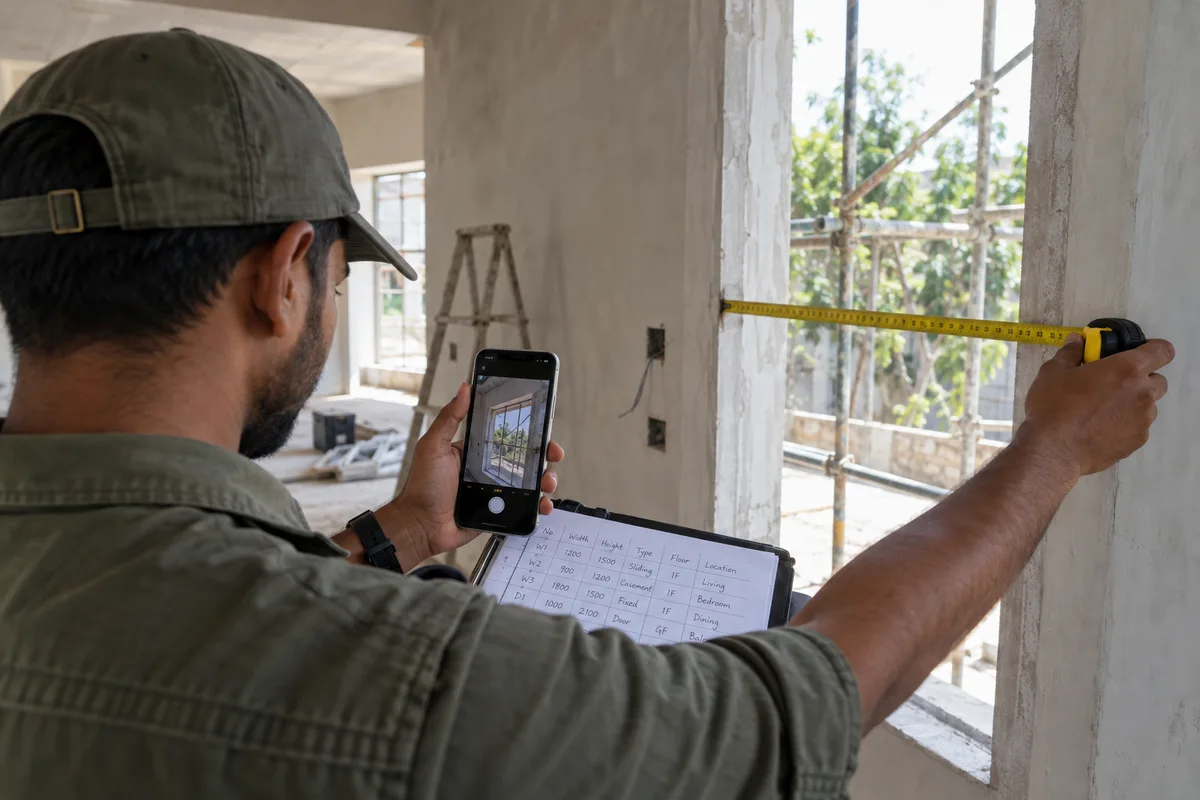
Opening sizes, levels, wall type and floor level noted on a sheet, reviewed before the cut list.
Opening sizes, levels, wall type and floor level noted on a sheet, reviewed before the cut list. See role design and job descriptions.
A person or team responsible for crates, loading and unloading with a breakage log.
A person or team responsible for crates, loading and unloading with a breakage log. See HR reporting and analytics.
Induction on safety at height, protecting floors, sealing and customer manners.
Induction on safety at height, protecting floors, sealing and customer manners. See employee onboarding process.
A skill scale with tasks and pay at each level.
A skill scale with tasks and pay at each level. See compensation benchmarking.
A short log of complaints by installer and sealing method, reviewed with the crew.
Before changing anything, find out what is true today. Work through the checks using a recent operating period. The time needed depends on the records you hold; note missing evidence and use the findings to choose a priority.
Share your requirementsConfirm with a qualified professional. What applies to you depends on your business, your state and your arrangements, and it changes. This page describes practice. It does not state a legal position.
The services below fit this kind of business best. Each starts by recording where you stand, and every later report compares against that. We do not promise outcomes.
Clear duties for measurement review and glass handling so errors do not reach the cut list.
Simple remake, breakage and complaint records by person and job.
A proper induction for installers who will work at height in customers' buildings.
Grades and pay for fabricators and installers that reflect real skill.
Start with a free conversation, or see the paid HR Diagnostic.
Understand the business, its workforce, current processes and HR challenges.
Find the missing, weak, inconsistent or person-dependent processes.
Create the structure, processes, policies, SOPs, dashboards and systems needed.
Help HR and department managers actually adopt the new system.
Digitise repetitive and approval-based workflows where it is worth doing.
Track hiring, attendance, employee cost, performance, training and attrition.
Strengthen the people-management system continuously, not once.
From the GullyHR blog: one on HR in construction and real estate, and one on each of the topics this page points to.

Site engineers, supervisors, crews and sales teams leave for different reasons. How to ask what shaped their decision and act on it between projects.
8 min readRead article

A first-week plan for bringing in an outside specialist: what access to give, how to protect client data, and the confidentiality steps to settle on day one.
7 min readRead article
Simple variable pay structures for product and engineering teams: four options, why individual metrics backfire, a build plan and a one page outline to adapt.
6 min readRead article
A shift, weekly and monthly safety routine for rubber plants that names who checks platen guards, mill trip bars, autoclave doors, burst-test cages and slings, and who acts on near misses.
7 min readRead articleMore on the GullyHR blog.
Give the measurer a checklist, have a second person review it before the cut list and track errors by measurer. Most errors come from rushed or unchecked sheets.
Name a person or team for handling and keep a breakage log by stage. When the stage is known, the cause and training need become clear.
Induct them on harness and edge protection, supervise their first jobs and sign them off before they go alone. Confirm legal obligations with a qualified professional.
Recognise skill with a distinct grade and pay, involve them in setting standards and train juniors alongside them. Compare pay with nearby fabricators.
Log each complaint by installer, product and sealing method, and review the pattern with the crew. Then adjust training and checks.
We would count remakes last quarter from wrong measurements, look at your glass breakage record and ask which installers did upper-floor work. A good first piece of work is a measurement checklist plus a breakage log. Scope is agreed in writing afterwards.
All 8 business types in construction materials · Find another business type
See all HR topics for construction and real estate, or another industry.
Tell us your industry, team size and the issue you want to address. Bring one example of where work gets delayed or ownership is unclear, and the deadline or decision you are working towards.