
HR for Paper and Printing: press minders, finishing lines, season peaks and artwork hand-offs
Paper and printing units run on tickets, press hours and tight delivery. The work depends on a few skilled minders and mechanics, and delays upstream land on finishing staff, who also face seasonal rushes and hand injuries.
Not sure what you need? Tell us about your business in six short steps and we will come to the first meeting prepared.
Share your requirementsUnits in this group convert paper, board and film into finished goods: notebooks, bags, labels, brochures, cartons, forms and industrial prints. Work moves on a job ticket through artwork and prepress, plate or file, press, then cutting, folding, binding, lamination and packing. Orders come from schools, brands, agencies and packers, some with fixed dates tied to exams, festivals or product launches.
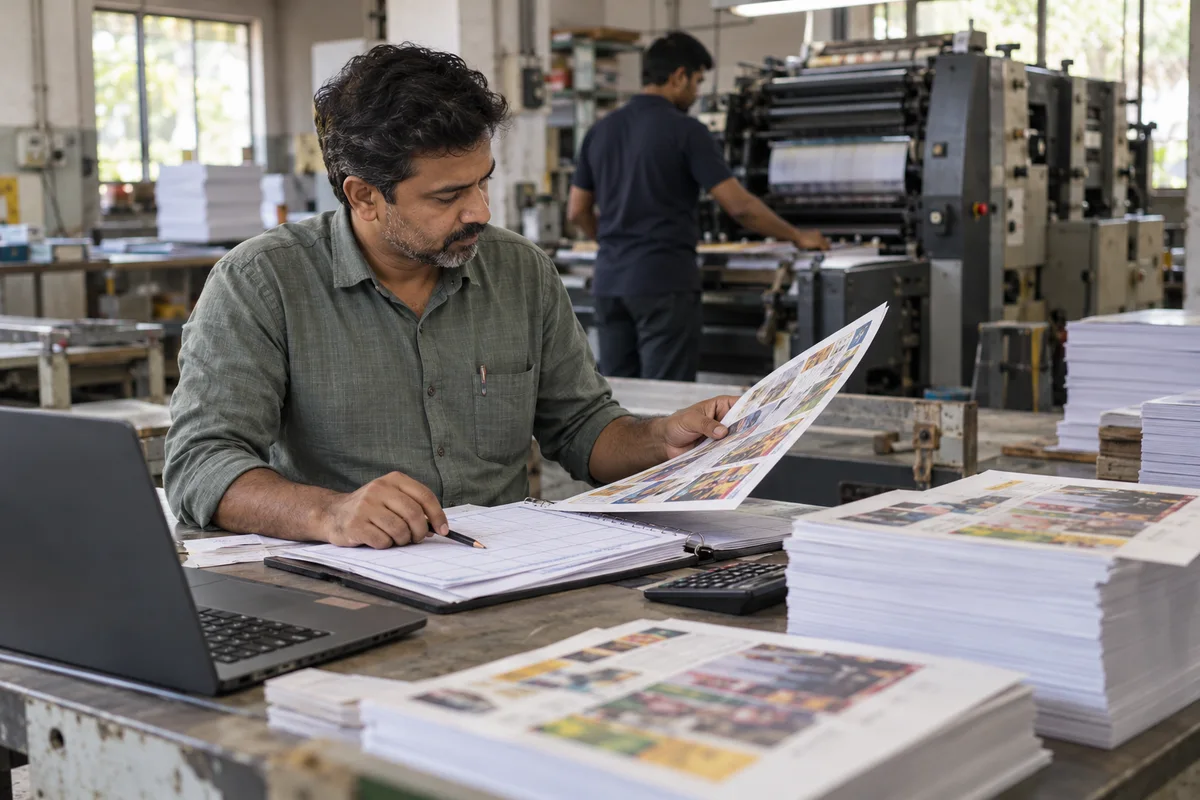
The people side is shaped by a few skilled hands and a long chain. A press minder or machine setter decides whether the job runs well, and a single mechanic may keep the forming machines going. Errors in artwork or plates surface late at the press, and delay upstream lands on finishing. Helpers do repeat work for hours, shifts run into the night in busy weeks, and cutters, folders and stitchers can injure hands.
What paper and printing have in common
The senior press hand is the quality gate
On an offset, label or industrial press the minder sets register, ink and speed by feel. That skill is rarely written down and few young people are being trained. Pair a learner with the minder and track what they can set alone. See learning and development.
Upstream errors surface at the press
Wrong artwork, plate or estimate shows up when machines are already running. A simple sign-off at each hand-off and a culture where staff can stop a job early save waste and arguments. Clear roles help; see role design.
Finishing absorbs everyone else’s delay
Cutting, binding and packing run last, so late presses mean long nights for the people who have no say. Honest delivery promises, and fair overtime pay, keep that crew from leaving.
Seasons bring rushes and casual hands
School term, festivals and exam cycles pull orders into short windows. Units add casual helpers with little induction. A short safety and quality briefing and a pool of returning hands steadies the rush. See onboarding.
Hands are at risk on cutters and stitchers
Guillotines, stitching machines, die cutters and rewinders injure hands when people rush or tire. Safety is a habit built through supervision and rest, not only guards. See health and safety.
Business types in paper and printing
Choose the one closest to yours. Each page covers how that kind of unit is run, where its people processes strain, and the HR processes worth putting in place first.
- Paper Product MakersReels to goods: forming machines depend on one mechanic and demand peaks around school and festival seasons.Explore HR guidance
- Commercial PrintersJob-by-job work; estimators, prepress and press minders must agree, and promises made at the counter reach the floor.Explore HR guidance
- Label and Sticker PrintersNarrow-web changeovers and registration depend on one or two hands; rewinding is dull and error prone.Explore HR guidance
- Offset Printing PressesThe minder sets make-ready by hand and new minders are not being trained, so succession matters most here.Explore HR guidance
- Digital Printing ShopsCounter staff and operators work side by side with same-day demand, file fixes and casual rush help.Explore HR guidance
- Industrial Printing UnitsSolvents, curing, heavy cylinders and long shifts bring health and registration discipline to the front.Explore HR guidance
- Paper Bag MakersMachine setters and piece-paid handle fixing set this apart, with spiky demand and dust and glue exposure.Explore HR guidance
Roles we help you hire in paper and printing
GullyHR runs talent acquisition for permanent roles in paper and printing. For each role we agree the job description with you, find and screen candidates against it, and support the offer through to joining. Tell us the role and the number of people, and we start there.
- Machine mechanics
- Plate makers
- Press mechanics and electricians
- Slitter and sheeter operators
- Cup, plate and envelope forming operators
- Stitching and binding staff
- Feeders and stackers
- Counting and carton packing crew
- Reel store handlers
- Quality checkers
- Line supervisors and dispatch staff
- Prepress and artwork operators
- Offset press operators
- Colour matchers and press assistants
- Guillotine and folding machine operators
- Binding, perfect-binding and lamination staff
- Customer service executives and estimators
- Packers and delivery riders
- Production supervisors
- Narrow-web press operators
- Press helpers and unit cleaners
- Rotary die and slitter operators
- Rewinder and reel inspection staff
- Prepress and artwork staff
Job descriptions for this sector
We recruit permanent employees. We do not supply contract or temporary staff.
We set up the interview and hiring process for paper and printing
Every business interviews, but few have a written process that works the same way for every role and every interviewer. GullyHR designs yours, from the role brief to the offer, trains your managers to run it, and can run it for you on the roles you hand us.
1. Role brief and scorecard
We agree what the role must deliver, the must-have and nice-to-have skills, and how each will be scored.
2. Stages and sequence
Screening call, assessment, interview rounds and decision points, sized to the role and the number of people you hire.
3. Question bank and scoring
Structured questions for each role family and a rating guide, so two interviewers judge the same answer the same way.
4. Interviewer readiness
A short briefing for your managers on what to ask, what to avoid and how to give a clear yes or no.
5. Offer and follow-up
Who approves, how the offer is made, and how candidates are kept informed from first call to joining.
HR processes that matter most for paper and printing
Each business-type page above goes into the processes that fit it best. These are the ones that come up most across the whole group.
- Learning and development
A learner path for minders and setters moves skill from one pair of hands to several before the senior leaves.
- Succession planning
The senior press operator is the quality gate; naming and growing a successor protects every job.
- Workplace health, safety and wellbeing
Cutter, stitcher and die-cutter injuries and solvent exposure need routines, not only guards.
- Attendance, shift and leave
Night runs and season peaks need clear rosters, overtime rules and rest so finishing crews do not burn out.
- Employee onboarding
Casual helpers in rush weeks need a short, repeatable induction on safety and quality before they touch machines.
- Compensation and rewards
Piece rates on handle fixing and finishing can reward speed over quality; the pay basis needs care.
Questions owners ask
Make teaching part of the role and reward it. Pair a learner for set periods, list the settings they should master and sign them off in steps. Fear of being replaced fades when the senior sees a clear path for themselves.
Plan headcount early, keep a list of returning casual hands, and run a short induction on safety and quality. Add a lead for each shift so new helpers are supervised. Agree overtime and rest rules before the rush, not during it.
They absorb delays from every earlier stage, work long nights and earn the least. Fair overtime, a say in delivery promises and a path to machine roles help. Exit talks show the same few reasons.
The core pieces repeat: induction, skill ladders, rosters and pay. A label unit leans on changeover and registration skill, while a bag unit leans on setters and piece-paid helpers. We tailor to your process.
We would look at who holds press and setting skill, how hand-offs and delays reach finishing, how seasonal helpers join, and where hands get hurt. We then suggest first steps, and the scope is agreed in writing afterwards.