HR for Shaft Manufacturers: Turning, Straightening and Long Parts
A shaft maker turns long bar into drive shafts, spindles and axles held to straightness and diameter limits. The people problem is heavy handling, a few skilled lathe hands and patient inspection.
Make this work for your business. Share your team size, priorities and what you need help with. We’ll use your brief to prepare for the first conversation.
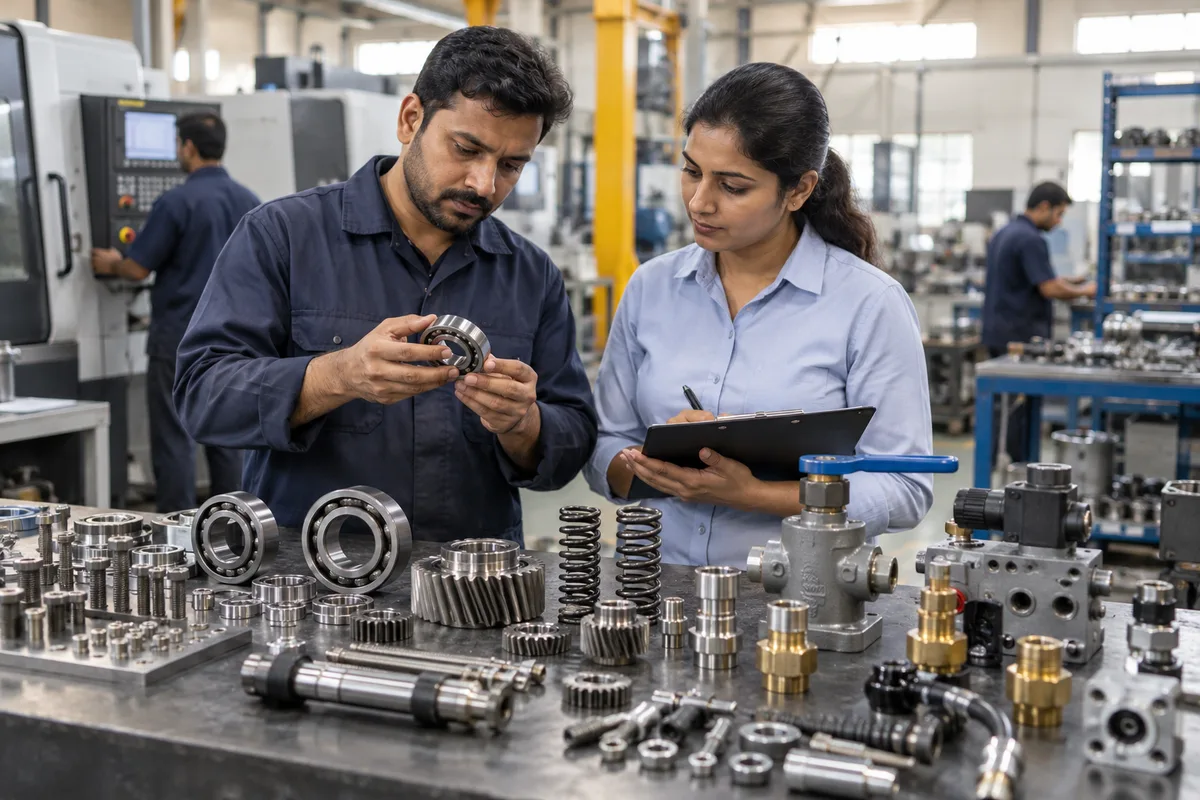
A shaft manufacturer cuts bar to length, centres the ends, turns diameters and shoulders, cuts keyways and splines, heat treats or induction hardens, straightens, then grinds to final size. Parts are long and heavy, so handling matters. Orders come as drawings from pump makers, motor builders and vehicle suppliers, in medium batches with fixed delivery dates. Straightening under a press is a hand skill few can do well, and cylindrical grinding sets the final fit. Because several units run older lathes, output depends on each operator's feel for a particular machine. Related reading: HR for manufacturing.
Plan→
Hire→
Onboard→
Manage→
Develop→
Perform→
Engage→
Retain→
Exit→
Improve
When HR is weak in shaft manufacturers, you may see
Long, heavy bars injure handlers
Press straightening skill sits with very few
Old lathes suit only certain operators
Medium batches mean constant re-setting
Crane and trolley work goes to whoever is near
Final grinding is the last chance to catch a bend
These are the places the people side of this kind of business tends to give way. The rest of this page works through them.
Why GullyHR for shaft manufacturers
Shafts that leave straight, with more than one pair of hands.
For owners of shaft works who turn, harden, straighten and grind long bar to drawing. We set up the skills cover, handling routines and final checks that keep a bend from reaching the customer.
01
Name the straightening skill
A written skill card for press straightening, with a second hand trained beside the first, so one absence no longer leaves hardened shafts waiting to be made true.
02
A trained handling crew
A named crew for long bars, with lifting aids and a crane signal routine, so heavy handling stops falling to whoever happens to be standing nearest the trolley.
03
A card for every older lathe
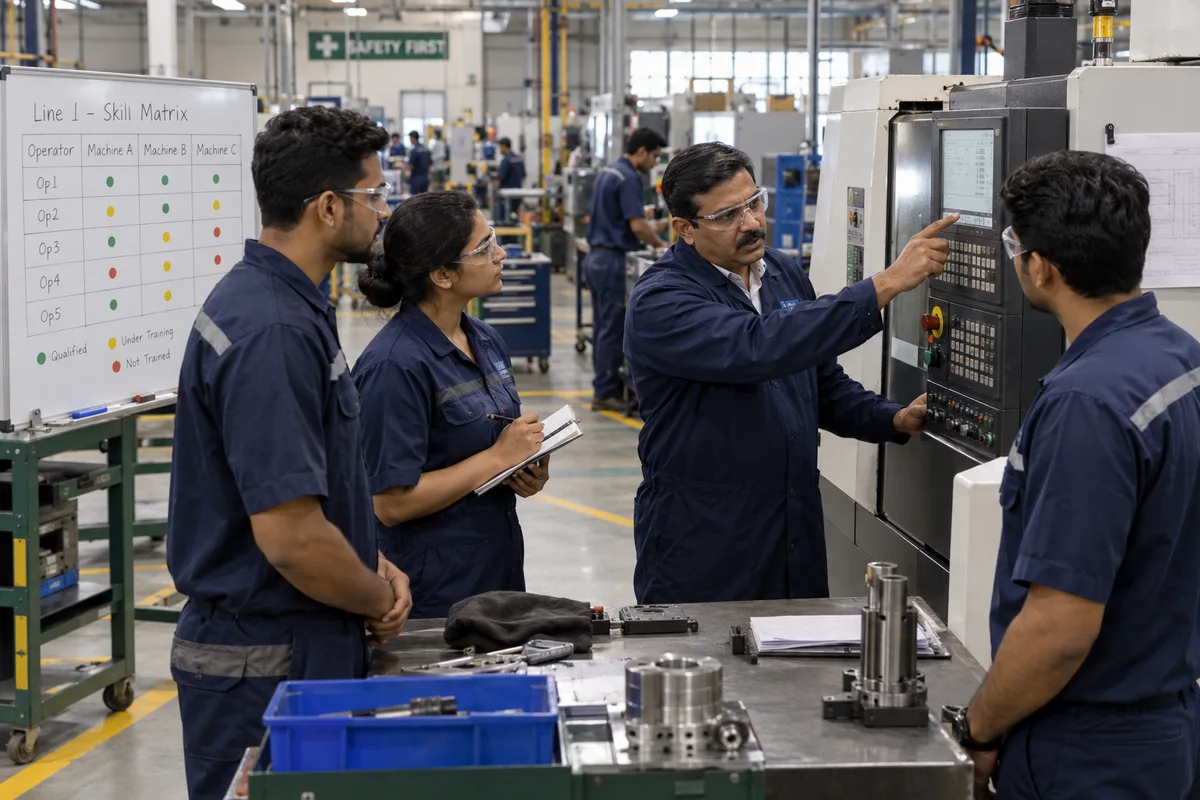
A one-page card per lathe records which operators run it well and what the machine needs, so output no longer rests on a single person's feel.
04
Set-up sheets for repeat shafts
A written sheet for each repeat shaft covering centres, shoulders and keyways, so medium batches restart quickly and the final grinding check stays clear of dispatch pressure.
Our services for shaft manufacturers
Start with any one of these. Scope and fee are agreed in writing after a free first conversation.
HR audit
The audit starts at the straightening press, because that hand skill sits with so few people. We then read the near-miss log from the crane and trolley bays and compare each lathe operator against the machines they actually run. Next comes the final grinding and run-out gauge station, where a bend should be caught. We talk to inspectors, keyway milling hands and dispatch staff, and read how overtime falls in delivery weeks. Each finding is tied to a named station, so the owner can see where one absence would stop a shaft order.
What you receive
A map of stations that depend on a single named person
A handling risk note covering long bars, trolleys and crane work
A trace of one returned shaft from sawing to dispatch
An example, not a client storyPicture a plant where the only press straightener is away for a week and hardened shafts pile up bent. The audit would show that nobody else has been trained, that dispatch leans on the grinder to pass doubtful parts, and that a second straightener should be named first. That is the kind of gap an audit finds quickly.
Process design begins with three routines that the plant runs by habit. We walk the straightening press with the hand who does it and write each step in the order it happens. We then write the handling routine for long bars between saw, lathe, hardening and grinder, including who signals the crane. The third routine is the final gauge check, drawn so dispatch cannot hurry it. Repeat shafts get set-up sheets afterwards. Each routine ends on a single page that a new hand can follow at the machine.
What you receive
A straightening routine written beside the press operator
A long bar handling and crane signal card for each bay
A final gauge check procedure kept apart from dispatch
An example, not a client storySay a pump maker sends a repeat order for a shaft last made months ago, and the lathe hand who set it has left. With no sheet, the new operator guesses at centres and shoulders and scraps the first bars. A written set-up sheet would have saved that morning. It would take one afternoon to write.
Week to week, we keep the rota that matches operators to the lathes they run well, so older machines are not handed to whoever is free. We follow the handling crew's attendance, log near misses and chase the actions. Before a delivery week we agree overtime with the supervisors and check that the final grinding and inspection stations are covered. A short note goes to the owner on Friday. Anything that slips, such as a missed sign-off, is raised with the shift lead the same day.
What you receive
A weekly rota matching operators to lathes and crane duties
A monthly handling incident review with named actions
A Friday note on attendance, overtime and station cover
An example, not a client storySuppose three delivery dates fall in one week and two turners are on leave. Without a plan, whoever is near the crane gets pulled off their station, and inspection is skipped. With a managed rota, cover is agreed on Monday and the grinding check keeps its own person. The owner hears about it on Friday, not after a complaint.
Hard-to-fill roles here are the straightening press hand, the cylindrical grinder and the inspector who is patient with a micrometer. We write each role with the shaft sizes and machines it covers, then design a short practical task: read a drawing, set a turned diameter or gauge a bar for bend. Two people score the task against the same sheet. Candidates also see the handling side of the job before they accept. Offers go out only after the practical result and the references are read together.
What you receive
Role profiles for straightener, grinder, turner and inspector
A practical trial task scored on one common sheet
An interview guide that includes a walk through the handling bay
An example, not a client storyTake a works that must replace a grinder who is retiring. The loudest candidate talks well, but the quiet one holds a diameter on the trial bar and reads the gauge correctly. A scored practical trial would put that difference on paper before an offer is made. The offer then follows the evidence, not the impression.
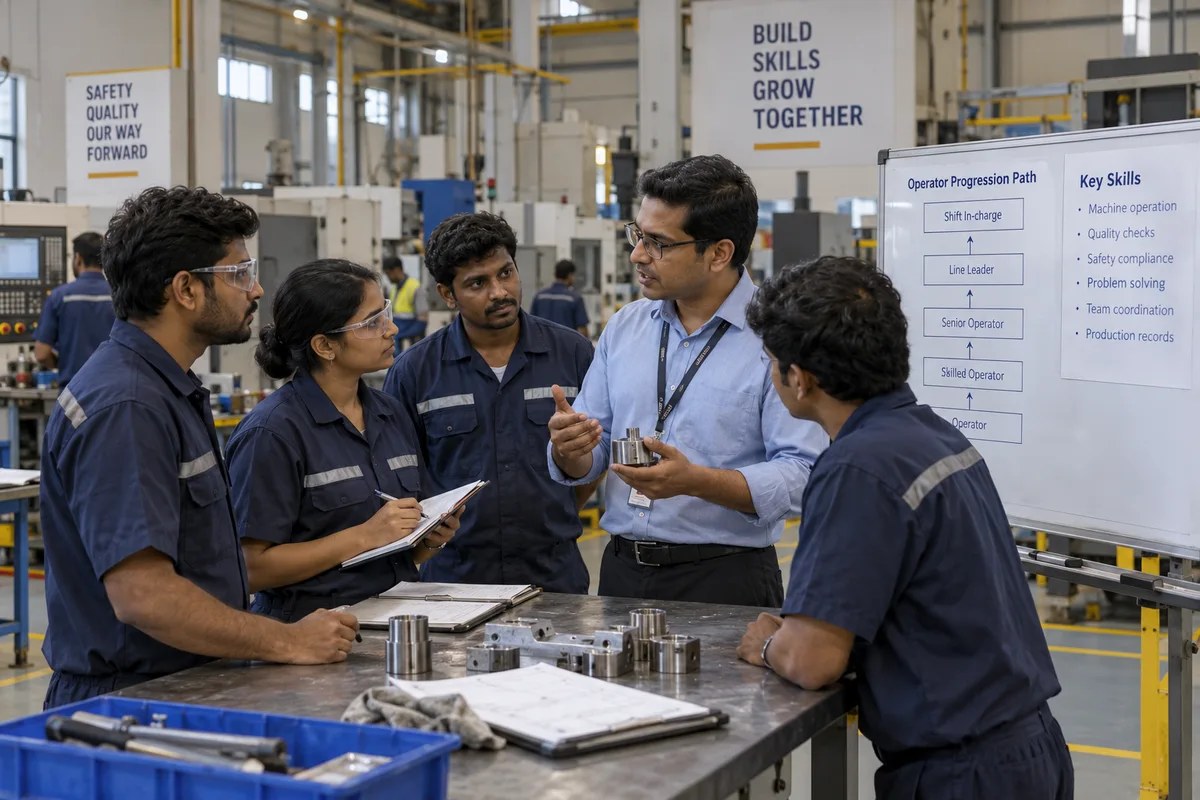
Supervisor sessions cover how to brief a crew before a long bar move, how to hand over a lathe between shifts and how to stop a doubtful part reaching dispatch. Skills sessions sit beside the press and the older lathes, with the experienced hand teaching and a checklist recording what the learner has shown. We also teach the crane and trolley handlers the signals and lifting habits the plant has agreed. Attendance and sign-offs go into the person's record, so the next supervisor knows what has been taught.
What you receive
A supervisor session on briefing, handover and stopping a part
A skills ladder for the learner straightener with sign-offs
A handler session on signals, aids and long bar posture
An example, not a client storyPicture a new lathe hand placed on an older machine with a quick demonstration and nothing else. By the second week the shoulders are cut oversize and the operator is blamed. A short skills ladder with a named teacher would have set the pace sensibly. Teaching it properly takes days, not months, and saves the scrap.
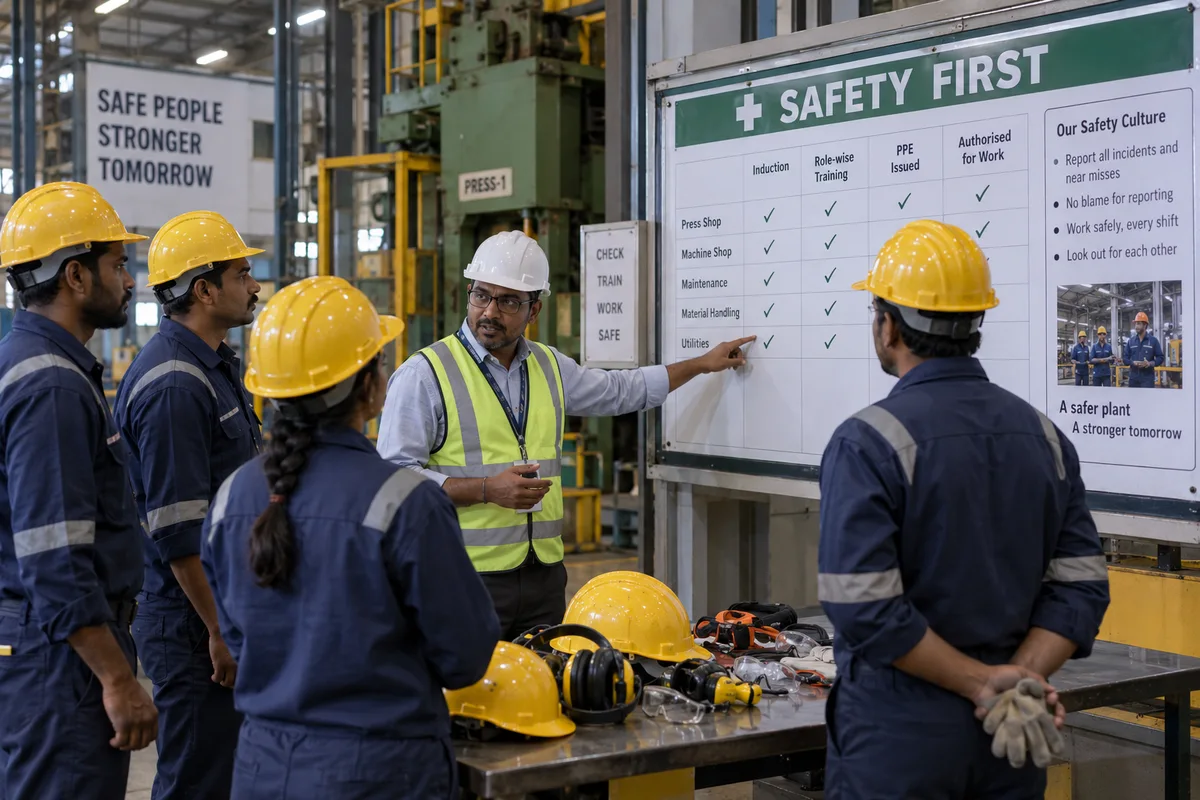
The handbook gets plain pages for the jobs that hurt people: long bar lifting, crane and trolley authorisation, and keeping clear of the press during straightening. It also covers skill grading for lathe and grinding roles and how overtime is offered in delivery weeks. In the software we hold each operator's machines, training dates and gauge sign-offs, so a supervisor can see who may do what. Your own adviser confirms the legal wording. Supervisors receive a printed one-page summary for the bay noticeboard, with the crane rules in large type, and a copy goes to every crane handler.
What you receive
A handbook section on long bar handling and crane authorisation
A skill grade table for turning, grinding and straightening
An HR system record of machines, training dates and sign-offs
An example, not a client storySay an operator is told to run the crane because nobody else is free, though he was never shown the signals. A written authorisation rule and a training record in the system would have made that instruction impossible to give by accident. Neither the instruction nor the blame would have arisen.
We start by asking him to describe the skill in his own words, then write it as a card and name him as the trainer, with recognition in his grade. A second hand learns beside him on real shafts. It protects delivery dates and treats his craft as an asset. Any pay change is discussed with your own adviser.
Yes. We would name a small handling crew, agree the signals with them and write a short authorisation card, so the job stops falling to a random hand. We also set up the near-miss log for long bars. Your adviser confirms what training and records your local rules expect for crane work. The crew list is reviewed each quarter.
It is quick to do and pays back at the next absence. Each card records the machine's quirks, who runs it well and what a learner should be shown first. Supervisors then allocate people to lathes on facts, and nobody is left guessing when the usual operator is on leave or has resigned. It also helps a learner reach a useful pace sooner.
We write the final gauge check as a separate step, name who owns it and agree that dispatch cannot overrule it without the owner's say. We also review each return together, without blame. The routine keeps a bent shaft from leaving, and your adviser can confirm any record you must retain. Dispatch still gets its dates through better planning.
Who does the work in shaft manufacturers
Sawing and cutting staff
Centre lathe and CNC turning operators
Keyway and spline milling operators
Induction hardening operators
Straightening press hands
Cylindrical grinding operators
Inspectors with micrometer and run-out gauges
Crane and trolley handlers
Packing and dispatch staff
Roles we help you hire in shaft manufacturers
GullyHR runs talent acquisition for permanent roles in shaft manufacturers. For each role we agree the job description with you, find and screen candidates against it, and support the offer through to joining. Tell us the role and the number of people, and we start there.
We recruit permanent employees. We do not supply contract or temporary staff.
Where HR strains in shaft manufacturers
Long, heavy bars injure handlers
Lifting bars onto lathes and racks without aids leads to strains and drops, and helpers carry the most risk.
Press straightening skill sits with very few
A straightening hand judges the bend by sight and feel. When this person leaves, nobody else can step in, and rejections climb.
Old lathes suit only certain operators
Each machine has habits one person knows, and moving people between lathes drops quality for days.
Medium batches mean constant re-setting
Different diameters and lengths each week mean setting time that is lost when instructions are only spoken.
Crane and trolley work goes to whoever is near
Untrained handlers move heavy parts, and near misses go unreported.
Final grinding is the last chance to catch a bend
Pressure to ship late rushes inspection, and a bent shaft reaches the customer.
HR topics for shaft manufacturers
Start with the topics that matter most here: Health, Safety and Wellbeing; Learning and Development; Career and Succession Management. Then work through the rest. Each topic is written for manufacturing, not in general.
The pieces a shaft manufacturers business puts in place, in an order that makes each easier. Open any card for the detail.
Name the straightening skill and train a second hand
Pick a keen operator, set a path using real parts and sign off each stage.
What this coversHide
Pick a keen operator, set a path using real parts and sign off each stage. Learning and development can shape the plan.
Give heavy handling a trained crew and aids
Named crane and trolley handlers with a short practical course, V-block and sling aids at each station, and a near-miss book.
What this coversHide
Named crane and trolley handlers with a short practical course, V-block and sling aids at each station, and a near-miss book. See health, safety and wellbeing.
Keep a card for each lathe
The machine's quirks and best settings, written by the operator who knows it best and pinned beside it.
What this coversHide
The machine's quirks and best settings, written by the operator who knows it best and pinned beside it.
Prepare set-up sheets for repeat shafts
One sheet per part number listing tools, speeds and checks, so a changeover does not wait on one person's memory.
What this coversHide
One sheet per part number listing tools, speeds and checks, so a changeover does not wait on one person's memory.
Shield the final check from dispatch pressure
A rule that every shaft is gauged for run-out before it leaves, with a named signer.
What this coversHide
A rule that every shaft is gauged for run-out before it leaves, with a named signer. Performance management can link it to team goals.
Ask who straightens shafts and who could step in if that person were absent.
Count handling injuries and near misses logged over the last half year.
Write down which lathes only one operator runs well.
See how many repeat shafts have a written set-up sheet.
Take the latest shaft a customer returned and trace who gauged it.
Confirm with a qualified professional the registration, record-keeping and staffing rules that cover a plant turning and grinding shafts.
Confirm with a qualified professional. What applies to you depends on your business, your state and your arrangements, and it changes. This page describes practice. It does not state a legal position.
Why the best operator can struggle as shift supervisor, what it costs the line, and a practical way to choose, prepare and back new supervisors in any kind of plant.
A shift, weekly and monthly safety routine for rubber plants that names who checks platen guards, mill trip bars, autoclave doors, burst-test cages and slings, and who acts on near misses.
A founder's guide to hiring freshers and running a first-year programme: campus or open drives, a screening round, a training plan by quarter, mentors and checkpoints.
Give the role a title and pay, bring the person into quality decisions and ask for a junior to train. Respect for the skill counts as much as the money.
Aids and trained handlers. Decide who may use the crane, check slings before each lift and keep a book where near misses are noted without blame.
Ask each operator to write down the machine's habits, and move a second person onto it slowly. The knowledge is then shared, not lost.
On a one-page sheet per part, kept at the machine and updated after every run. The supervisor reviews it monthly.
Make the final run-out gauge a fixed step with a signature, and agree dispatch times with sales so inspection is not squeezed.
We would ask who can straighten, review handling injuries and near misses, and see which lathes hang on one person. A handling crew and a second-straightener plan make a sensible opening. Afterwards the scope goes into writing.
Tell us your industry, team size and the issue you want to address. Bring one example of where work gets delayed or ownership is unclear, and the deadline or decision you are working towards.