


Industries
Why NGO and social enterprise employees leave and how to understand why
Staff at NGOs and social enterprises leave for funding, field and workload reasons as well as pay. How to understand why, listen early and act.
7 min readRead articleA church, temple, mosque, gurdwara or faith-based charity runs on calling, volunteers and the trust of a community. Here is how to organise paid staff, clergy and volunteers fairly and clearly.

Not sure what you need? Tell us about your business in six short steps and we will come to the first meeting prepared.
Share your requirementsA church, temple, mosque, gurdwara, monastery or faith-based charity serves a community through worship, teaching, welfare and activities such as schools, clinics, hostels or relief work. The people involved range from clergy and religious teachers, who may be appointed by a body outside the organisation, to a small group of paid staff such as an administrator, accountant, caretaker, cook, musician or driver, and a much larger group of volunteers who give hours each week. A trust, board or committee of members oversees the work, and its members change over time. Roles rest on devotion and personal relationships, so formal terms, pay scales and written duties may be thin. Money comes from donations, offerings and grants, and those who give expect careful use. Festivals, services and community drives make the calendar uneven, and some of those who serve are also members of the congregation, which makes a disagreement personal and public. If the organisation runs a school, a children's programme or a residential home, safeguarding and conduct become central concerns.
These are the places the people side of this kind of business tends to give way. The rest of this page works through them.
HR here has to work for each of these groups, not only the office. The set-up below is written with all of them in mind.
GullyHR runs talent acquisition for permanent roles in churches and faith-based organisations. For each role we agree the job description with you, find and screen candidates against it, and support the offer through to joining. Tell us the role and the number of people, and we start there.
We recruit permanent employees. We do not supply contract or temporary staff.
Every business interviews, but few have a written process that works the same way for every role and every interviewer. GullyHR designs yours, from the role brief to the offer, trains your managers to run it, and can run it for you on the roles you hand us.
We agree what the role must deliver, the must-have and nice-to-have skills, and how each will be scored.
Screening call, assessment, interview rounds and decision points, sized to the role and the number of people you hire.
Structured questions for each role family and a rating guide, so two interviewers judge the same answer the same way.
A short briefing for your managers on what to ask, what to avoid and how to give a clear yes or no.
Who approves, how the offer is made, and how candidates are kept informed from first call to joining.
Clergy and long-serving helpers are expected to serve without counting hours, so pay, rest and leave are rarely discussed and resentment builds quietly.
A past board agreed an allowance or housing for a person, but nothing was written, and the new board disputes it.
People give time with no clear role, training or limit, and some are asked to handle cash, children or sensitive information without checks.
Where adults work with children or vulnerable people, expectations on behaviour and how concerns are raised sit in unspoken norms.
A complaint about a staff member or leader touches the whole community, and there is no agreed way to hear it fairly and privately.
Start with the topics that matter most here: Policies, Compliance and Governance; Employee Relations; Employee Engagement and Experience. Then work through the rest. Each topic is written for ngos and social enterprises, not in general.
Policies a manager can apply, and obligations with owners and dates.
Two routes, one for complaints, one for conduct, kept separate.
Communication, recognition and the conditions people actually work in.
How many people, in which roles, by when, and what they will cost.
Structure, reporting lines and who is allowed to decide what.
Requisition to joining, the same way every time.
A first day that is the same for the fifth joiner as the first.
Records, attendance, leave and the day-to-day HR that must simply work.
Salary structure, payroll inputs and a month that closes on time.
Goals, reviews and ratings that hold up in a conversation.
Training planned from need rather than from the calendar.
Named backups for the roles that cannot be vacant.
Induction, records, incident reporting and follow-through.
Who leaves, when, why, and which of them mattered.
Resignation to relieving letter, in a defined order.
Records that survive people, and approvals that do not queue.
A short monthly pack management actually reads.
An HR function that runs the same way every month.
The pieces a churches and faith-based organisations business puts in place, in an order that makes each easier. Open any card for the detail.
A letter for each paid person covering role, hours, pay, leave, housing or allowances and reporting line, discussed in person first.
A letter for each paid person covering role, hours, pay, leave, housing or allowances and reporting line, discussed in person first. The HR documentation process gives the format.
A short register of decisions on pay, allowances and appointments that each new committee receives.
A short register of decisions on pay, allowances and appointments that each new committee receives. The HR policies and governance work shows how.
A one-page description of what each volunteer does, who guides them, how many hours are expected and which tasks need two people.
A one-page description of what each volunteer does, who guides them, how many hours are expected and which tasks need two people. Cash handling and work with children need extra care. The employee engagement work supports a respectful programme.
Plain rules for adults working with children or vulnerable people and a named person to receive concerns, reviewed with a qualified professional.
Plain rules for adults working with children or vulnerable people and a named person to receive concerns, reviewed with a qualified professional. The grievance and disciplinary process covers handling.
A small panel, clear steps and confidentiality, so that a complaint is heard without becoming a congregation-wide matter.
A small panel, clear steps and confidentiality, so that a complaint is heard without becoming a congregation-wide matter.
Before changing anything, find out what is true today. Work through the checks using a recent operating period. The time needed depends on the records you hold; note missing evidence and use the findings to choose a priority.
Share your requirementsConfirm with a qualified professional. What applies to you depends on your business, your state and your arrangements, and it changes. This page describes practice. It does not state a legal position.
The services below fit this kind of business best. Each starts by recording where you stand, and every later report compares against that. We do not promise outcomes.
Simple written terms for paid roles, so understandings do not depend on memory.
A staffing policy and decision record that a changing board can follow.
A fair, private way to hear complaints and concerns about conduct.
Ways to thank and guide volunteers and paid staff so both feel valued.
Start with a free conversation, or see the paid HR Diagnostic.
Understand the business, its workforce, current processes and HR challenges.
Find the missing, weak, inconsistent or person-dependent processes.
Create the structure, processes, policies, SOPs, dashboards and systems needed.
Help HR and department managers actually adopt the new system.
Digitise repetitive and approval-based workflows where it is worth doing.
Track hiring, attendance, employee cost, performance, training and attrition.
Strengthen the people-management system continuously, not once.
From the GullyHR blog: one on HR in ngos and social enterprises, and one on each of the topics this page points to.
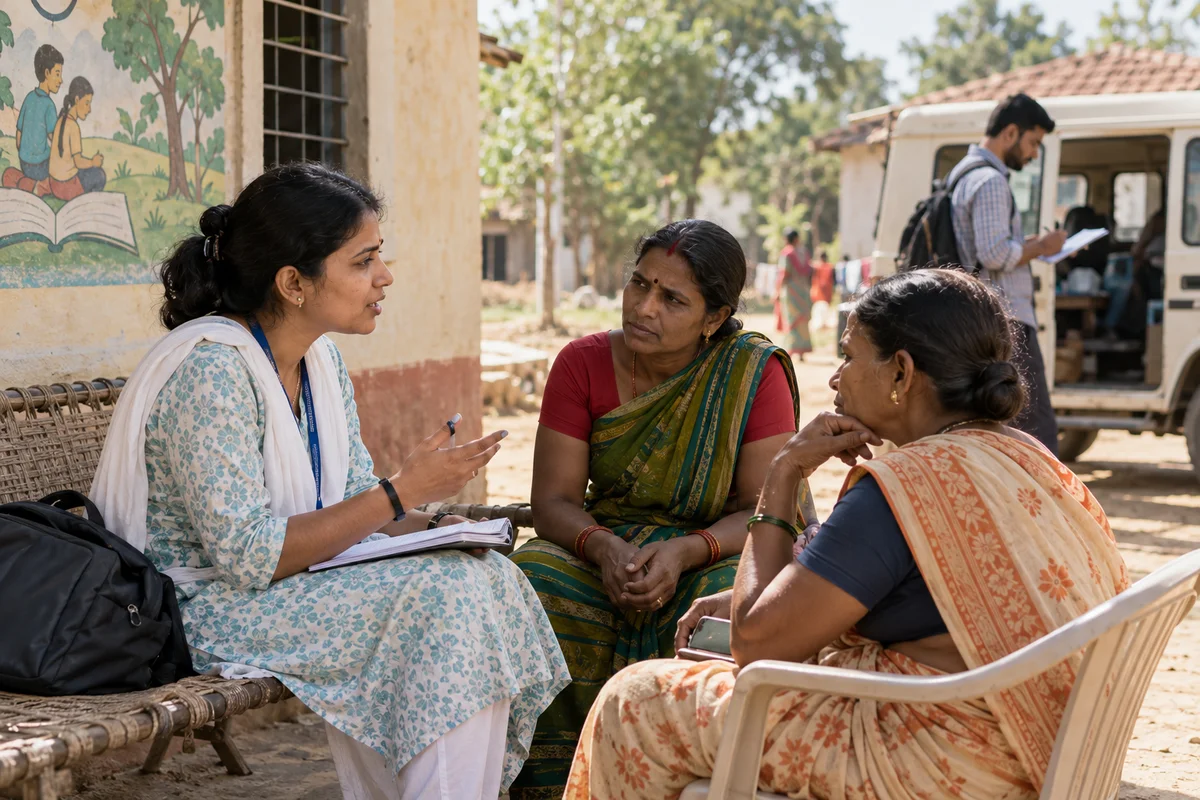
Staff at NGOs and social enterprises leave for funding, field and workload reasons as well as pay. How to understand why, listen early and act.
7 min readRead article
How an India head can sort a global parent's HR policies into apply, adapt or replace, write an India addendum with advisers, and keep headquarters on side.
7 min readRead article
An employee brings you a complaint about their supervisor. What happens next should not depend on who is in the room. A grievance procedure a small company can actually run.
8 min readRead article
Eighty per cent responded, the report was thorough, and six months later trust was lower than before. What went wrong between the survey and the silence.
8 min readRead articleMore on the GullyHR blog.
Written terms help both sides, even where a religious body appoints the person. Ask a qualified professional how your arrangement should be set out and who is responsible for what.
Give each a clear role, a named guide, set hours and training for sensitive tasks. Thank them regularly, and be open about what you cannot ask of them.
Use an agreed process with a small, fair panel, written records and confidentiality. Take advice from a qualified professional where the matter is serious.
Conduct with children and vulnerable people, supervision, communication, how concerns are raised and who receives them. A qualified professional should review it.
Keep a short register of staffing and pay decisions and hand it over each term. Changes should be made openly, with the person concerned.
We would listen to how clergy, paid staff and volunteers are actually arranged today, and where a calling and a job have become tangled. We look at how committee decisions about staffing are recorded and how volunteers are given a role. A sensible first piece of work is simple written terms for the paid roles, with a safeguarding and conduct code to follow.
All 43 business types in ngos and social enterprises · Find another business type
See all HR topics for ngos and social enterprises, or another industry.
Tell us your industry, team size and the issue you want to address. Bring one example of where work gets delayed or ownership is unclear, and the deadline or decision you are working towards.