















Why construction and real estate employees leave and how to understand why
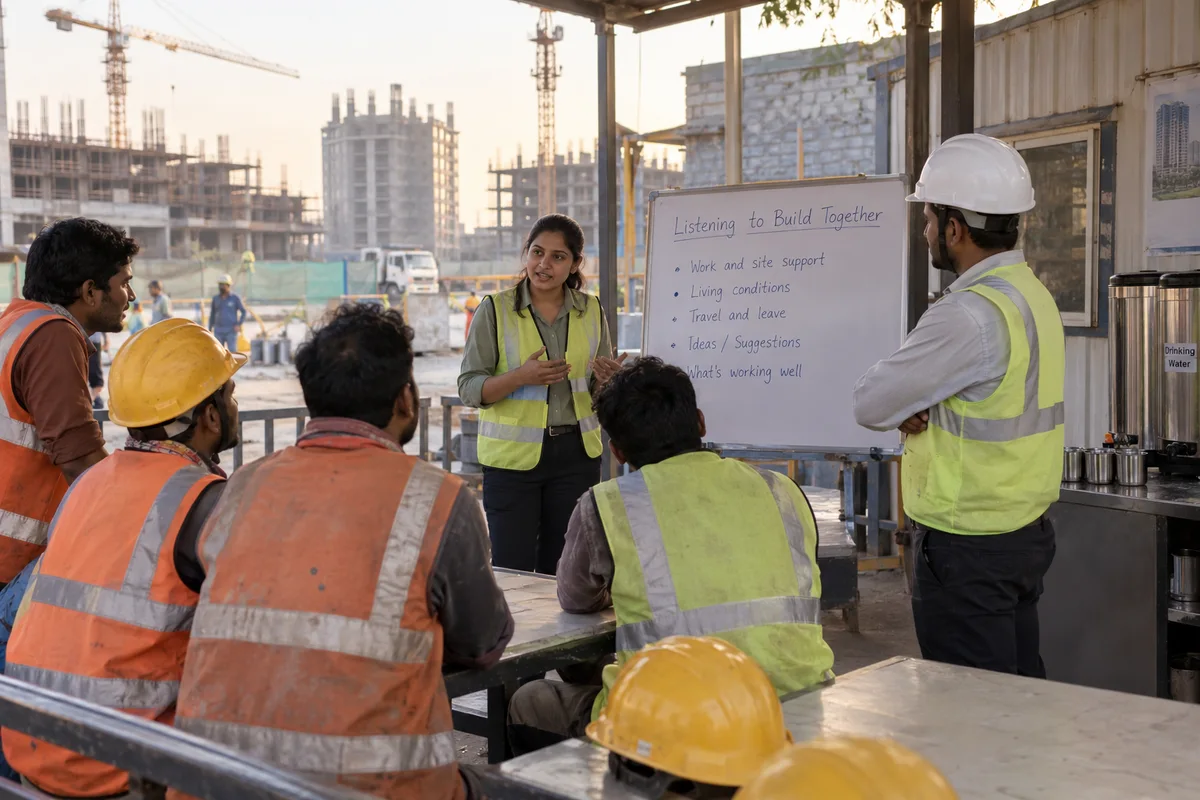
Site engineers, supervisors, crews and sales teams leave for different reasons. How to ask what shaped their decision and act on it between projects.
8 min readRead articleA bridge contractor builds piers, girders and decks over rivers, roads and rail, with crews staying on one project for years. A small group of specialist crews, working at height and over water, decides quality, and losing a few key people can stop a stage.

Not sure what you need? Tell us about your business in six short steps and we will come to the first meeting prepared.
Share your requirementsA bridge contractor builds foundations, piers, bearings, girders and decks for rail, road or river crossings. Projects run for years, and work is staged around heavy events such as a deep pile, a large pour, a girder launch or a stressing sequence that cannot be repeated. Crews are small and specialised: bar benders for heavy reinforcement, formwork carpenters, prestressing teams, crane and launching gangs, and divers or boat crews where there is water. Everything is documented, because inspectors check every stage. The wider construction and real estate hub covers what the sector shares.
These are the places the people side of this kind of business tends to give way. The rest of this page works through them.
HR here has to work for each of these groups, not only the office. The set-up below is written with all of them in mind.
GullyHR runs talent acquisition for permanent roles in bridge contractors. For each role we agree the job description with you, find and screen candidates against it, and support the offer through to joining. Tell us the role and the number of people, and we start there.
We recruit permanent employees. We do not supply contract or temporary staff.
Every business interviews, but few have a written process that works the same way for every role and every interviewer. GullyHR designs yours, from the role brief to the offer, trains your managers to run it, and can run it for you on the roles you hand us.
We agree what the role must deliver, the must-have and nice-to-have skills, and how each will be scored.
Screening call, assessment, interview rounds and decision points, sized to the role and the number of people you hire.
Structured questions for each role family and a rating guide, so two interviewers judge the same answer the same way.
A short briefing for your managers on what to ask, what to avoid and how to give a clear yes or no.
Who approves, how the offer is made, and how candidates are kept informed from first call to joining.
One stressing team or one launching gang can hold up the project, and no one else on site can do their job.
A deep pile or large deck pour needs the right crew present for a long stretch, and absence on the day is costly.
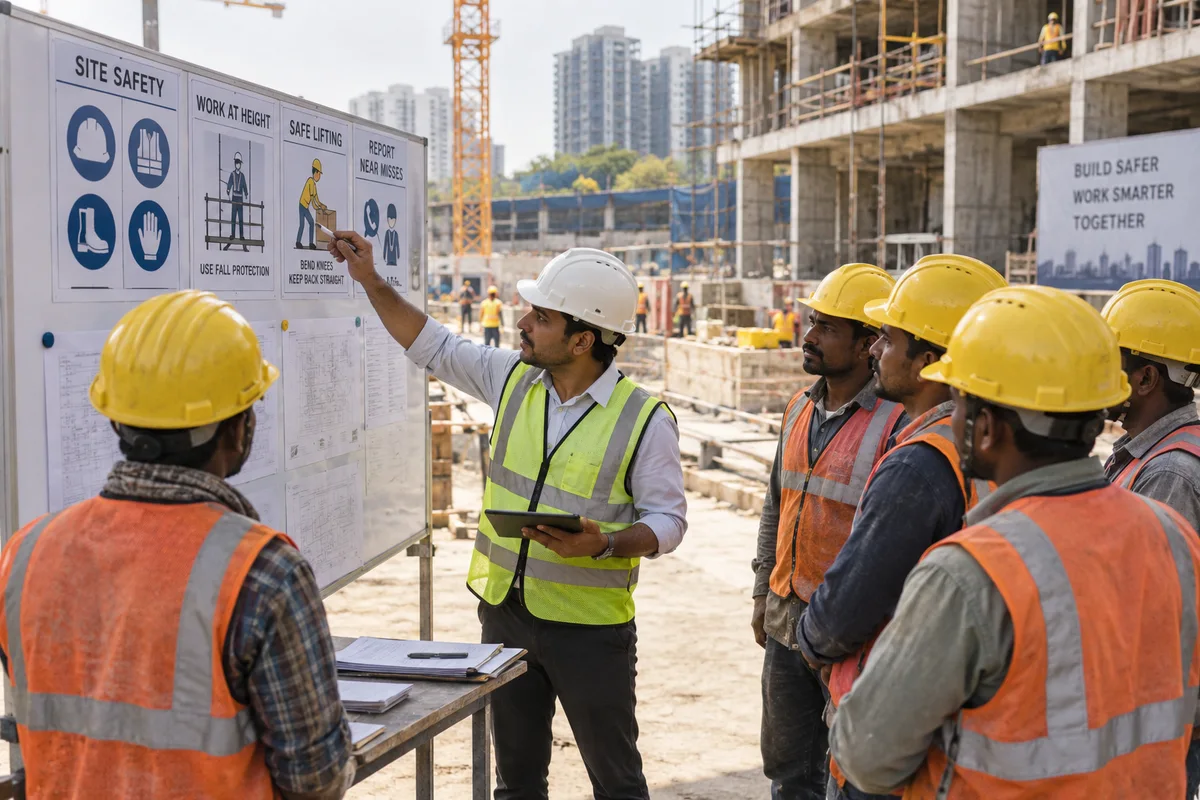
Falls, floods and lifts involve severe harm, yet some crews learn the rules in a few minutes.
Engineers and crews spend years on one site, so boredom, family strain and slow career steps cause exits.
Test results, stressing records and inspection sign-offs must be right, and gaps stall the next stage.
When a launching foreman or stressing lead leaves, the method they built leaves too, with nothing written.
Start with the topics that matter most here: Career and Succession Management; Health, Safety and Wellbeing; Retention and Attrition Management. Then work through the rest. Each topic is written for construction and real estate, not in general.
Named backups for the roles that cannot be vacant.
Induction, records, incident reporting and follow-through.
Who leaves, when, why, and which of them mattered.
How many people, in which roles, by when, and what they will cost.
Structure, reporting lines and who is allowed to decide what.
Requisition to joining, the same way every time.
A first day that is the same for the fifth joiner as the first.
Records, attendance, leave and the day-to-day HR that must simply work.
Salary structure, payroll inputs and a month that closes on time.
Goals, reviews and ratings that hold up in a conversation.
Training planned from need rather than from the calendar.
Communication, recognition and the conditions people actually work in.
Two routes, one for complaints, one for conduct, kept separate.
Policies a manager can apply, and obligations with owners and dates.
Resignation to relieving letter, in a defined order.
Records that survive people, and approvals that do not queue.
A short monthly pack management actually reads.
An HR function that runs the same way every month.
The pieces a bridge contractors business puts in place, in an order that makes each easier. Open any card for the detail.
List the stages ahead and the crews each needs, with names, backups and notice periods for each critical role.
A named understudy for every critical role who works beside the lead.
A named understudy for every critical role who works beside the lead. The succession planning work shapes this.
A one-page crew and relief plan for each big event, agreed a week before, with rest and food covered.
Practical sessions with equipment, rescue drills and a record per person, repeated when conditions change.
Short method notes for stressing, launching and heavy lifts, written with the crew that does them.
A visible next step for engineers and foremen who stay on one project for years, with review dates and a rotation option.
Before changing anything, find out what is true today. Work through the checks using a recent operating period. The time needed depends on the records you hold; note missing evidence and use the findings to choose a priority.
Share your requirementsConfirm with a qualified professional. What applies to you depends on your business, your state and your arrangements, and it changes. This page describes practice. It does not state a legal position.
The services below fit this kind of business best. Each starts by recording where you stand, and every later report compares against that. We do not promise outcomes.
Understudies and backups for the few specialists whose absence would stop a stage.
Skill records for formwork, prestressing, lifting and quality roles, kept per person.
Practical leadership for foremen and engineers who run small crews for years on one site.
Reviews and feedback built around stages and records, for long single-site projects.
Start with a free conversation, or see the paid HR Diagnostic.
Understand the business, its workforce, current processes and HR challenges.
Find the missing, weak, inconsistent or person-dependent processes.
Create the structure, processes, policies, SOPs, dashboards and systems needed.
Help HR and department managers actually adopt the new system.
Digitise repetitive and approval-based workflows where it is worth doing.
Track hiring, attendance, employee cost, performance, training and attrition.
Strengthen the people-management system continuously, not once.
From the GullyHR blog: one on HR in construction and real estate, and one on each of the topics this page points to.

Site engineers, supervisors, crews and sales teams leave for different reasons. How to ask what shaped their decision and act on it between projects.
8 min readRead article

A two-hour exercise that names the roles you could not fill quickly, who could cover them, and what readiness would actually require.
7 min readRead article
A shift, weekly and monthly safety routine for rubber plants that names who checks platen guards, mill trip bars, autoclave doors, burst-test cages and slings, and who acts on near misses.
7 min readRead article
What really keeps mobile app and web developers in a small firm: stay conversations, growth paths, fair release rules and a risk sheet an owner can use this month.
6 min readRead articleMore on the GullyHR blog.
Name an understudy for each critical role, record methods in writing, agree notice periods and keep the person engaged with a clear path and fair pay. Nobody should be the only one who can do a stage.
Give them clear stage goals, visible progress, a planned next step and a chance for rotation or new responsibility. Years on one site without change is a quiet reason for good people to leave.
Practical sessions with the actual equipment, rescue drills and a signed record per person, repeated when the site changes. Confirm the applicable rules with a qualified professional.
Because inspectors check each stage and the next stage cannot start without sign-off. Missing records mean delay, so give someone clear ownership and train crews in what must be written.
Plan a week ahead: who is needed, who relieves them, how long the pour will run, food, rest and who makes decisions. A written plan prevents shortages and fatigue on the day.
We would list the roles whose absence would stop the next stage, read the training records for height and water work, and ask your stressing or launching lead how they would teach the job. Understudies and written method notes are usual first jobs, scoped for your approval.
All 7 business types in construction contractors · Find another business type
See all HR topics for construction and real estate, or another industry.
Tell us your industry, team size and the issue you want to address. Bring one example of where work gets delayed or ownership is unclear, and the deadline or decision you are working towards.