
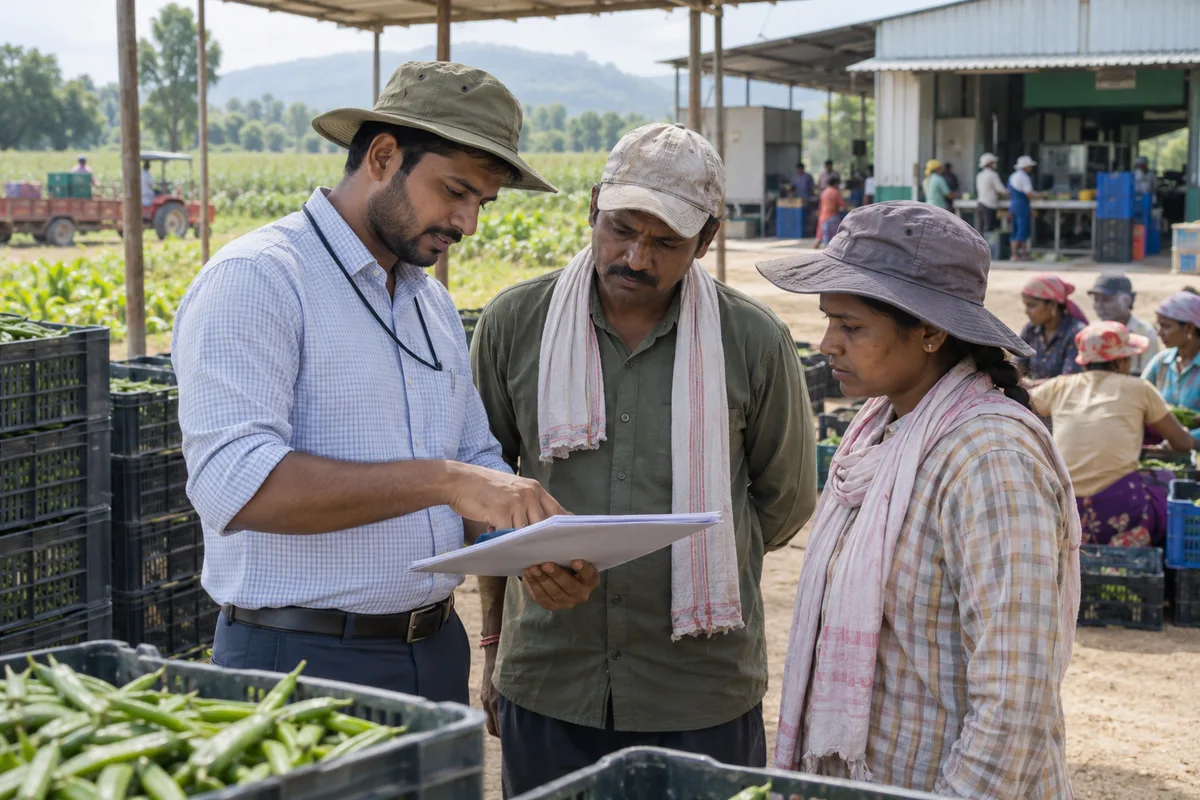
It is the second morning of picking and a crew leader says eighteen people came yesterday. Your block supervisor's notebook shows sixteen, the weighbridge slips carry nicknames, and the lorry is due before noon. Nobody is lying on purpose, but somebody is about to feel cheated.
What should a farm owner set up first in HR?
Set up the records that decide pay and safety: a register of every worker, one daily attendance and quantity sheet, written pay terms, clear supervisor limits, and basic induction and housing records. Do this for permanent and seasonal people before you spend any effort on appraisals, handbooks or software.
The order matters because a farm's trouble starts in the field. A missing name becomes a pay quarrel. An unrecorded advance becomes a quarrel at season end. A new sprayer who was never shown the mixing routine becomes a safety incident. Whether you grow field crops, flowers under cover, orchard fruit, plantation produce or vegetables for a contract buyer, the first fixes sit in the same places.
Five things to put in place, in order
- 1
One register for every person
List permanent staff, seasonal pickers, packhouse hands, pump attendants and anyone supplied by a gang leader or contractor. Record the name they answer to, a second identifier, an emergency contact, start date, who supervises them and who pays them. Add returning workers to the same list so next season's calls start from it.
- 2
A daily sheet both sides accept
One line per person per day: block or house, task, time in and out, quantity by crate, kilo, row or bunch, quality rejects and any advance given. The supervisor reads the line back before the crew leaves, and the worker marks agreement. Carbon copies or a phone photo both work.
- 3
Pay terms said and written
State the day rate or piece rate, what counts as a half day, what happens when rain stops work, the pay day, how advances are recovered and how a disputed count is raised. Put it on one page in the languages your crews speak, and have supervisors explain it aloud.
- 4
Limits for supervisors
Decide what a field supervisor or gang leader can approve alone: sending someone home, granting a half day, changing a rate, hiring a walk-in. Anything else goes to the farm manager the same day.
- 5
Induction, stay and welfare records
Before first work, show water points, toilets, restricted stores, machinery hazards and the person to call. Record who sleeps where, who travels on your vehicle and who handles complaints.
Where the gang leader fits
A good gang leader finds people you could never reach on your own. The risk is that the leader becomes the only person who knows who worked, what each person is owed and why somebody stopped coming. Keep the relationship, but hold your own register and daily sheet. Agree on paper what the leader is paid for, who pays the workers, who carries advances and what you will check. Pay disputes inside the crew can reach your gate even when the money passed through other hands.
Set supervisor limits with real cases
A rule that says supervisors should use judgement settles nothing at six in the morning. Sit down with the field supervisors and work through the calls they actually face, then write the answer beside each one. Keep the page short and give a copy to the gang leader so everyone hears the same thing.
- A picker arrives after the crew has gone to the far block. Can the supervisor take them on for part of the day, and at what rate?
- Rain stops harvest mid-morning. Who calls it, what is recorded and what other work is offered?
- Someone asks for an advance in the field. Who may agree it, where is it written and who tells the cashier?
- A worker seems unwell in a hot greenhouse. The supervisor should be free to stop the work and get help without asking anyone first.
- A walk-in offers to join during the peak. Who checks them in the register and gives the safety briefing before they enter the block?
A daily sheet you can copy
Print one per crew per day. Keep it short enough that a supervisor will fill it in standing at the edge of a wet field.
Date:
Block or greenhouse:
Crop and task:
Supervisor:
Gang leader (if any):
Weather or stoppage:

Name | In | Out | Qty | Unit
__________ |    |     |    |
__________ |    |     |    |
__________ |    |     |    |

Rejected at grading:
Advances given (name, amount):
Injuries or complaints:
Counts read back: yes / no
Supervisor sign:
Crew member sign:
Entered in register by:
Who keeps it going
Give each record an owner. The field supervisor fills the sheet. A record keeper or estate clerk enters it that evening and flags blanks. The farm manager settles disputed lines before they age. The owner reads a handful of sheets each week against weighbridge or packhouse figures. If one person fills, enters, approves and pays, mistakes and favouritism have nowhere to show.
Try the routine on one block during a quiet spell. You will find that nicknames repeat, units are unclear and phones die in the afternoon. Fix those before the crowd arrives. A paid HR audit is an option if you want an outside check of records, roles and risks across several blocks or sites, but the first walk through your own notebooks costs only an evening.
Adjust for the way your farm runs
A greenhouse or flower unit with a steady daily crew should add task-wise sheets for bunching, spraying and re-entry after treatment. A plantation with resident families needs housing, welfare and weighing records early. A contract farm should read the buyer agreement for conditions on worker records, hygiene and traceability, then collect that evidence in the same daily routine so nobody keeps a second book. An orchard that hires hard for a short harvest gains most from a returners list with phone numbers, skills and agreed arrival dates.
What can wait
- Annual appraisal forms for seasonal crews, who need quick feedback at the row instead.
- A thick handbook that no picker will read. One page of terms and rules comes first.
- HR software, until the paper sheet is filled correctly through a busy week. Then software for attendance and leave has something sound to hold.
- Detailed grade structures, though you should note now who can graft, irrigate, spray or drive, so pay can reflect it later.
- Engagement surveys. A weekly question at the housing block tells you more.
Where to go next
Pick the next sowing or picking week and name who will hold the register, the sheet and the pay terms. Our page on HR for farms and agribusinesses sets out the wider picture. If you would like to talk through your own farm, tell us your requirements. The first conversation is free.