
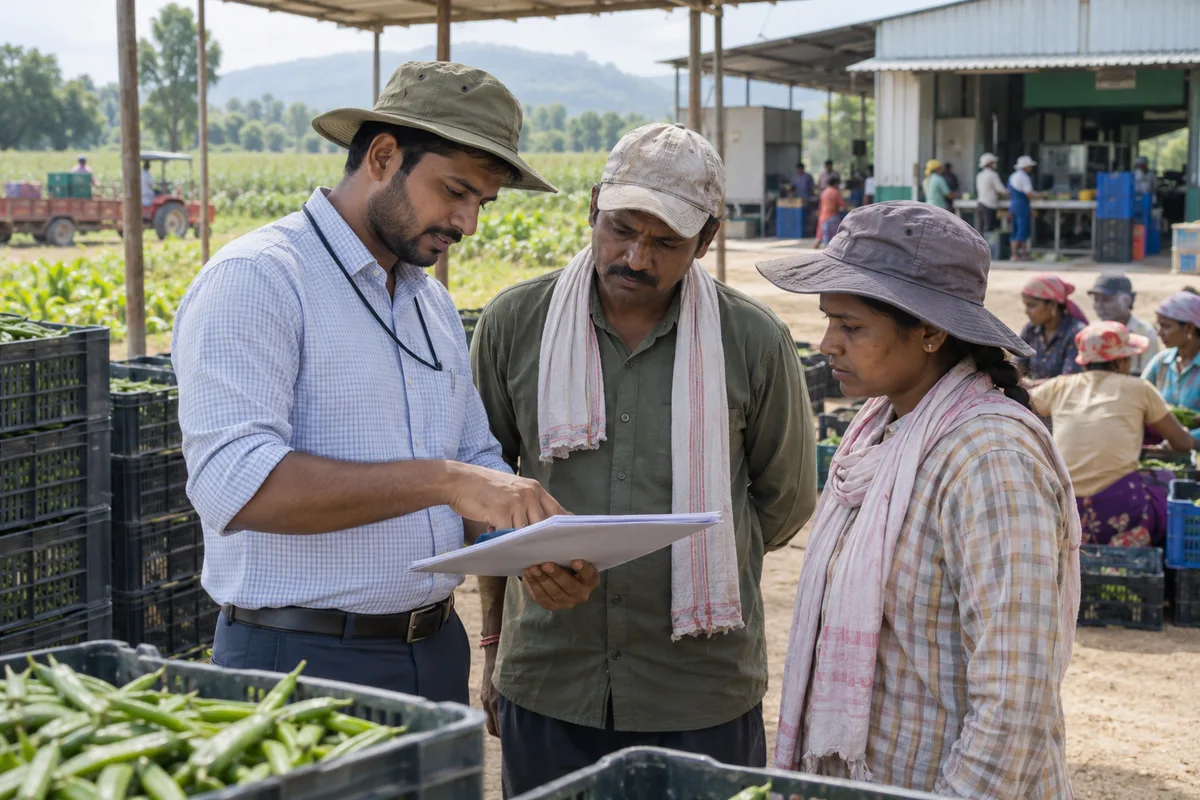
The harvest is over and the manager reports that it went fine. Three weeks later you hear that a crew will not come back, a pay dispute is still open and a loader has been limping since the second week. Each of these was known to somebody on the farm.
What should a farm owner check about people every month?
Check whether the work had enough hands, whether daily records match produce and payments, which disputes are open, whether quality rejects point to a people problem, whether anyone was hurt or badly housed, and whether the coming weeks are staffed. Give every weak answer an action and a name before the meeting ends.
Who sits down, and with what
The owner, the farm manager and the person who keeps records are enough. Bring in a block supervisor or packhouse lead for their own items. Meet at the farm, because half the questions are settled by walking to the housing, the chemical store or the weighing point. Gather the month's crew sheets, payment register, advance book, weighbridge or dispatch slips, grading reports, buyer complaints, injury notes and the crop calendar. If a document cannot be found, record that as the first finding.
Work through six questions in turn. For each, read the source first, then agree what the answer requires you to do before moving on.
Did each crop stage have the hands it needed?
Compare the crew you planned for sowing, weeding, pruning or picking with names on the daily sheets. Note blocks that waited and produce left standing. If people were short, find out whether the call went late, a gang leader failed, a neighbour paid more or workers left midway. Each cause needs a different fix: earlier dates, a second source of crews, a rate check or a conversation at the camp.
Do the records agree with each other?
Pick several days at random. Match quantities on crew sheets with weighbridge or packhouse intake, then match both with what was paid. Gaps can mean missed crates, double counting, one person marking absent friends present or simple copying errors. Trace one gap to its source and change that handover. Look also for sheets with identical times for everyone, which suggests they were filled in afterwards.
What money questions are still open?
Count unresolved disputes, late payments and advances without a signature. Settle old ones first and record the outcome. If disputes cluster under one supervisor or one unit of measure, stand at that weighing point on the next pay cycle and watch.
Is quality telling you something about people?
Read grading rejects and buyer complaints by block and crew. Bruised fruit can follow a rush on piece rate. Wrong stem lengths can mean new bunching hands were never shown the standard. A residue concern points to the spray log and who was trusted with mixing. Respond with instruction in the row, a changed quality gate or closer checking before you think about blame.
Was anyone hurt, unwell or poorly looked after?
Ask about injuries, near misses, heat illness, chemical exposure and vehicle incidents. Walk through the housing, water, toilets and transport. Ask workers directly, away from their gang leader where possible. A broken pump at the quarters or an overloaded trailer deserves a date for repair and a named person today.
Are the coming weeks covered?
Set the crop calendar for the next stretch beside the list of confirmed workers and skilled people. Flag any task that depends on a single person, any permanent worker thinking of leaving and any permit or training date falling due. Start contacting returners well before the crop forces your hand.
Month:        Farm or block:
Present:

1 CREW COVER
Short days:      Cause:
2 RECORDS
Days sampled:    Gaps found:
3 PAY
Open disputes:   Oldest:
4 QUALITY
Reject pattern:
5 SAFETY AND WELFARE
Incidents:
Housing or water faults:
6 NEXT WEEKS
Stage due:
Hands confirmed / needed:
One-person tasks:

ACTIONS (what, who, by when)
1.
2.
3.
Last month's actions closed:
Turn answers into action
- 1
Mark each question
Use steady, watch or act. Write the evidence beside the mark so a later argument has something to rest on.
- 2
Limit the list
Choose the few actions that protect safety, owed money and the next crop stage. Park the rest openly.
- 3
Name one owner
A supervisor, record keeper or manager takes each action. Shared ownership on a farm means the job waits for whoever has time.
- 4
Tell the crews
Say what you heard and what will change. People who see a complaint answered are more willing to raise the next one early.
- 5
Open with last month
Start the following review by checking those actions in the field, not just asking whether they were done.
In quiet months, use the time to review grades, plan training and speak with permanent staff one by one. In peak weeks, shorten the meeting to safety, pay and cover, and keep it. A basic performance management process gives permanent staff clear goals to discuss, while HR reporting and analytics becomes useful once several sites report in different ways.
An illustration of one finding followed through
Suppose rejects rise in one pepper house while the neighbouring house holds steady. The tempting answer is careless pickers. The sheets show that the crew changed midway through the month and the new hands started on a morning when the supervisor was away at dispatch. The action is modest: the supervisor shows each newcomer a sample of acceptable and unacceptable fruit, checks first crates at the row and notes who has been briefed. At the next sitting, the same grading report shows whether that was the cause. If rejects have not moved, look at crate handling, cart routes and timing in the heat.
Be ready for findings that point upward. A late pay day, a changed rate announced mid-crop or an owner's instruction that overrides the manager can sit behind complaints that first appear to be about workers. Record those in the same plain way, with the owner's name beside the action.
Where to go next
Copy the page, book a date after your next pay day and bring real sheets. Our farms and agribusinesses overview explains related pressures. If you want help setting up the routine, tell us what your farm needs.