
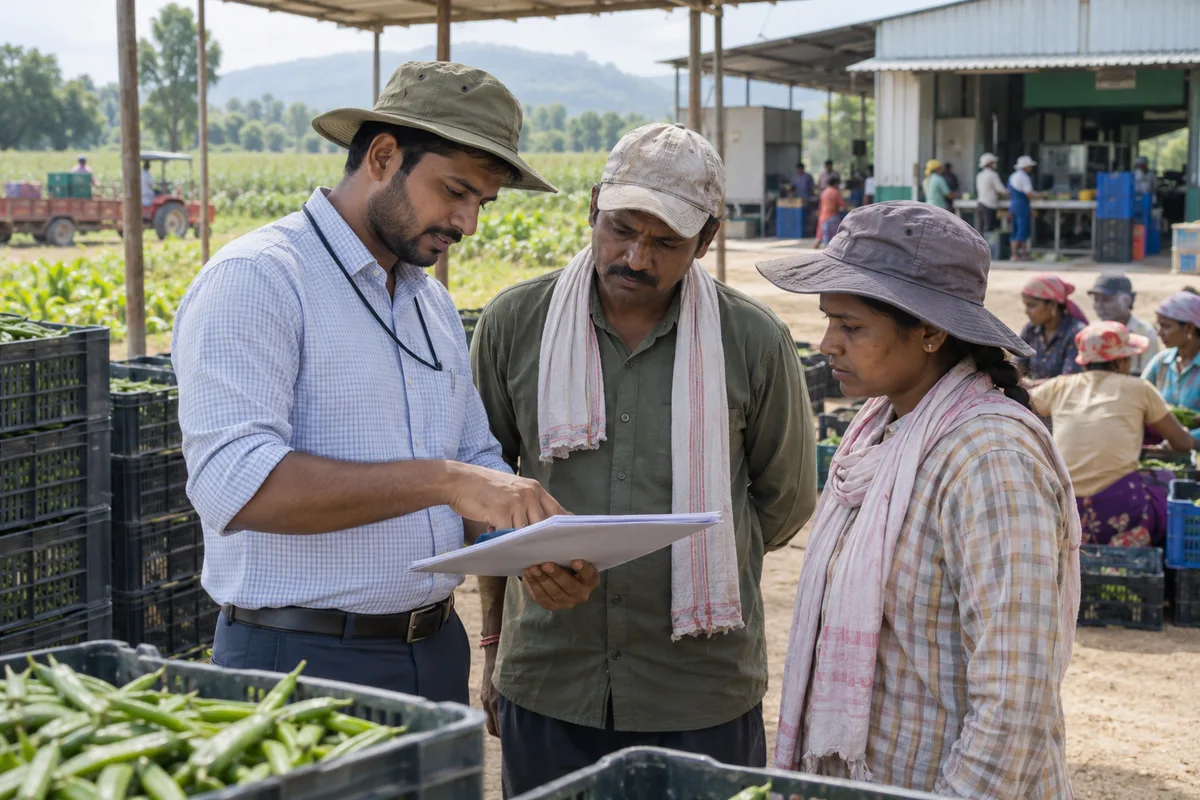
Picture the second morning of paddy arrivals. A new helper is told to "stay with the dryer team", the shift lead is pulled to the weighbridge, and by mid-morning the helper is standing beside a running elevator with nobody watching and no idea which switch stops it.
What should a new joiner's first week look like on a farm or in a processing unit?
Give one named person charge of the joiner, cover the dangers of the post before any work starts, then release tasks one by one: watch, do under supervision, do alone. By the end of the week the joiner should handle a short, written list unaided and know exactly which jobs still need a second person.
Settle four things before they arrive
A harvest joiner who reports to a gate and waits has already learnt that nobody planned for them. Sort these out the evening before, even when the intake is a single casual worker.
- The buddy: a named block supervisor, shift lead or senior field officer who is on duty on the same days.
- The kit: boots, gloves, dust mask, apron or cold-store jacket as the post requires, in the right size and signed out.
- The record: identity and contact details, emergency contact, engagement type, rate of pay and whether a labour contractor supplied the person.
- The task list: what this post does in a normal week, split into jobs learnt now and jobs learnt later.
Who does what, day by day
The days below assume a six-day week. Shorten it for a simple hand task and lengthen it for anything involving a boiler, a combine, spraying or cash.
- 1
Day one: walk the site
The supervisor shows exits, drinking water, toilets, first aid, assembly point, no-go areas and where to stop each machine nearby. The joiner repeats the stop points back while standing at them. No productive task yet beyond fetching and observing.
- 2
Day two: watch the full cycle
The buddy runs one complete cycle, such as intake to bagging, or a village visit from route plan to report. The joiner names each stage and says what would make a lot, a load or a visit unacceptable.
- 3
Day three: do it with hands on
The joiner performs the safer parts while the buddy stands within reach: tagging lots, sweeping spillage, sorting, drawing samples, filling the visit sheet. Errors are corrected on the spot and shown again.
- 4
Day four: handle the exception
Practise the awkward moments: wet produce at the gate, a torn bag, a farmer disputing a weight, a pump that will not prime, a cold-room door left open. The joiner learns whom to call and what never to decide alone.
- 5
Day five: work a shift with checks
The joiner takes a normal share of work. The supervisor checks at the start, middle and handover, then compares the records the joiner filled in with the physical stock, samples or visits.
- 6
Day six: sign off or extend
Supervisor and joiner go through the card together. Tasks done correctly are marked as solo. The others get a date for another attempt and stay supervised until then.
Where the line sits between alone and supervised
Write this line for each post, because supervisors under pressure will move it. A processing-unit helper can reasonably clean, stack and tag alone within the week, but should not clear a blockage, enter a bin or pit, or restart equipment. A quality trainee can draw samples and read the moisture meter, while acceptance or rejection stays with the quality lead. A new field officer can visit known growers and record crop stage, but should not promise a price, an input credit or a pickup date. A counter or procurement clerk can raise slips with a second person verifying weights, rates and any cash.
A first-week card the supervisor can carry
One sheet per joiner is enough. It lives with the supervisor, gets filled in at the work spot and moves to the file at the end of the week.
Name:
Post and site:
Buddy:
Season / permanent:
Kit issued (date):
Stop points shown: Y / N
Hazards explained in language:

TASK        SEEN  WITH  ALONE
1.
2.
3.
4.

Never alone yet:
Next check date:
Supervisor sign:
Joiner sign / mark:
When thirty people start on the same morning
Peak intake breaks the one-buddy idea, so change the shape and keep the checks. Split the batch by task, not by arrival order. Put returning workers in front of small groups, brief them the day before on exactly what to show, and relieve them of part of their own output so teaching is not squeezed. Use the language the group speaks at home, and use demonstration and picture boards where reading is weak. Asking "did you understand?" proves nothing; ask each person to show the stop button, the hygiene step or the bag tag.
Field joiners need a different guard. Pair them on routes for the early visits, agree a daily call-in time, give them the escalation number for vehicle breakdowns and animal or chemical incidents, and check two of their recorded visits against what the grower says. A solo rider on rural roads should have road safety and phone charging settled before the first route.
What goes wrong, and what to leave out
One failure is a long talk on company history followed by nothing practical. Skip it. Another is signing every box on day one so the file looks complete, which leaves you with paper that nobody believes after an incident. A third is changing buddies each shift, so the joiner hears three versions of the same job. If the season forces a handover, pass the card to the next person with the open items circled.
Keep the week connected to what follows. Add a short check after the first pay day, when questions about days worked, advances and deductions surface, and another before the busiest stretch. A written onboarding and probation routine keeps those dates from depending on one supervisor's memory.
Where to go next
Choose one post with heavy seasonal intake, write its solo and supervised lists with the supervisor, and trial the card on the next joiner. Our agriculture and agribusiness page covers related people topics, and you can tell us your requirements if you want help building first-week plans across sites.