
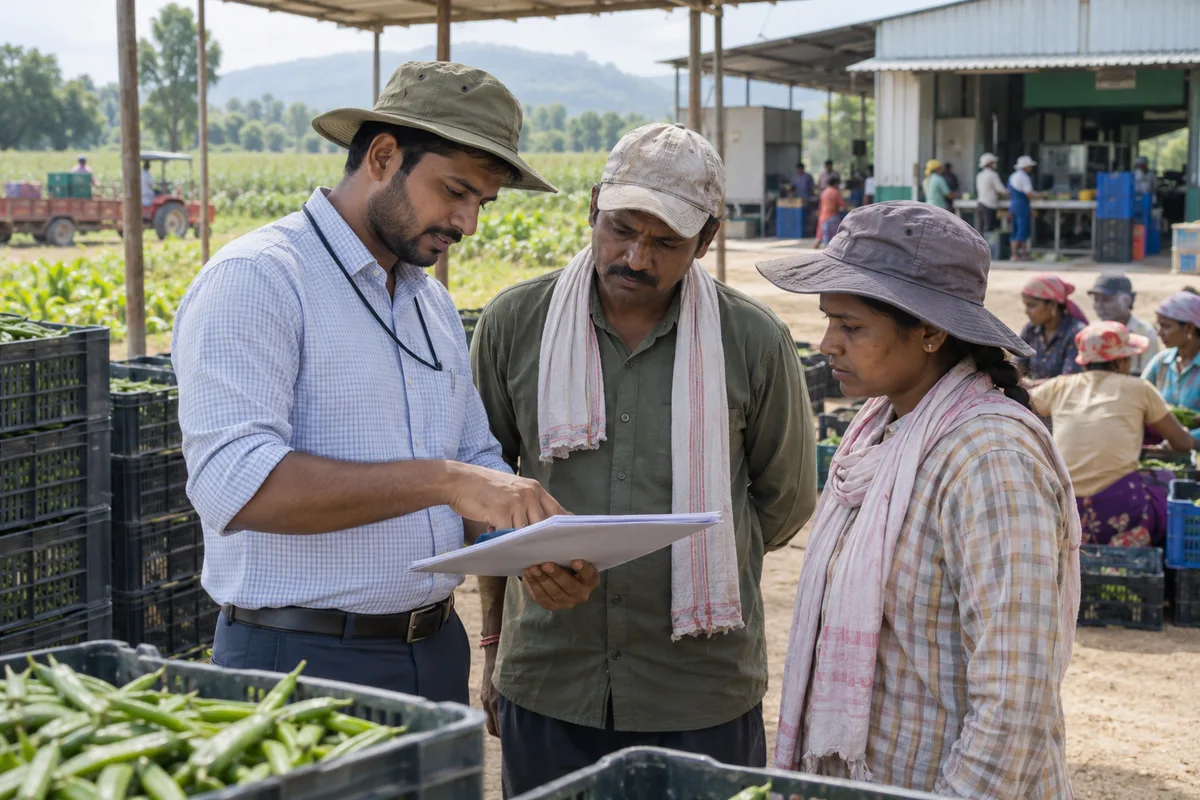
Picture an owner who hears every day about rain, arrivals and prices, but learns that two field officers are leaving only when growers start ringing. The same month, a pay complaint at the packhouse has been passed between the supervisor and the accounts desk since the first week.
What should an agribusiness owner check about people each month?
Check whether critical posts were covered, who worked excess hours, which pay questions remain open, what safety events occurred, who left or stopped attending, whether quality problems trace to training, and whether the next season has people and supervisors ready. Each exception gets an action, a named owner and a date.
Seven questions, their sources and the action
Compare with the previous month and with the same crop stage last year where you have it. Look site by site, since a combined figure can hide a struggling collection centre behind a calm head office.
- Cover: which shifts, blocks or routes ran short? Source: roster against muster. Action: name a backup, train one or change the intake plan.
- Hours: who repeatedly worked beyond plan or lost rest days? Source: gate and overtime approvals. Action: rebalance, add relief and check the legal position.
- Pay: which queries on days, piece counts, travel claims or advances are open? Source: query log. Action: assign an answer date and fix the faulty input.
- Safety: what injuries, near misses, chemical exposures or equipment bypasses were reported? Source: site log and first-aid book. Action: make the hazard safe and confirm required reporting.
- Leavers: who resigned, vanished or asked for transfer, from which supervisor? Source: register and exit notes. Action: speak to people and test the stated reason.
- Quality and growers: which rejects, weight disputes or missed pickups involve unclear duties or untrained staff? Source: lab, weighbridge and complaint records. Action: retrain or redefine authority.
- Next window: which posts, licences, kit and supervisors are missing? Source: season plan and skill sheet. Action: start hiring, renewal or teaching.
Run it in under an hour
- 1
Collect the sheet beforehand
An administration owner gathers entries from site leads a few days ahead and marks missing data as unknown instead of guessing.
- 2
Start with open actions
Read last month's list. Close what has evidence, and ask what is blocking the rest.
- 3
Take danger and pay first
Any live hazard, harassment concern or unpaid amount gets handled before trends, in private where individuals are involved.
- 4
Discuss exceptions only
Skip sites and questions with nothing unusual. For each exception ask what happened, how you know and what would stop a repeat.
- 5
Decide and assign
Record the action, one owner and a date. The owner of the business resolves trade-offs such as slowing intake or funding relief.
- 6
Tell the crews
Supervisors report back what was decided on matters workers raised, including where the answer is no and why.
The one-page sheet
Month:        Crop stage:
Present:

CHECK        SITE  ISSUE? ACTION
Cover gaps
Long hours
Pay queries open
Injury / near miss
Leavers / no-shows
Quality or grower
Season readiness

Action 1:
 Owner:          Due:
Action 2:
 Owner:          Due:
Action 3:
 Owner:          Due:
Unknown data to fix:
Next review date:
Read the signs with care
A month with no reported near misses may mean a safe site, or a crew that has learnt not to report. Walk the unit and ask. High attendance among seasonal workers can hide people turning up ill because they fear losing the place. A rise in grading disputes after a new intake points towards instruction, while disputes against one long-serving clerk call for a fair, private check of the records before anyone draws conclusions.
Field officer departures deserve more than a replacement request. Look at route length, travel claim delays, target pressure, evening calls, vehicle costs and how the area manager behaves. Ask the leaver, and also ask a colleague who stayed what nearly made them go.
Add two conversations to the paperwork
Records show what was entered. Each month, visit one site without the usual escort for part of the round: a collection centre at closing time, a night shift in the unit, or a harvest block during the break. Ask a recent joiner what they have been told about stopping a machine and when they will be paid. Ask an experienced worker which job is harder than it was last month. Listen for broken gloves, late water, a vehicle everyone avoids or an advance nobody can explain.
Then spot-check one thread from end to end. Pick a few names from the muster and trace them to approved hours, piece or visit records and the amount paid. Pick a rejected lot and trace who received it, who tested it and what instruction they had. Do the check openly and treat mismatches first as a process fault to understand. Add anything unresolved to the action list with an owner.
Change the weight with the calendar
During harvest or heavy processing, keep the monthly review and add a brief weekly check on cover, hours, safety and pay queries. After the window, hold a longer session: which supervisors kept crews, which sources supplied reliable workers, who should be invited back, what kit was not returned and which tasks depended on one person. Before the following window, confirm the readiness line has real names against it.
Close the month with the next crop window in view
End by looking ahead. Name the arrivals, sowing support, spraying round, dispatch push or shutdown that falls before the next meeting. Ask each lead what would stop them if it started early. Look for an unrenewed operator licence, an unbooked contractor, protective kit not yet ordered, a collection centre without an in-charge, or leave already promised to the only quality sampler. Decide which of these the owner must settle personally, and give the rest to the leads with dates.
What to leave off
Do not turn the meeting into a recital of headcount or a dashboard nobody acts on. Leave individual performance verdicts to proper one-to-one conversations with evidence. Avoid collecting new data until you can say which decision it would change. If a line has produced no action for several months, check that the source is honest, then decide whether it still belongs.
Individual goals and feedback need their own performance management process, with standards suited to field, farm and unit work. When assembling the sheet takes longer than discussing it, consider better HR reporting and analytics, starting from the few questions above.
Where to go next
Book the first review, fill the sheet with what you have and mark the unknowns openly. Further reading is on our agriculture and agribusiness page. If you want help setting up the records and routine, share your requirements.