



















GullyHR

Restaurants & Cafes · Cloud kitchens

HR for Cloud Kitchens: Multi-Brand Kitchens, Aggregator Orders and Lean Teams

A cloud kitchen has no dining room and no walk-in guests. A lean team cooks for several brands from one kitchen, to the rhythm of app orders, where a bad rating arrives within the hour.

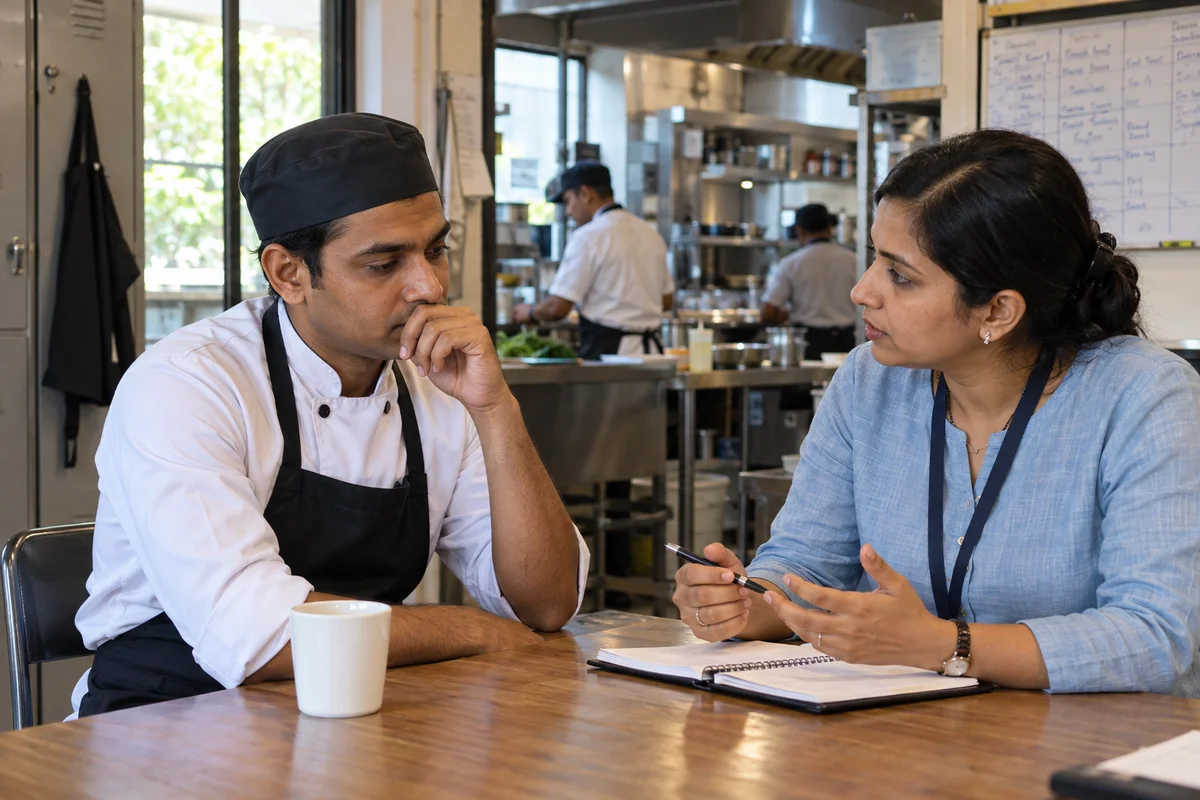
A restaurant manager, chef and service supervisor planning staffing before opening

Not sure what you need? Tell us about your business in six short steps and we will come to the first meeting prepared.

Share your requirements

A cloud kitchen cooks only for delivery. Orders come through aggregator apps and the brand's own channels, and the kitchen may run several brands from one line, so a cook handles different menus in the same hour. There is no front of house, so every employee is in prep, cooking, packing or dispatch. Teams are lean, shift patterns follow order peaks and the brand's reputation is built on ratings. Operators often open several kitchens in different parts of the city, which makes consistent hiring and training a daily test. The wider food and beverage hub covers what the sector shares.

  1. Plan
  2. Hire
  3. Onboard
  4. Manage
  5. Develop
  6. Perform
  7. Engage
  8. Retain
  9. Exit
  10. Improve

When HR is weak in cloud kitchens, you may see

  • One cook, three menus
  • Order peaks arrive with no warning
  • Nobody sees the guest, so quality feels abstract
  • Every new kitchen restarts hiring
  • The role of each person keeps changing
  • Late nights and no social interaction
  • Management data are many, people data are few

These are the places the people side of this kind of business tends to give way. The rest of this page works through them.

Who does the work in cloud kitchens

HR here has to work for each of these groups, not only the office. The set-up below is written with all of them in mind.

  • Kitchen heads and sous chefs
  • Line cooks across brands
  • Prep and commissary staff
  • Packing and sealing staff
  • Dispatch and rider coordination staff
  • Stores and inventory staff
  • Cleaning and dishwashing staff
  • Kitchen managers and area managers

Where HR strains in cloud kitchens

  • One cook, three menus

    A cook must hold the recipes of several brands in mind during a rush, and mix-ups of sauces, portions and packaging follow.

  • Order peaks arrive with no warning

    A promotion or a rainy evening sends orders up within minutes, and a lean team cannot flex, so ratings and refunds suffer.

  • Nobody sees the guest, so quality feels abstract

    Staff never meet the customer, and complaints arrive as ratings and screenshots, which is hard to turn into learning.

  • Every new kitchen restarts hiring

    Opening a second or third kitchen means finding a head, a line and prep crew in a short time, usually while the first kitchen is still settling.

  • The role of each person keeps changing

    As brands are added or dropped, cooks move between menus and stations without a clear view of their new role or pay.

  • Late nights and no social interaction

    Kitchens run until late, staff are away from the public and the work can feel isolating, so interest fades.

  • Management data are many, people data are few

    The operator tracks orders and ratings closely but has little on who joined, who left and who is ready to move up.

HR topics for cloud kitchens

Start with the topics that matter most here: HR Strategy and Workforce Planning; Organisation Design; HR Analytics and Management Reporting. Then work through the rest. Each topic is written for food and beverage, not in general.

HR Strategy and Workforce Planning

How many people, in which roles, by when — and what they will cost.

Organisation Design

Structure, reporting lines and who is allowed to decide what.

HR Analytics and Management Reporting

A short monthly pack management actually reads.

Recruitment and Talent Acquisition

Requisition to joining, the same way every time.

Onboarding and Probation

A first day that is the same for the fifth joiner as the first.

Employee Administration

Records, attendance, leave and the day-to-day HR that must simply work.

Compensation, Payroll and Benefits

Salary structure, payroll inputs and a month that closes on time.

Performance Management

Goals, reviews and ratings that hold up in a conversation.

Learning and Development

Training planned from need rather than from the calendar.

Career and Succession Management

Named backups for the roles that cannot be vacant.

Employee Engagement and Experience

Communication, recognition and the conditions people actually work in.

Employee Relations

Two routes — one for complaints, one for conduct — kept separate.

Policies, Compliance and Governance

Policies a manager can apply, and obligations with owners and dates.

Health, Safety and Wellbeing

Induction, records, incident reporting and follow-through.

Retention and Attrition Management

Who leaves, when, why — and which of them mattered.

Exit and Alumni Management

Resignation to relieving letter, in a defined order.

HR Technology and Automation

Records that survive people, and approvals that do not queue.

HR Operations and Governance

An HR function that runs the same way every month.

What a working HR set-up looks like

The pieces a cloud kitchens business puts in place, in an order that makes each easier. Open any card for the detail.

Plan the team size from order patterns

Use order counts by hour and brand to decide the number of cooks, packers and prep staff for each shift.

What this covers

Use order counts by hour and brand to decide the number of cooks, packers and prep staff for each shift. The HR strategy and workforce planning work covers it.

Give each brand a recipe and plating card

One card per dish, photographed, kept at the station, with portion, sauce and packing details.

What this covers

One card per dish, photographed, kept at the station, with portion, sauce and packing details. New cooks learn from it before touching the line.

Define roles across brands

Write which roles are tied to one brand and which cover several, with clear lines of reporting.

What this covers

Write which roles are tied to one brand and which cover several, with clear lines of reporting. See role design.

Create a standard kitchen opening pack

A set of role profiles, a hiring route, an induction and a first-month plan that can be used for each new kitchen.

What this covers

A set of role profiles, a hiring route, an induction and a first-month plan that can be used for each new kitchen.

Share ratings with the team each week

Show staff the comments and ratings that relate to their shifts, along with a thank you for good ones, so that quality is visible.

What this covers

Show staff the comments and ratings that relate to their shifts, along with a thank you for good ones, so that quality is visible.

Start by checking where you stand

Before changing anything, find out what is true today. These checks take an afternoon and tell you which of the topics above to start with.

Share your requirements
  • Count how many dishes a typical cook must handle in a shift.
  • List ratings and refund causes for the last month and who was on shift.
  • Ask your head chef how a new kitchen would be staffed from scratch.
  • Ask three cooks how they feel about the number of menus they handle.
  • Check if you can say how many cooks joined and left across your kitchens last year.
  • Confirm with a qualified professional the food licence, shop and working hour rules, and the arrangements for riders and gig workers that apply to a cloud kitchen business in your states.

Confirm with a qualified professional. What applies to you depends on your business, your state and your arrangements, and it changes. This page describes practice. It does not state a legal position.

How GullyHR helps

The services below fit this kind of business best. Each starts by recording where you stand, and every later report compares against that. We do not promise outcomes.

Start with a free conversation, or see the paid HR Diagnostic.

Our HR transformation approach

  1. 1

    Assess

    Understand the business, its workforce, current processes and HR challenges.

  2. 2

    Identify gaps

    Find the missing, weak, inconsistent or person-dependent processes.

  3. 3

    Design

    Create the structure, processes, policies, SOPs, dashboards and systems needed.

  4. 4

    Implement

    Help HR and department managers actually adopt the new system.

  5. 5

    Automate

    Digitise repetitive and approval-based workflows where it is worth doing.

  6. 6

    Measure

    Track hiring, attendance, employee cost, performance, training and attrition.

  7. 7

    Improve

    Strengthen the people-management system continuously, not once.

Blogs worth reading first

From the GullyHR blog: one on HR in food and beverage, and one on each of the topics this page points to.

More on the GullyHR blog.

Questions owners ask

There is no fixed number. Count orders by hour for each brand, see how many dishes one cook can manage and plan from that. Start with a small, cross-trained team and add as the numbers prove it.

Your next chapter

Let’s make HR work better.

Tell us what is slowing your team down. We’ll help you find a practical way forward, starting with a conversation.

  • A free first conversation with an HR practitioner
  • A clear scope and fee before any paid work
  • A practical next step for your business

Let’s start with your business

Share your contact details and the HR challenge on your mind. We’ll help you find the right starting point.

10-digit Indian mobile, without +91.

Your details stay private. Privacy policy


