
HR for Medical Devices and Equipment: fitters and inspectors, assembly teams, engineer retention
Medical device makers build instruments, equipment, implants and disposables where fit, finish and traceability matter to the buyer. The people problem is a thin layer of skilled fitters, inspectors and engineers on whom quality and delivery rest.
Not sure what you need? Tell us about your business in six short steps and we will come to the first meeting prepared.
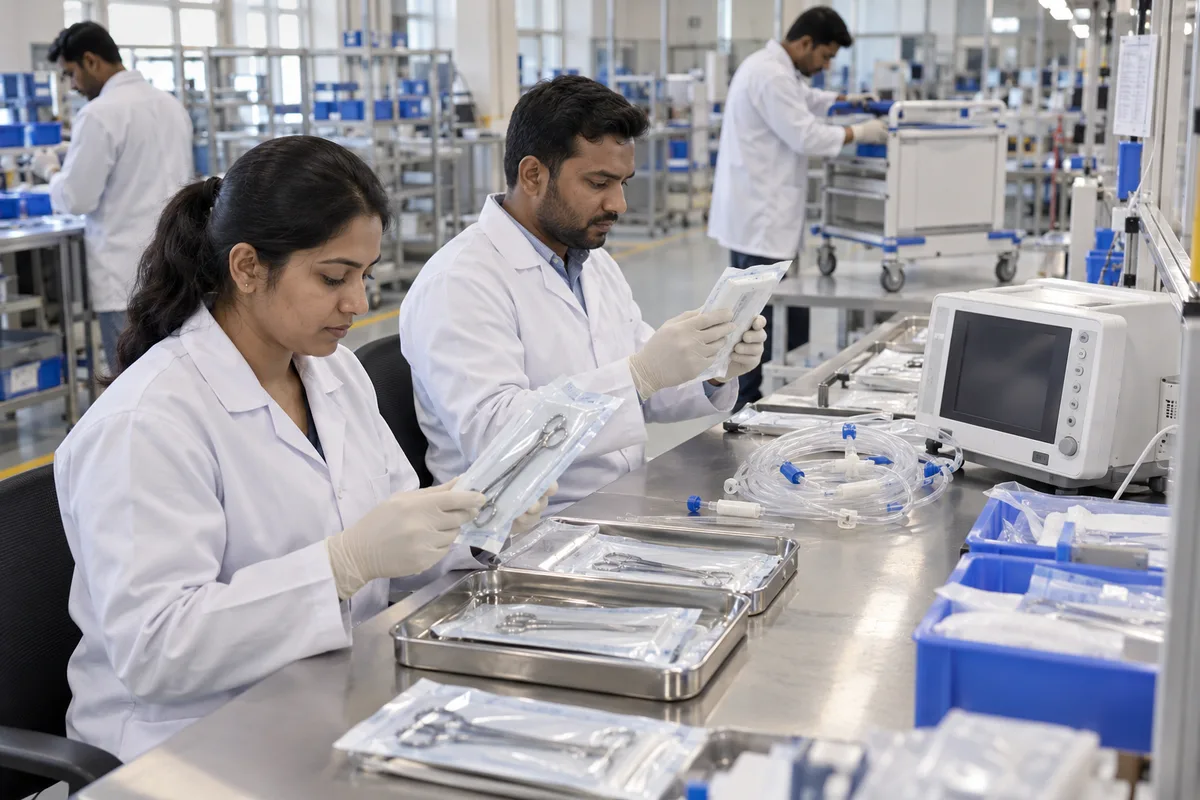
Share your requirementsCompanies in this group make surgical instruments, hospital furniture, diagnostic equipment, implants, plastic components and disposables. Work arrives from hospitals, distributors, tenders and export buyers, in batches that need traceable parts. A unit may machine and finish metal, mould plastic, or assemble bought-in parts into equipment that is tested before it is shipped.
The people side depends on a few hands. Grinders, polishers, machine setters, inspectors and service engineers carry skill that is learned by watching, and they are hard to replace. Assembly teams need discipline on cleanliness and records, while design and service engineers expect a growth path. Tender and export spikes force overtime, then a quiet period follows. A sound skill and role structure and a steady hiring process keep the workshop and the engineering desk in step.
What medical devices and equipment have in common
A small number of skilled people carry quality
In most units a handful of finishers, setters or inspectors decide whether a lot passes. Their pay and recognition are rarely planned, and they are the first to receive outside offers. Losing one costs weeks of output.
Records and traceability depend on habit
Buyers expect each lot to be traced to people and materials. When operators are new or rushed, entries are missed. Induction, a simple record routine and supervisors who check at the bench protect traceability.
Demand arrives in tender and export bursts
Orders bunch around hospital tenders or shipment dates. Overtime peaks, temporary hands are brought in, and the workshop then quietens. Planning headcount and shift patterns ahead keeps good people from tiring out.
Engineers want a growth path
Design, quality and service engineers leave when they see no step ahead. A clear performance process and a defined career ladder hold them better than a one-time raise.
Workshop and sales speak different languages
Sales promise specifications and dates, and the workshop learns late. Shared planning meetings and clear roles reduce the friction and the last minute pressure on shop floor teams.
Business types in medical devices and equipment
Choose the one closest to yours. Each page covers how that kind of unit is run, where its people processes strain, and the HR processes worth putting in place first.
- Surgical Instrument MakersGrinding, forging and polishing hands hold the skill, and finish decides acceptance, so apprenticeship and retention of a few artisans are the main people issue.Explore HR guidance
- Medical Equipment MakersAssembly, wiring and testing of larger equipment need technicians who can read drawings, with service engineers visiting customer sites.Explore HR guidance
- Hospital Furniture MakersFabrication, wood and upholstery crews matter more than precision skills, and orders follow hospital projects, so teams swell and shrink.Explore HR guidance
- Medical Disposables MakersClean moulding and packing lines run in volume, so operator discipline and shift handover matter more than individual craftsmanship.Explore HR guidance
- Diagnostic Equipment MakersElectronics assembly, calibration and software support bring technician and engineer hiring, plus field service staff.Explore HR guidance
- Orthopaedic Implant MakersMachining, finishing and inspection of implants demand tight tolerances, so inspectors and setters carry the weight and training takes long.Explore HR guidance
- Medical Plastics MakersInjection moulding and tooling teams need setters and mould maintenance staff, with the standard set by process control rather than hand skill.Explore HR guidance
Roles we help you hire in medical devices and equipment
GullyHR runs talent acquisition for permanent roles in medical devices and equipment. For each role we agree the job description with you, find and screen candidates against it, and support the offer through to joining. Tell us the role and the number of people, and we start there.
- Maintenance technicians
- Drop-forge and press operators
- Milling and profile machinists
- Hardening and tempering furnace staff
- Blade and jaw grinders
- Box-lock and joint fitters
- Polishers and buffing wheel hands
- Final bench inspectors
- Ultrasonic cleaning and packing staff
- Stores and dispatch clerks
- Assembly technicians
- Wiring and PCB-level technicians
- Bench test and calibration technicians
- Final inspection and packing checkers
- Field installation and service engineers
- Clinical application and user-training specialists
- Purchase and stores staff
- Design and drawing engineers
- Dealer support and dispatch staff
- Tube cutting and bending operators
- Press and punching operators
- Welders
- Grinding and fettling staff
- Pretreatment and powder coating crew
Job descriptions for this sector
We recruit permanent employees. We do not supply contract or temporary staff.
We set up the interview and hiring process for medical devices and equipment
Every business interviews, but few have a written process that works the same way for every role and every interviewer. GullyHR designs yours, from the role brief to the offer, trains your managers to run it, and can run it for you on the roles you hand us.
1. Role brief and scorecard
We agree what the role must deliver, the must-have and nice-to-have skills, and how each will be scored.
2. Stages and sequence
Screening call, assessment, interview rounds and decision points, sized to the role and the number of people you hire.
3. Question bank and scoring
Structured questions for each role family and a rating guide, so two interviewers judge the same answer the same way.
4. Interviewer readiness
A short briefing for your managers on what to ask, what to avoid and how to give a clear yes or no.
5. Offer and follow-up
Who approves, how the offer is made, and how candidates are kept informed from first call to joining.
HR processes that matter most for medical devices and equipment
Each business-type page above goes into the processes that fit it best. These are the ones that come up most across the whole group.
- Recruitment process consulting
Clearer hiring for fitters, inspectors and engineers, with defined roles and a fair test of the skill that matters.
- Role design and job descriptions
Makes the skills and responsibilities of setters, finishers and inspectors explicit, so training and pay follow the role.
- Employee onboarding process
Gets new assembly and inspection staff to the standard on records and cleanliness before they work alone.
- Compensation and rewards strategy
Reviews piece rates and skill pay so scarce craftspeople are rewarded for quality rather than speed.
- Performance management process
Gives engineers and supervisors a clear review rhythm and growth path to reduce quiet exits.
- Learning and development process
Turns watch-and-learn skills into a planned training path with senior craftspeople as teachers.
Questions owners ask
Recognise them openly, tie part of pay to quality and not only volume, and give each a student to train. People who teach feel valued. Owners should also plan a second pair of hands for each critical skill.
Because new staff learn records from a colleague in a hurry. A short, structured induction and a supervisor who checks entries at the bench cure most of it. Blaming individuals can push good operators out.
Forecast the peak from the order book, decide early who works overtime, and line up trained temporary help before the rush. Rotating overtime fairly keeps morale and quality steadier than last minute requests.
Yes. Engineers value a clear role, review and growth path, while workshop staff respond to skill pay and training. Running both through one process pleases neither group.
We would look at which roles hold your quality, how you hire and train them, how overtime peaks are handled and where people leave. We would suggest a short list of priorities. Scope is agreed in writing afterwards.