

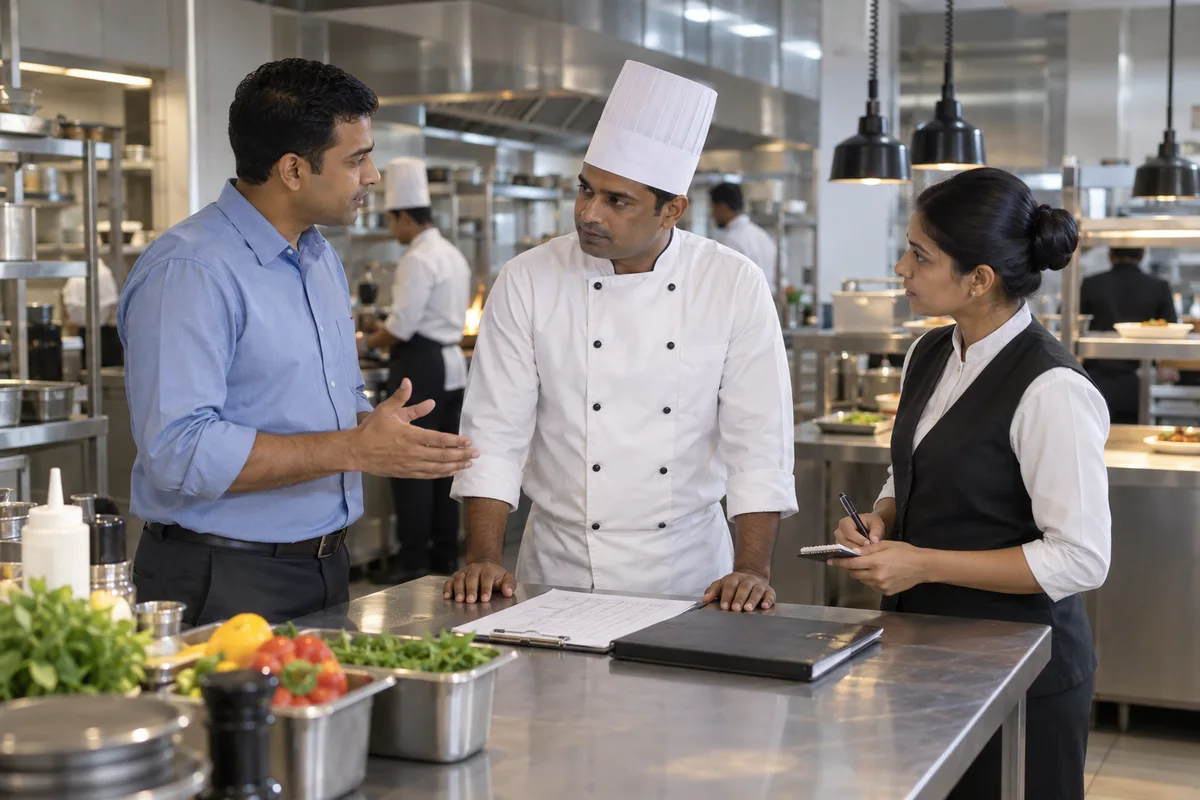
Why food and beverage staff leave and how to understand why
Kitchen, service and outlet staff leave quickly in food and beverage. How to ask what lies behind the first answer, compare outlets and act on what you learn.
7 min readRead articleA brewery or distillery makes a regulated product in batches, on a licensed site, with a small skilled team. The people side includes process knowledge held by one brewer, tank checks at odd hours and a clear rule on alcohol at work.

Not sure what you need? Tell us about your business in six short steps and we will come to the first meeting prepared.
Share your requirementsA brewery or distillery makes beer, spirits or related drinks in batches: milling, mashing, fermenting, distilling or conditioning, then filling, packing and dispatch. Sizes range from a taproom brewery with a handful of people to a plant with a laboratory, a bottling line and a warehouse. The product is regulated, the premises are licensed and the site records are checked, so discipline around records and conduct counts more than in most food businesses. Skilled brewers and distillers are few, a taproom adds hospitality staff, and sales, marketing and distribution teams sit around the plant. A small team carries a lot of knowledge and a lot of responsibility. See also HR for food and beverage.
Who does the work
Process knowledge sits with the head brewer
Recipes, tank cycles and fixes live in one person's head, and his departure threatens consistency and the product.
Batches run on their own clock
Fermentation does not follow shifts, so weekend checks, night readings and tank turns depend on a few willing people.
Licensed premises raise the stakes
Conduct at work, stock records and who is on the site carry weight, and a lapse is not just an HR matter.
Taproom and plant are two cultures
Hospitality staff work evenings and weekends with tips and customers, while the plant works days with machines, and the two feel differently treated.
Heat, pressure and chemicals
Hot liquor, pressurised vessels, CO2 and cleaning chemicals are routine hazards, and confined-space work needs trained people.
Seasonal and event peaks
Festivals, long weekends and year-end demand require extra packing and taproom hands for a few weeks.
Alcohol at the workplace
Tasting is part of the job in some roles, and a clear line on consumption and conduct protects both staff and the business.
Growth outpaces structure
A craft brand that grows from five people to thirty adds a sales team, a line and a lab before roles and reporting are defined.
Write down the process knowledge
Recipes, cycle times, cleaning steps and troubleshooting captured as procedures, with a second person trained on each. The HR documentation process and learning and development work help.
Set a clear alcohol and conduct policy
What is allowed during tasting, at events and on the site, and what is not, written in plain words and acknowledged by staff. The policies and governance work covers it.
Design a tank-watch rota
A fair schedule for weekend and night checks with agreed extra pay or time off, so the burden does not fall on the same two people. The attendance and shift process holds it.
Train for vessel, CO2 and chemical safety
A short practical session with a check and a record, including confined-space rules where relevant. The health, safety and wellbeing work builds it.
Separate plant and taproom terms clearly
Written terms, rosters and tip or incentive rules for each group, so the two sides understand the difference.
Define roles as the team grows
Role descriptions and reporting lines for each function as the business scales. The role design work shows how.
Confirm with a qualified professional. What applies to you depends on your business, your state and your arrangements, and it changes. This page describes practice. It does not state a legal position.
A practical safety routine for vessels, CO2, heat and chemicals, with training recorded per person.
A clear alcohol, conduct and records policy that suits a licensed site.
A way to move brewing and distilling knowledge from one head into the team.
Roles and reporting lines that keep up as a craft brand scales.
Every engagement starts by recording where you stand, and every later report compares against that. We do not promise outcomes. Start with a free conversation, or see the paid HR Diagnostic.
From the GullyHR blog: one on HR in food and beverage, and one on each of the topics this page points to.

Kitchen, service and outlet staff leave quickly in food and beverage. How to ask what lies behind the first answer, compare outlets and act on what you learn.
7 min readRead article

A practical contents list for an employee handbook in a growing Indian business: what to cover, what to leave to policies, and how to keep it usable and current.
5 min readRead article
A laminated notice, an annual drill, and an incident register with three entries in two years. What workplace health and safety looks like when it is real.
7 min readRead article
A calendar of courses, a budget spent by March and no record of what any of it changed. What a learning and development process contains when it starts from need rather than from the catalogue.
7 min readRead articleMore on the GullyHR blog.
Capture recipes and routines in writing, train a second person on each step and give the head brewer time and recognition to teach. Dependence ends when knowledge is shared, not when pay is cut.
Tasting rules, drinking at work events, conduct on site, driving and what happens in case of breach. Write it plainly and have staff acknowledge it.
Rotate them across trained people, pay extra or give time off, and keep clear instructions so the person on watch knows what to do.
The terms can differ because the work differs, but the reasons should be clear and written. Unexplained differences cause resentment.
Plan early, use trained part-timers where you can and give a short induction on the premises, the product and safety.
The first discussion would look at process steps only one person can do, who covers weekend and night tank checks and how they are compensated, and whether the alcohol and conduct rule is written and known. Plant and taproom terms side by side might be compared. A useful first piece of work is a written process record and tank-watch rota. We confirm scope in writing.
All 7 business types in food and beverage · Find another business type
See all HR topics for food and beverage, or another industry.
Identify payroll leaks, record gaps and hiring bottlenecks in a free first conversation, and leave knowing what to fix first.
Know what you need? Share your requirements in four short steps.
Want the full picture? See the paid HR Diagnostic.
Prefer a quick message? Chat on WhatsApp