
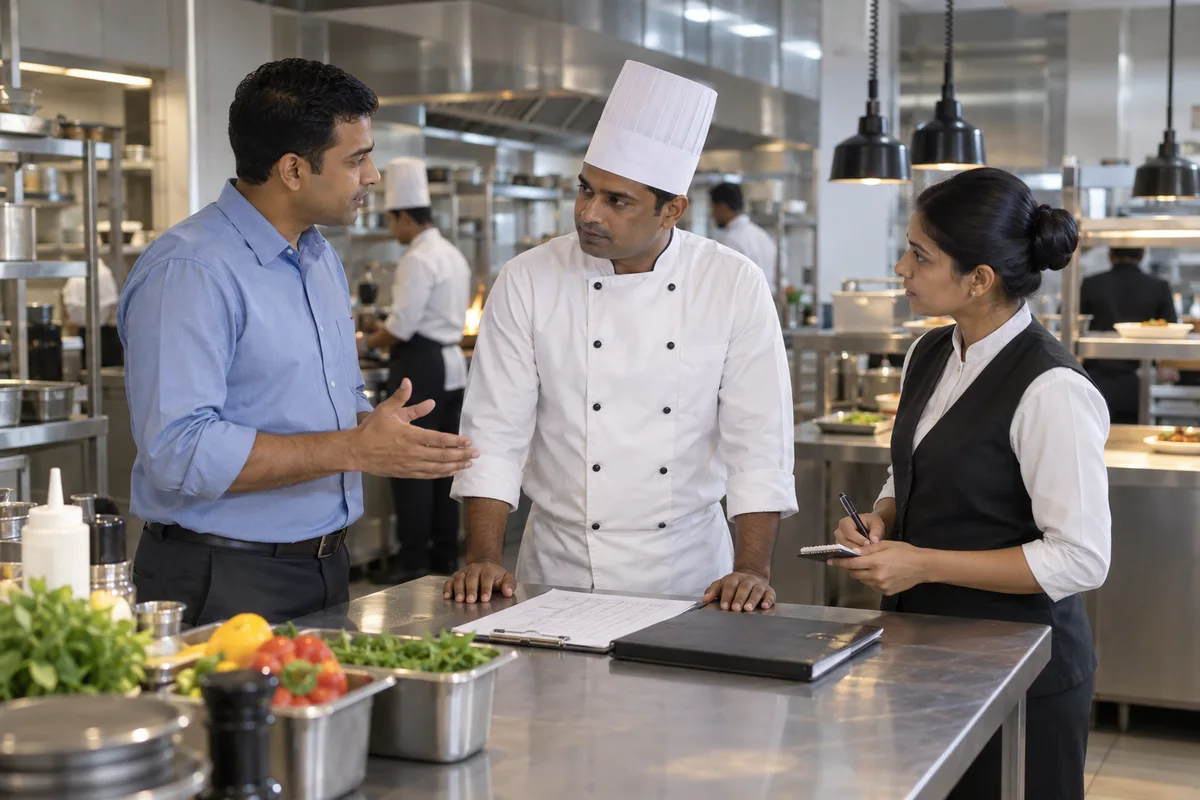
Why food and beverage staff leave and how to understand why
Kitchen, service and outlet staff leave quickly in food and beverage. How to ask what lies behind the first answer, compare outlets and act on what you learn.
7 min readRead articleA winery grows grapes, makes wine and often hosts visitors, which means farm work, cellar work and hospitality in one business. Farm, cellar and visitor teams work under different rhythms, and harvest weeks depend on seasonal workers arriving on time and being treated fairly.

Not sure what you need? Tell us about your business in six short steps and we will come to the first meeting prepared.
Share your requirementsA winery and vineyard runs three jobs: growing grapes, making wine and, in many cases, welcoming visitors. The vineyard needs pruning, canopy work, spraying and a short, intense harvest; the cellar needs crushing, fermentation, ageing, blending and bottling; the tasting room, restaurant or stay needs hospitality staff. Work follows the vine and the cellar, not the clock, with a long quiet stretch and a harvest that must be picked at the right moment. Many estates are far from towns, so housing, transport and food for workers matter. The licensed product brings record-keeping and conduct expectations, and a small year-round team is joined by many seasonal hands. See also HR for food and beverage.
Who does the work
Harvest labour must appear on the right week
Grapes ripen on their own schedule, and if the pickers are not there, quality and the crop are at risk.
Estates are remote
Workers need housing, transport and food, and arrangements for them are an HR matter as much as a facilities one.
Vineyard and cellar skills are scarce
Experienced pruners and cellar hands are few, and learning takes several seasons.
Year-round staff are few, seasonal staff are many
A small core carries the estate for months, and then a large temporary group arrives and must be organised quickly.
Tourism adds a second business
Tasting room and event staff work weekends and holidays with a different pay and pace from the farm.
Pay and treatment of seasonal workers
Piece rates, advances and housing conditions need to be fair and clear, or workers do not return.
Licensed product, relaxed culture
Tasting is part of the job in some roles, and conduct standards around alcohol need to be clear.
Knowledge rests with the winemaker
Blends, cellar practice and vineyard decisions are known to one or two people.
Plan the harvest crew early
A list of returning pickers, new recruits and a contingency pool, with an arrival schedule tied to ripeness checks. The recruitment process keeps it topped up.
Set housing, transport and food standards
A written minimum for accommodation, travel and meals for seasonal workers, with someone responsible for it.
Write fair seasonal terms
Clear rates, piece-rate rules, advances, weather days and end-of-season payment, explained before the work starts. The payroll process supports it.
Build a skills ladder for pruners and cellar hands
A progression from helper to skilled worker with supervised learning each season. The learning and development process can structure it.
Separate farm, cellar and visitor terms
Written terms and rosters for each group, so weekend tourism work is not treated as an afterthought.
Write down the winemaker's knowledge
Cellar procedures and blending notes captured as the winemaker teaches an assistant, so the estate does not depend on one head.
Confirm with a qualified professional. What applies to you depends on your business, your state and your arrangements, and it changes. This page describes practice. It does not state a legal position.
A returning harvest pool and a backup list, ready before the grapes are.
Clear piece-rate, advance and end-of-season payment rules that workers understand.
A multi-season route for pruners and cellar staff to become skilled.
Housing, heat, tools and chemical-use routines for people who live and work on the estate.
Every engagement starts by recording where you stand, and every later report compares against that. We do not promise outcomes. Start with a free conversation, or see the paid HR Diagnostic.
From the GullyHR blog: one on HR in food and beverage, and one on each of the topics this page points to.

Kitchen, service and outlet staff leave quickly in food and beverage. How to ask what lies behind the first answer, compare outlets and act on what you learn.
7 min readRead article

Candidates who accept and never arrive are usually lost in the silence between offer and joining. What actually causes it, and a contact plan that closes the gap.
8 min readRead article
Most salary structures grew one negotiation at a time. How to build grades and bands from what you already pay, without repricing everybody at once.
8 min readRead article
A calendar of courses, a budget spent by March and no record of what any of it changed. What a learning and development process contains when it starts from need rather than from the catalogue.
7 min readRead articleMore on the GullyHR blog.
Keep a list of returning workers, contact them early, confirm travel and housing, and keep a standby pool in case ripening moves forward.
Rates and how they are calculated, advances, working hours, weather days, housing and transport, and who to contact. Put it in a language they read.
Use supervised practice across seasons with a simple skill ladder, and recognise progress with grade and pay.
Provide decent housing, safe transport, food, first aid and a named person to hear problems. A fair estate gets workers back.
Document cellar practice, train an assistant alongside him and give him time and recognition to teach.
Our opening discussion would cover how many harvest workers returned compared with last year, what housing and transport feel like from a worker's side, and whether piece rate, advance and weather-day rules are written. Who could run a fermentation tank without the winemaker would come up. A good first piece of work is early harvest crew planning. Scope is agreed in writing.
All 7 business types in food and beverage · Find another business type
See all HR topics for food and beverage, or another industry.
Identify payroll leaks, record gaps and hiring bottlenecks in a free first conversation, and leave knowing what to fix first.
Know what you need? Share your requirements in four short steps.
Want the full picture? See the paid HR Diagnostic.
Prefer a quick message? Chat on WhatsApp