
Learning and development process for Transformer Manufacturers: passing winding skill to the next hands
Winding skill takes years and a poor coil wastes copper and opens finished units. A staged learning plan moves new hands from scrap and practice work to real coils with a senior watching.
Not sure what you need? Tell us about your business in six short steps and we will come to the first meeting prepared.
Share your requirementsWhy learning and development process matters in transformer manufacturers
Transformer winders learn by standing beside an older winder for months. When that winder retires or leaves, the knowledge goes with them. Some new hands are put on a live coil too early because a job is late, and a loose turn or damaged paper insulation shows up only at the test bay, when the unit may have to be opened again.
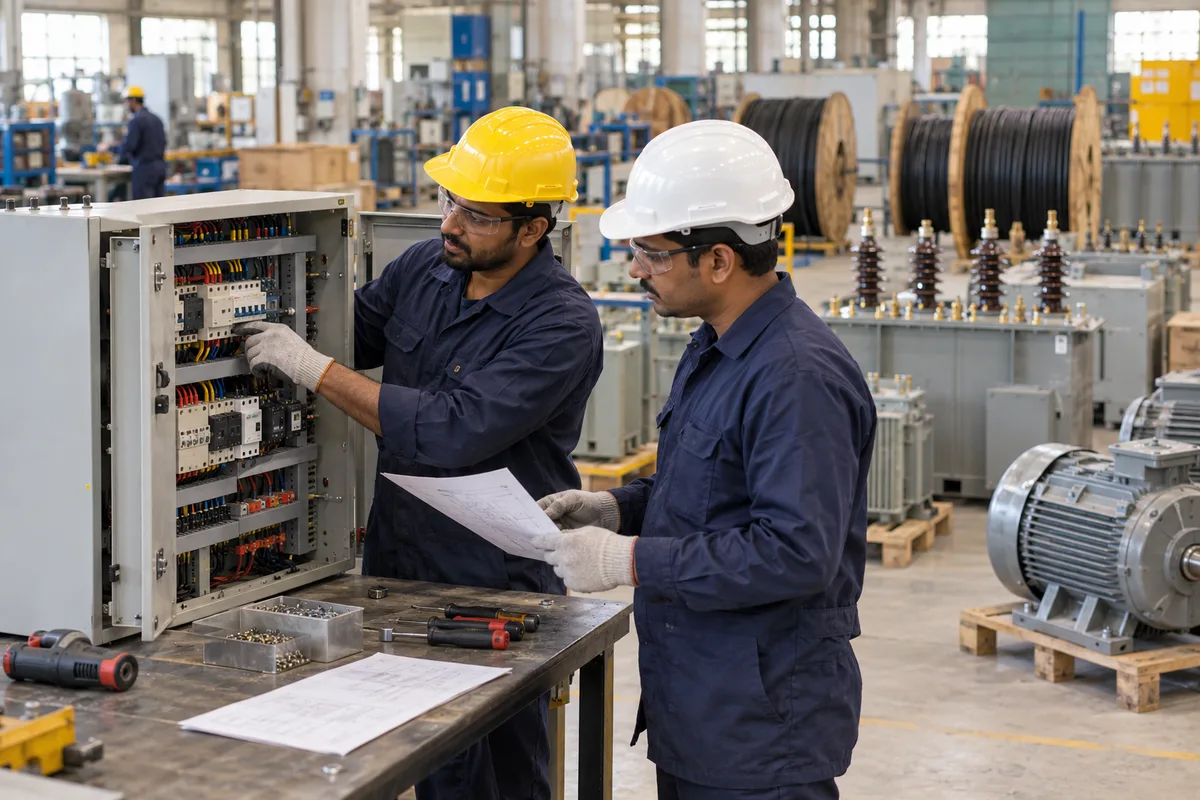
Good looks like a ladder of tasks: paper handling and cleaning first, then practice winding on scrap, then small coils, then main coils. Each step is signed off by a named senior. The shop keeps a list of who can wind which type, so a late job does not push an unready person onto a high value coil.
How to set it up
1. List the winding and stacking tasks
Write the tasks from easiest to hardest: insulation cutting, paper wrapping, tension setting, layer winding, joints, core stacking. Note which ones can damage a coil if done wrong.
2. Set a practice area
Keep offcuts of copper and paper for practice. A trainee winds a practice coil and a senior checks turns, spacing and finish before the trainee touches a real coil.
3. Name a senior for each trainee
Pick a winder who explains well and give them protected time. Note in a small record what the trainee can now do alone. Review it together every month.
4. Cross train in the other crafts
Let winders spend a short time in core stacking and assembly so they see where their coil goes and what problems arise there. It also builds cover for absences.
5. Keep a skill matrix up to date
Mark who can wind each coil type, who can stack cores and who can fill oil. Use it when planning jobs. A learning and development process gives the structure.
Check these first
Before changing anything, find out what is true today. Use your own records for a defined period and note gaps in the evidence. The review may take longer if records are incomplete or spread across teams.
- Count how many winders can wind your largest coil type alone, and how old they are.
- List coils or units reopened in the last year and note who had worked on each stage.
- Ask a trainee what they were first allowed to do and who signed it off.
- Check how much practice copper and paper you allow trainees in a month.
GullyHR can do this with you. Read how we approach learning and development process in general, or share your requirements and we will tell you where to start.
Questions owners ask
It varies by coil type and the person. Basic winding can be learned in months, but large or complex coils take years of practice. Plan the stages and sign each one off rather than fixing a calendar.
Pay a fair training rate and make the steps up clear, so the trainee knows what each sign off adds. Treating practice as free labour makes good trainees leave in the first year.
Start now. Have them wind with a trainee beside them, write down the settings and checks they use, and photograph good coils. Pay them in a way that rewards teaching, and set a handover date with named successors.
We set up the interview and hiring process for transformer manufacturers
Every business interviews, but few have a written process that works the same way for every role and every interviewer. GullyHR designs yours, from the role brief to the offer, trains your managers to run it, and can run it for you on the roles you hand us.