
Learning and development process for Cable and Wire Manufacturers: extrusion skill, line setup and cross cover
Extruder skill is learned slowly and mostly on live lines. A staged learning plan, with setup checks and cross cover, spreads that skill across more people than one or two seniors.
Not sure what you need? Tell us about your business in six short steps and we will come to the first meeting prepared.
Share your requirementsWhy learning and development process matters in cable and wire manufacturers
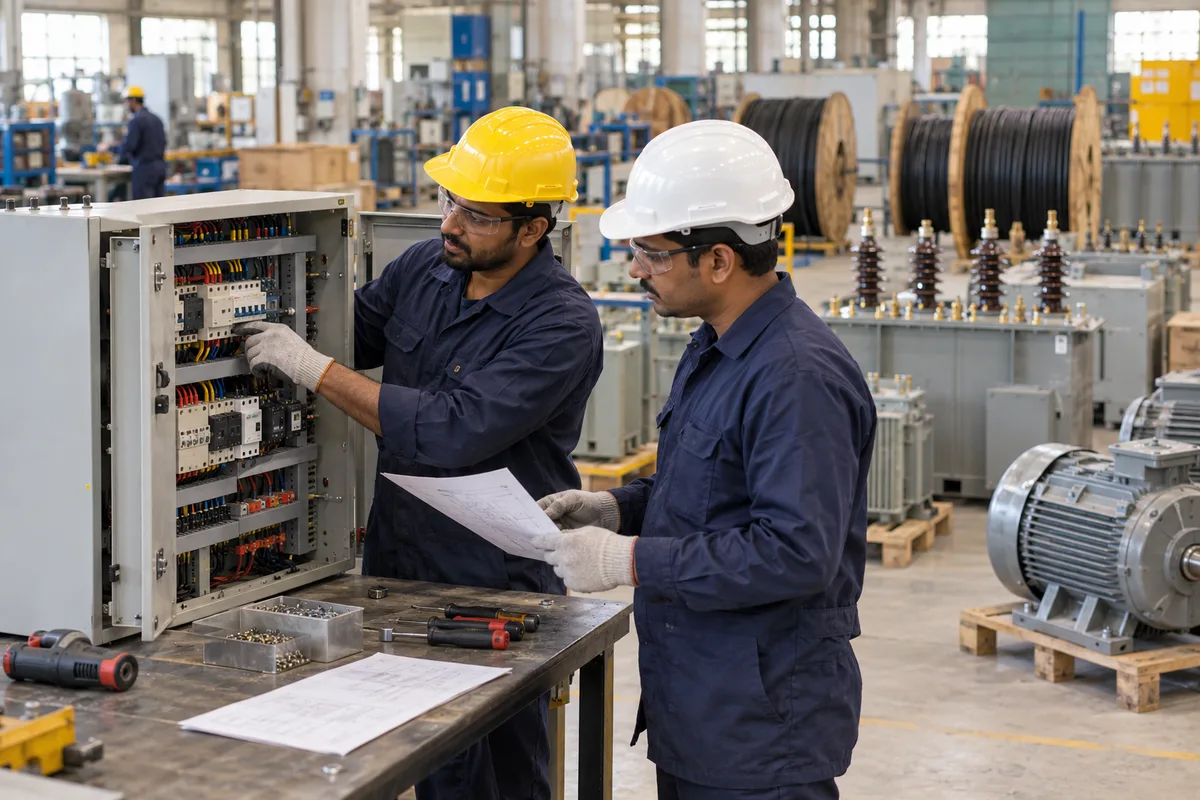
On a cable floor, the most skilled operator is asked to set up every product change, because they do it best. Younger operators watch but are not allowed to try, since scrap is costly. When they are absent, the line runs poorly or stops. Drawing, stranding and laying up each have their own tricks, and cross cover is thin, so a single absence causes a gap.
Good looks like a ladder for each line: start by watching setup, then do setup under supervision on a lower value product, then handle full setups alone. Photographs and short notes capture settings for common products. Each operator learns a second line to cover, so absence does not stop production.
How to set it up
1. Write the setup steps for common products
For each common product, note the settings, checks and signs of trouble in simple words. Add photographs of good output. Review with the senior operator for accuracy.
2. Set stages for each operator
Define stages: watch, assist, do under supervision, do alone. Mark who signs each stage and when. Start trainees on lower value products where scrap costs less.
3. Give the senior operator time to teach
Plan the senior operator's work so that they can coach during changeovers. Recognise teaching in their reviews and pay step. Do not expect it to happen between urgent jobs.
4. Build cross cover
Choose a second line for each operator and plan a period of practice there. Record who can cover which line. Use the record when planning leave and nights.
5. Review progress monthly
Meet each trainee monthly and record progress. A learning and development process can be run with a simple matrix of operators and lines.
Check these first
Before changing anything, find out what is true today. Use your own records for a defined period and note gaps in the evidence. The review may take longer if records are incomplete or spread across teams.
- List the operators who can do a full setup on each line and see where only one person can.
- Compare scrap after changeovers done by seniors and by newer operators.
- Check whether settings for your five most common products are written anywhere.
- Count operators who can cover a second line.
GullyHR can do this with you. Read how we approach learning and development process in general, or share your requirements and we will tell you where to start.
Questions owners ask
Use lower value products and plan practice during planned changeovers. Pair the trainee with a senior who can stop the run. The cost of some scrap is lower than the cost of a gap in skill.
A short classroom session on materials, temperature and measurement is worth having, but most skill comes on the line. Use it to explain why settings matter, and then practise on the floor.
Look at the cause: material, settings, handover or maintenance. Review scrap events with the operator and the supervisor together, and record the cause. People share more when the aim is a fix.
We set up the interview and hiring process for cable and wire manufacturers
Every business interviews, but few have a written process that works the same way for every role and every interviewer. GullyHR designs yours, from the role brief to the offer, trains your managers to run it, and can run it for you on the roles you hand us.