









Industries
Why NGO and social enterprise employees leave and how to understand why
Staff at NGOs and social enterprises leave for funding, field and workload reasons as well as pay. How to understand why, listen early and act.
7 min readRead articleA chamber of commerce speaks for local businesses, hosts trade fairs and meetings and runs desks that member firms visit daily. Its staff are long serving, and its president changes every year or two.

Make this work for your business. Share your team size, priorities and what you need help with. We’ll use your brief to prepare for the first conversation.
Share your requirementsA chamber of commerce brings together traders and firms in a city or state. The secretariat runs the member desks, issues routine documents, organises trade fairs, buyer meetings and delegations, and prepares representations for the government. A secretary general and a handful of seniors hold the institutional memory, while presidents rotate every year or two with new ideas. Members drop in, telephone and write, and expect to be recognised by name. Event weeks pull the entire staff into logistics. See the NGO and social enterprise hub and the associations hub for what such bodies share.
These are the places the people side of this kind of business tends to give way. The rest of this page works through them.
Why GullyHR for chambers of commerce
For chambers of commerce that want the member desk, the trade fair team and the secretary general's office to run on written roles, whoever holds the presidency this year.
A succession note names who can step in on each task only the secretary general holds today, so the chamber keeps its memory when that person is away or leaves.
A written desk standard sets how callers and walk-ins are greeted, recorded and followed up, so members get the same reply whoever sits at the desk.
An event role sheet spreads fair duties across the secretariat and records what normal work waits, so support staff are not stretched beyond their jobs every fair.
A written route for staff grievances and member complaints about staff gives an alternative to going straight to the president, protecting attendants, drivers and desk staff alike.
Start with any one of these. Scope and fee are agreed in writing after a free first conversation.
The audit begins with the secretary general's own task list, marking what only that person can do and what has no written steps. We then sit at the member desk for a morning to see how interruptions are handled. We read the staff list for grades, pay and service years across the documentation desk, trade fair team, accounts and office attendants. We count who was pulled into the last trade fair and what regular work waited. Finally we ask an attendant and a driver how they would raise a problem.
What you receive
An example, not a client storyTake a chamber where a new president asks for a rapid change in how members are served, and the long-serving seniors push back. The audit shows what each desk actually does, which roles are overloaded and who holds what knowledge. The new president then decides with facts, not impressions, and the seniors see their work described fairly.
How the hr audit works →Process design starts at the front desk, where a member arrives or telephones and expects to be recognised. We write how enquiries are logged, passed to the documentation desk and followed up, with a plain standard for reply. Next comes the trade fair or delegation routine: who is released from normal work, who covers the desk and how overtime is recorded. Then we draw a complaint route for staff and for members who complain about staff, with a record. Each routine is written in the chamber's own language and tested on one live event.
What you receive
An example, not a client storySuppose the chamber runs a buyer meeting and four desk staff are pulled into logistics, leaving certification requests to wait. Members phone the president, who tells the secretary general to fix it. With a written event roster that names cover for each desk, the requests carry on and the president hears no complaint.
How the hr process design works →Each week we keep the desk roster and event assignments current, and record who works extra hours in event weeks and when time off is given back. We maintain staff records and review notes so decisions are written down. Once a year we prepare a workforce review covering retirements, the second line behind senior staff and training needs. When a new president arrives, we prepare a short briefing on roles, open staff matters and the standards the secretariat already follows, so the incoming leadership does not need to rediscover them.
What you receive
An example, not a client storyPicture a chamber whose secretary general is about to retire after decades and has told no one which tasks only they know. A management routine begins the handover well ahead, naming a successor for each task and pairing them in live work. By the farewell the secretariat has what it needs, and the new president inherits a working office.
How the hr management works →The roles that are hard to fill are a secretary general or chief executive who can work with elected leaders, a research and representation officer who can write for government and a trade fair executive who can handle logistics. We write a scorecard for each that names both the skill and the manner with members. Candidates take a short writing task or a planning case, and desk candidates a role play with an impatient member. A mixed panel of senior staff and a committee member scores on the same sheet, so selection is fair and visible.
What you receive
An example, not a client storySay the chamber must hire a research officer, and two committee members each recommend a different candidate. Without a common method the choice becomes a contest between members. A writing task on a real policy question, scored on one sheet by a panel, lets the chamber choose on merit and explain why.
How the recruitment for permanent roles works →Desk staff practise greeting members by name, taking down requests accurately and saying what will happen next, including when the answer is no. Fair and delegation teams run a pre-event briefing on roles, timing and escalation. Seniors learn to delegate tasks the secretary general currently holds and to give feedback to long-serving staff respectfully. Attendants and drivers are shown how to raise a problem and what happens after they do, so they are treated as part of the secretariat and not as the lowest grade.
What you receive
An example, not a client storySuppose a member arrives at the desk upset that a document has been delayed and asks for the president by name. The desk staff member, unsure what to say, sends the member upstairs. After a short practice session on listening, recording and promising a follow-up, the same staff member resolves it at the desk.
How the manager and team training works →A chamber needs plain rules that survive a change of president: the grades and how a person moves between them, event overtime and time back, how complaints are heard and who may hear them. We write these in a short handbook that the secretary general signs on behalf of the governing body. In the HR software we set up staff records, grade scales, leave and event rosters, and a grievance register. The chamber's own adviser confirms the registration, record-keeping and employment rules that apply before these are issued.
What you receive
An example, not a client storyPicture a long-serving attendant who is told by a new president to move to a different task, with no written grade or role to appeal to. The attendant feels slighted and the secretary general has nothing to show. A written grade scale and a role description would have given both sides a fair place to start.
How the policies, handbook and hr software works →We would begin by listing every task only the secretary general does, then write short steps for each and name a second person who learns it alongside. We schedule a few live handovers across the year, so the knowledge moves while the secretary general is still here. We do not remove authority from the post; we make the chamber less dependent on one person.
Yes. We would write down roles, standards and open staff matters in a briefing note, so each president starts from the same facts. Written rules do not stop a president proposing change; they make it clear what would be altered and who is affected. Your governing body and your own adviser decide what changes and confirm the employment rules.
We would write an event role sheet that names who is released, who covers each desk and how extra hours are recorded and given back. We would review it after each fair with the staff who worked it. Support staff would be included in the planning, not told on the day. Your own adviser confirms the working hours rules that apply.
We would write a complaint route that gives the secretary general or an HR lead the first look, records the complaint, hears the staff member and keeps the president informed without deciding alone. Supervisors would be trained on it, and a register would record outcomes. Your own adviser confirms the disciplinary steps your chamber must follow.
GullyHR runs talent acquisition for permanent roles in chambers of commerce. For each role we agree the job description with you, find and screen candidates against it, and support the offer through to joining. Tell us the role and the number of people, and we start there.
We recruit permanent employees. We do not supply contract or temporary staff.
Members and officials know one or two senior people, and plans for who would step in are not written anywhere.
Each office bearer asks for fresh programmes, and the staff retool their work every year without any change in pay or team.
Business owners arrive in a hurry and expect priority, and young desk staff are given little help to handle that.
Accountants, drivers and desk clerks are all drawn into stalls and logistics with no clear task, and the usual work waits.
Attendants and drivers see their work taken for granted, with unclear leave and no route to improve their position.
Members phone an office bearer instead of the director, and staff learn of a grievance only when it comes back as a rebuke.
Start with the topics that matter most here: Career and Succession Management; HR Strategy and Workforce Planning; Employee Relations. Then work through the rest. Each topic is written for ngos and social enterprises, not in general.
Named backups for the roles that cannot be vacant.
How many people, in which roles, by when, and what they will cost.
Two routes, one for complaints, one for conduct, kept separate.
Structure, reporting lines and who is allowed to decide what.
Requisition to joining, the same way every time.
A first day that is the same for the fifth joiner as the first.
Records, attendance, leave and the day-to-day HR that must simply work.
Salary structure, payroll inputs and a month that closes on time.
Goals, reviews and ratings that hold up in a conversation.
Training planned from need rather than from the calendar.
Communication, recognition and the conditions people actually work in.
Policies a manager can apply, and obligations with owners and dates.
Induction, records, incident reporting and follow-through.
Who leaves, when, why, and which of them mattered.
Resignation to relieving letter, in a defined order.
Records that survive people, and approvals that do not queue.
A short monthly pack management actually reads.
An HR function that runs the same way every month.
The pieces a chambers of commerce business puts in place, in an order that makes each easier. Open any card for the detail.
Identify two or three people who could take on parts of the secretary general's work, and plan their exposure step by step.
Identify two or three people who could take on parts of the secretary general's work, and plan their exposure step by step. See succession planning.
Match the programmes the new president wants against the people available, and decide what to add or drop.
Match the programmes the new president wants against the people available, and decide what to add or drop. The workforce planning work gives the steps.
Short rules on greeting members, response times and what to do when the person wanted is absent, taught to every new desk joiner.
Short rules on greeting members, response times and what to do when the person wanted is absent, taught to every new desk joiner.
A written list of who does what at fairs, with time off in return, so that routine work is covered in the meantime.
A written list of who does what at fairs, with time off in return, so that routine work is covered in the meantime.
Members and staff both know the first and second contact, and the director logs and answers each complaint.
Members and staff both know the first and second contact, and the director logs and answers each complaint.
Confirm with a qualified professional. What applies to you depends on your business, your state and your arrangements, and it changes. This page describes practice. It does not state a legal position.
A plan for who steps in when the secretary general or a senior desk head is away or leaves.
A yearly view of programmes against staff, so a new president's asks do not overload the team.
A proper start for desk and fair staff, including how to speak to members.
A clear route for complaints from members and staff that ends with the director, not the president.
Start with a free conversation, or see the paid HR Diagnostic.
Understand the business, its workforce, current processes and HR challenges.
Find the missing, weak, inconsistent or person-dependent processes.
Create the structure, processes, policies, SOPs, dashboards and systems needed.
Help HR and department managers actually adopt the new system.
Digitise repetitive and approval-based workflows where it is worth doing.
Track hiring, attendance, employee cost, performance, training and attrition.
Strengthen the people-management system continuously, not once.
From the GullyHR blog: one on HR in ngos and social enterprises, and one on each of the topics this page points to.
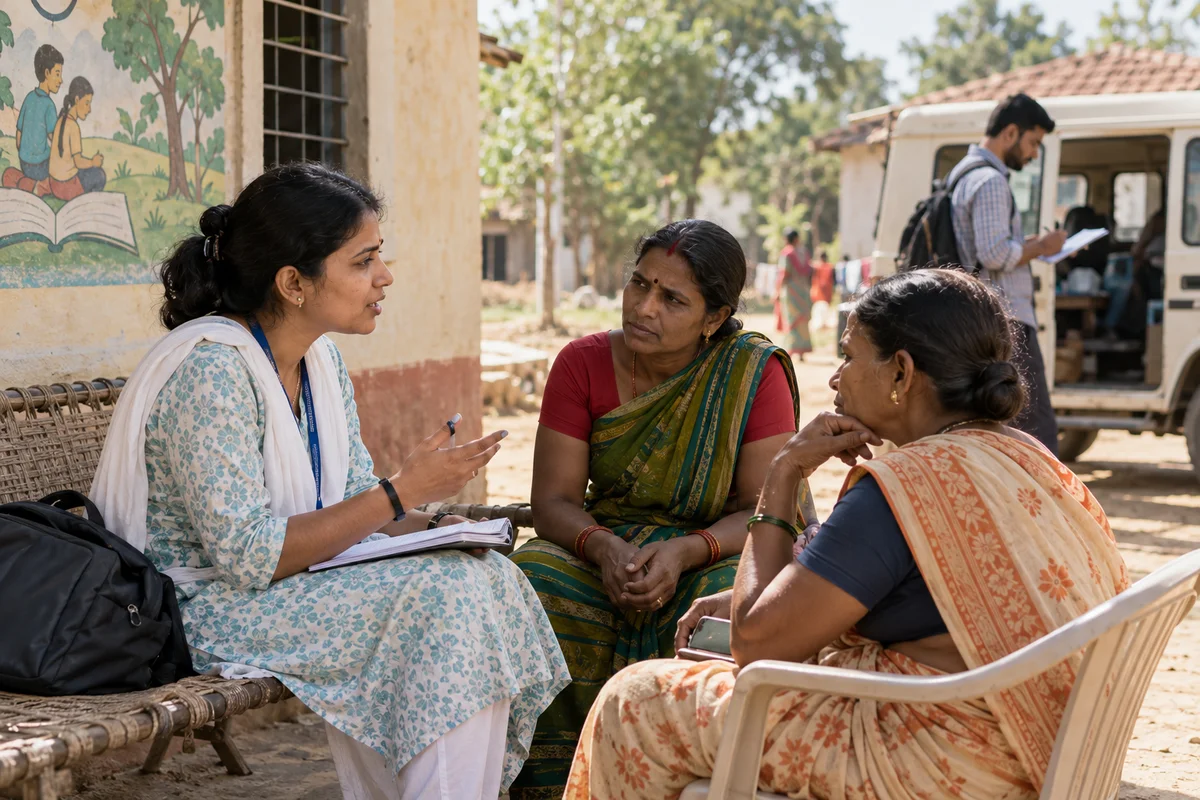
Staff at NGOs and social enterprises leave for funding, field and workload reasons as well as pay. How to understand why, listen early and act.
7 min readRead article
A two-hour exercise that names the roles you could not fill quickly, who could cover them, and what readiness would actually require.
7 min readRead article
How a D2C founder can decide which digital marketing work to hire for, which to buy from an agency, and which to split, with a worksheet and a five step plan.
6 min readRead article
An employee brings you a complaint about their supervisor. What happens next should not depend on who is in the room. A grievance procedure a small company can actually run.
8 min readRead articleMore on the GullyHR blog.
Name a few possible successors, share parts of the role with them and write down relationships and routines. A plan made in calm times avoids a gap in service and in the trust of members.
Keep a rolling plan owned by the secretariat, and review it with each new president at the start. The plan shows what can be added and what must be dropped to make room.
Give them a short script, role play real situations and set a rule on when to call a senior. Staff become calmer when they know what they are allowed to promise.
Yes, with a plan. Assign real roles, cover the usual work, and give time off afterwards. Otherwise people feel used, and the routine desks suffer during the very weeks when members visit.
With written terms, clear leave rules and a path to a better grade when they learn new skills. Their goodwill is part of how members experience the chamber.
We would first list what only the secretary general can do, ask the last two presidents what they changed and sit at the member desk for a morning. A succession plan with a yearly workforce view is a natural first job, with scope in writing for your approval.
All 6 business types in associations & membership organizations · Find another business type
See all HR topics for ngos and social enterprises, or another industry.
Tell us your industry, team size and the issue you want to address. Bring one example of where work gets delayed or ownership is unclear, and the deadline or decision you are working towards.