




Industries
Why agribusiness workers leave and how to understand why
Seasonal crews, field officers and processing staff leave for different reasons. How to ask what shaped their decision and act before next season.
7 min readRead articleA pump maker winds stators, machines shafts, fits impellers and tests every borewell or monoblock set on a head and flow bay. Skill sits with a few winders, and demand follows the rains.
Make this work for your business. Share your team size, priorities and what you need help with. We’ll use your brief to prepare for the first conversation.
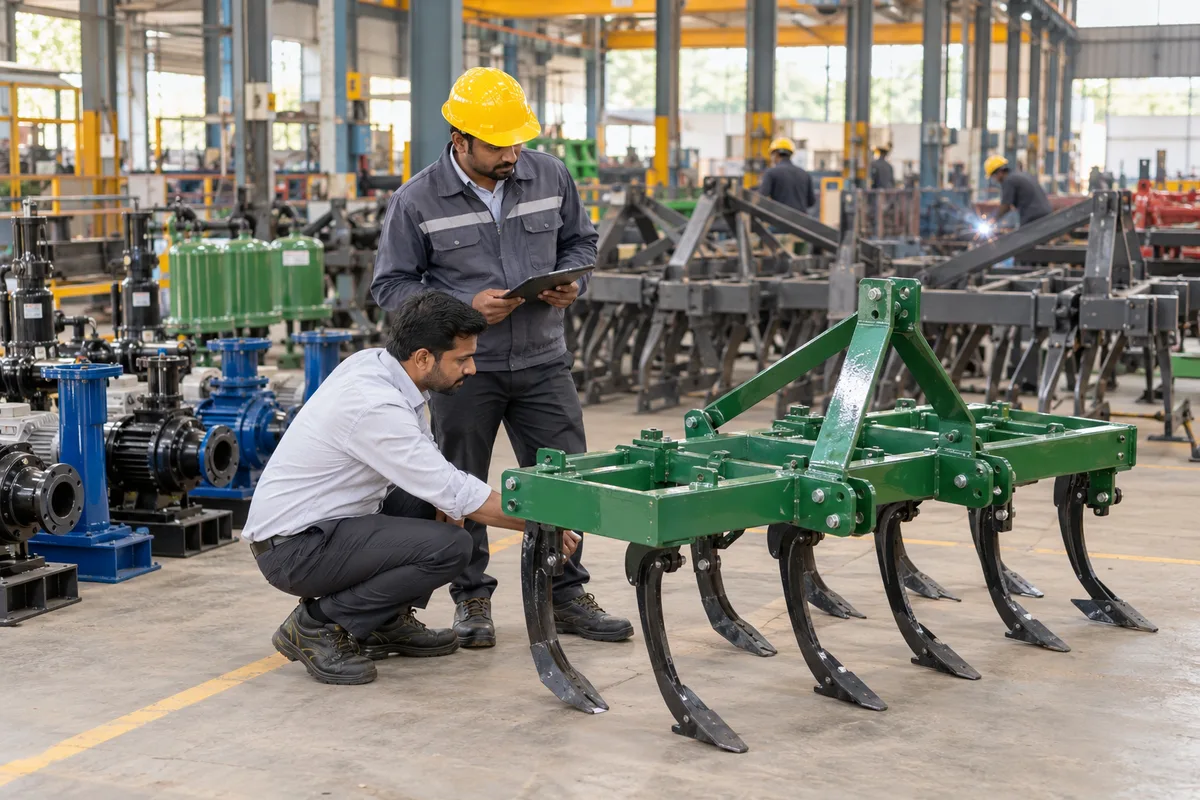
Share your requirementsAn agricultural pump maker builds submersible, borewell and monoblock sets for farmers. Housings are cast or bought in, shafts are turned, impellers fitted, and stators are wound, varnished and baked in-house or sent out. Each assembled pump goes to a test bay for head, discharge and running current before packing. Sales swing with the monsoon and the water table, so dispatch floods in some months and nearly stops in others. Dealers face the farmer and send back burnt or noisy pumps. Winders, machinists and test-bay hands learn from a senior over years, while casual labour fills the peaks. See also HR for agriculture and agribusiness.
These are the places the people side of this kind of business tends to give way. The rest of this page works through them.
Why GullyHR for agricultural pump makers
For pump makers whose winding skill sits with a few people and whose dispatch follows the rains. GullyHR sets up routines so skill spreads, pumps trace to a hand and season staffing is planned.
A written apprenticeship pairs each junior with a senior winder and lists what they must wind unaided. The skill stops living with the few who can wind a stator today.
A batch and winder mark on each pump, with a simple register, shows which burnt-pump claims come from which hands. Dealer returns lead to a cause, not an argument.
A written sequence for head, discharge and running current, with a sign-off per set. The bay stops depending on the habits of one patient person.
A roll of last season's casual workers and the months they were needed is used to call people back before the rains. Peaks stop being met with panic hiring.
Start with any one of these. Scope and fee are agreed in writing after a free first conversation.
The audit starts with last season's burnt and noisy pump returns from dealers, matched to the winding, varnish and test records that exist for each one. We then stand in the winding section, the machine shop and the test bay across a full shift. The senior winder, casting fettlers, assembly fitters and the dealer service desk are each spoken to alone. Casual muster sheets, protection issue records and apprentice notes are read last. You get a plain account of which skills rest on one person and which records cannot answer a claim.
What you receive
An example, not a client storyTake a maker whose dealers have returned a run of burnt pumps after a heavy season. The owner cannot say which winder wound them or whether they passed the test bay. An audit reads the returns against the winding and test records, and shows which gaps let the claims arrive unanswered.
How the hr audit works →Process design begins with the route of one pump: winding, varnish dip and baking, shaft and impeller fitting, test bay and packing. For each stage we write who does it, what they check and what they sign. The test bay sequence for head, discharge and running current gets its own sheet, with a place to record a failed set. The casual roll and the call-back steps are written last, drawing on what happened in the previous rains and what the senior winder says went wrong.
What you receive
An example, not a client storyPicture a maker where each fitter assembles a pump a little differently and the test bay is run from memory. A written route and a test sheet are drawn up, and a new tester follows them in the first week. From then on a failed set is recorded, held back and traced.
How the hr process design works →Week to week, GullyHR keeps the winder apprenticeship moving by meeting the senior winder and the juniors beside them. We sample test bay sheets and compare them with what we see at the bay. The casual roll is updated as workers come and go, and protection issue records are checked against the fettling and machine shop. When dealer calls rewrite the day, we sit with the supervisor and the service staff to note what changed and whether it needs a written rule. The owner receives a short weekly note.
What you receive
An example, not a client storySuppose the rains arrive early and dispatch doubles while the senior winder is on leave. A fractional HR manager checks the casual roll, reminds returning workers of site rules and keeps the apprentice sessions going. The supervisor gets one weekly note on who is working and what is open, and does not have to chase it.
How the hr management works →The hard-to-fill roles here are stator winders, machine shop operators who can hold shaft tolerance, and test bay technicians who record honest readings. We write the role card with the owner and the senior winder, then set a winding or turning sample and a test bay exercise that rewards careful recording over speed. Each candidate meets the same panel and is scored on the same sheet. Permanent offers carry a plan for the first weeks beside a senior. We do not supply contract workers for the peak.
What you receive
An example, not a client storySay the only winder who can handle the larger stators plans to retire next year. We help the owner write the role, set a winding sample, score candidates on one sheet and plan the first weeks beside the senior. The new winder starts learning the work well before the senior leaves, not after.
How the recruitment for permanent roles works →Training starts with the senior winder, who knows the work but may never have taught it in steps. We coach the winder on showing a junior the coil layout, tension and checks, one skill at a time. Test bay supervisors learn to hold the line when a dealer wants a set dispatched untested. A short session for casual hands covers fettling dust, noise protection, safe lifting of castings and how to mark a pump. Line leads practise giving feedback after a burnt pump comes back.
What you receive
An example, not a client storyPicture a senior winder who is excellent at the work but loses patience when a junior asks twice. A short coaching session breaks the winding skill into steps the junior can follow. The juniors then wind a first stator under watch, instead of learning only by standing near the bench.
How the manager and team training works →The policy set starts with the pump marking rule and the test bay sign-off, since those answer dealer claims. Alongside sit a casual workers note covering muster, return calls and rest, a protection issue register for dust and noise, and a winder grading and apprenticeship sheet. Each document is short enough to be read on the floor, and the owner's own adviser confirms any employment or registration point. In HR software we set up the roll, training and protection records so last season's data is there when the rains arrive.
What you receive
An example, not a client storySuppose a dealer disputes a warranty claim and the only proof is a handwritten slip. A pump marking rule, a test bay sign-off and a register in HR software let the maker show who wound the pump and when it was tested. The conversation with the dealer moves from argument to record, and the owner's adviser confirms the warranty wording.
How the policies, handbook and hr software works →We cannot stop anyone leaving, but we do set up a graded apprenticeship, a pay ladder tied to what a winder can wind unaided, and written coil and tension notes made with the senior. That spreads the skill across several people in the winding shed. Any restraint or notice terms are matters for your own adviser to confirm.
Only if the pump was marked at the time. We design a batch and winder mark, a simple winding register and a test bay sheet, so a return can be matched to a hand, a day and a test result. We also help build the habit of filling the register. Your adviser confirms any warranty terms.
We build a casual roll from last season's muster sheets, with names, skills, months worked and whether each would return. We then plan call-backs before the rains, with a short induction on dust and noise. We do not supply contract workers, so the roll is yours. Your adviser confirms how casual work should be recorded.
We write the test bay sequence for head, discharge and running current, with a sign-off per pump and a hold area for failed sets. Supervisors are coached to refuse a dealer's push, and the owner gets a weekly count of tested against dispatched pumps. Any duty on product records is confirmed by your own adviser.
GullyHR runs talent acquisition for permanent roles in agricultural pump makers. For each role we agree the job description with you, find and screen candidates against it, and support the offer through to joining. Tell us the role and the number of people, and we start there.
We recruit permanent employees. We do not supply contract or temporary staff.
Experienced winders judge turns, wire gauge and insulation by touch, and hardly any juniors are being groomed behind them.
When a set comes back from a field, nobody can say which winder or varnish batch produced it, so the cause stays unlearned.
A rushed head and current check passes a weak set, and peak-month pressure tempts staff to skip steps.
Dispatch surges before sowing and water season, then drops, so casuals arrive and leave with little continuity.
Grinding castings and turning shafts fill the shed with noise and dust, while masks and ear plugs are worn inconsistently.
A phone call about a stuck consignment reshuffles the plan, and the floor never gets a settled order of priority.
Visits to farms and calls about sets that do not lift water land on two or three people.
Start with the topics that matter most here: Learning and Development; Performance Management; Health, Safety and Wellbeing. Then work through the rest. Each topic is written for agriculture and agribusiness, not in general.
Training planned from need rather than from the calendar.
Goals, reviews and ratings that hold up in a conversation.
Induction, records, incident reporting and follow-through.
How many people, in which roles, by when, and what they will cost.
Structure, reporting lines and who is allowed to decide what.
Requisition to joining, the same way every time.
A first day that is the same for the fifth joiner as the first.
Records, attendance, leave and the day-to-day HR that must simply work.
Salary structure, payroll inputs and a month that closes on time.
Named backups for the roles that cannot be vacant.
Communication, recognition and the conditions people actually work in.
Two routes, one for complaints, one for conduct, kept separate.
Policies a manager can apply, and obligations with owners and dates.
Who leaves, when, why, and which of them mattered.
Resignation to relieving letter, in a defined order.
Records that survive people, and approvals that do not queue.
A short monthly pack management actually reads.
An HR function that runs the same way every month.
The pieces a agricultural pump makers business puts in place, in an order that makes each easier. Open any card for the detail.
Each junior works beside a senior winder against a written skill list, signed at every stage.
Each junior works beside a senior winder against a written skill list, signed at every stage. See learning and development.
A tag or card with the winder's code and varnish date turns each burnt-pump claim into learning.
A tag or card with the winder's code and varnish date turns each burnt-pump claim into learning. See HR reporting and analytics.
Set test steps, a signature per pump and a rule that peak load never trims the test.
Set test steps, a signature per pump and a rule that peak load never trims the test. See performance management.
Keep a returning-worker list and settle hiring and leave before the first order rush arrives.
Keep a returning-worker list and settle hiring and leave before the first order rush arrives.
Masks and ear plugs handed out, inspected and replaced on a schedule.
Masks and ear plugs handed out, inspected and replaced on a schedule. See health, safety and wellbeing.
Confirm with a qualified professional. What applies to you depends on your business, your state and your arrangements, and it changes. This page describes practice. It does not state a legal position.
A winding apprenticeship so the craft does not rest on two people.
Simple records that join each pump to its winder and any claim.
Test-bay discipline and ownership of quality in the busy months.
Dust, noise and fume habits for machining and casting areas.
Start with a free conversation, or see the paid HR Diagnostic.
Understand the business, its workforce, current processes and HR challenges.
Find the missing, weak, inconsistent or person-dependent processes.
Create the structure, processes, policies, SOPs, dashboards and systems needed.
Help HR and department managers actually adopt the new system.
Digitise repetitive and approval-based workflows where it is worth doing.
Track hiring, attendance, employee cost, performance, training and attrition.
Strengthen the people-management system continuously, not once.
From the GullyHR blog: one on HR in agriculture and agribusiness, and one on each of the topics this page points to.
Seasonal crews, field officers and processing staff leave for different reasons. How to ask what shaped their decision and act before next season.
7 min readRead article
A founder's guide to hiring freshers and running a first-year programme: campus or open drives, a screening round, a training plan by quarter, mentors and checkpoints.
6 min readRead article
A practical design for an IT services appraisal cycle: when to run it, how to rate fairly across projects, and how to explain hikes so they hold.
7 min readRead article
A shift, weekly and monthly safety routine for rubber plants that names who checks platen guards, mill trip bars, autoclave doors, burst-test cages and slings, and who acts on near misses.
7 min readRead articleMore on the GullyHR blog.
Pair juniors with a senior on a written skill list, sign off each stage and credit the senior for teaching. It takes a year or more, so begin early.
Mark each pump with the winder and the date or varnish batch. Open the claims every month and tell the team what was found.
Fix the steps, require a signature and have a supervisor re-test one random pump per shift. Add a test hand for the busiest weeks.
Keep a returning-worker list and a hiring and leave plan drawn from last year's pattern, and tell workers the heavy weeks early.
Agree a simple priority rule with sales and give the floor the week's order once. Avoid reshuffling every morning.
We would ask which juniors could learn winding, count last season's burnt-pump claims and how many were traceable, and watch a test bay for an hour. A winder apprenticeship with a traceability tag is a fair opening job. Terms go on paper before we start.
All 6 business types in agricultural equipment · Find another business type
See all HR topics for agriculture and agribusiness, or another industry.
Tell us your industry, team size and the issue you want to address. Bring one example of where work gets delayed or ownership is unclear, and the deadline or decision you are working towards.