
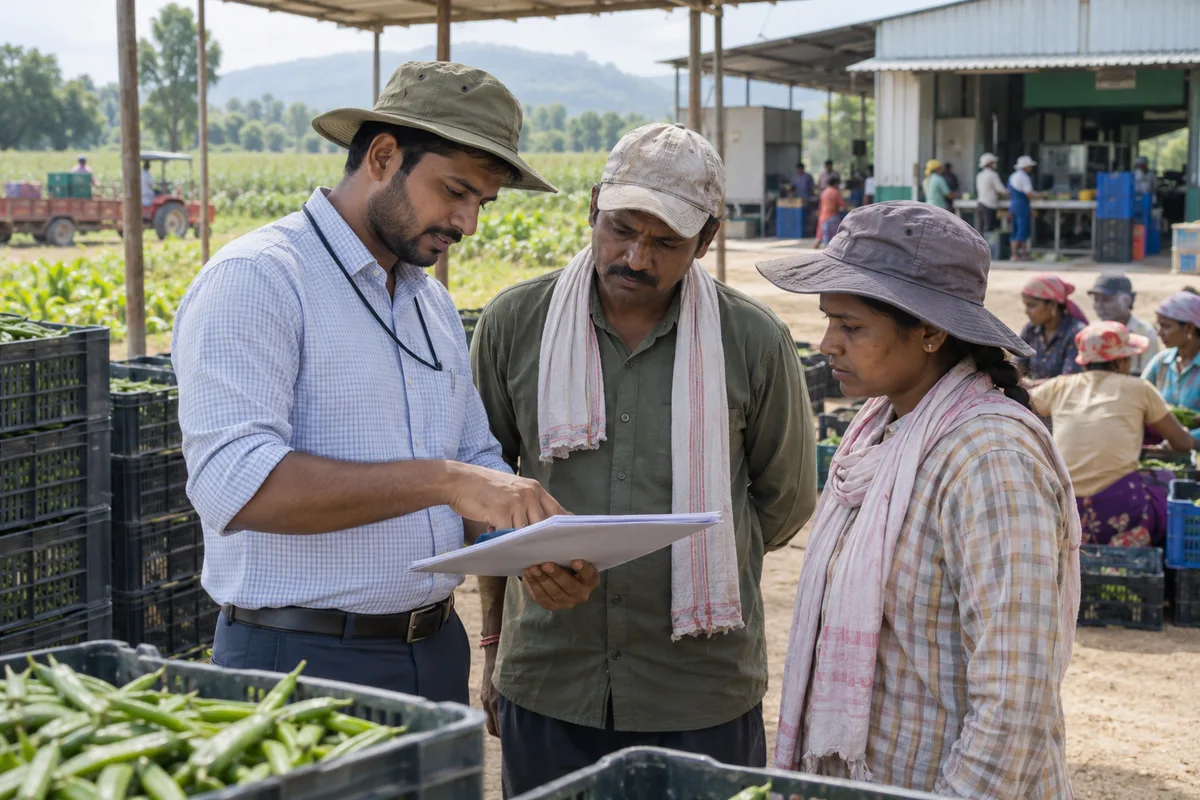
Suppose a procurement manager hires a confident field officer after a pleasant chat. At the first village meeting the new recruit cannot explain why a grower's lot was marked down, makes a vague promise about payment, and the grower takes the next load to a rival buyer.
Where do agribusinesses find good people, and how should they test them?
Look close to the work: supervisor and worker referrals, previous seasonal crews, agricultural and technical colleges, rural dealers, local notice points and vetted contractors. Then test each candidate on a short sample of the actual task, such as grading a lot or planning a village route, and score it against standards agreed before anyone arrives.
Size the need from the crop calendar
Mark sowing support, harvest arrivals, processing runs, dispatch and maintenance shutdown across the year. For each stretch, list posts, numbers, the date people must be able to work alone and the supervisor who will teach them. Work backwards from that date, allowing for notice periods and other employers recruiting from the same villages at the same moment. Some roles, such as maintenance technicians or quality leads, are better kept year round than rehired in a rush.
Match the source to the role
- Field officers and extension staff: agricultural colleges, input dealers' networks, former trainees and people from nearby growing areas who speak the local language.
- Quality and lab staff: food, dairy or science programmes, plus careful helpers already in your unit who want to move up.
- Machine operators, fitters and cold-room technicians: vocational institutes, equipment dealers, repair workshops and referrals from your maintenance lead.
- Procurement, weighbridge and counter staff: local candidates comfortable with slips, scales, simple software and face-to-face disputes.
- Seasonal crews: last season's list, supervisor referrals, village meeting points and labour contractors whose records you have checked.
Referrals work well when the standard stays the same for referred and unknown applicants. Watch for a crew drawn entirely through one intermediary, since losing that person can remove the whole group. Keep at least two routes into each seasonal task.
Choose the supervisors before the crew
A good intake under a weak supervisor will not last the window. Confirm block supervisors, shift leads and centre in-charges first, since they will do the testing, teaching and daily allocation. When picking one from the crew, test more than speed at the task: ask the candidate to brief two people on a hazard, sort out a disputed piece count and complete the muster. Watch whether the explanation is patient and the record is honest. Give new supervisors a clear limit on hiring, advances and dismissal, and name who they turn to when a situation goes beyond it.
Test the work, not the talk
- Field officer: plan a day's route across named villages, then handle a grower upset about a rejected lot. Look for honesty about what they can promise.
- Quality trainee: draw a sample using your method, compare grades on prepared lots and record a reading. Look for consistency and willingness to say "not sure".
- Weighbridge or procurement clerk: raise receipts from sample slips that contain one mismatch. Look for whether it is caught and escalated.
- Operator or fitter: walk through pre-start checks on a stopped, isolated machine and describe what to do on a blockage.
- Sorting and packing: a short demonstration followed by a timed sample, judged on rejects and hygiene as well as pace.
Run the trial fairly
- 1
Write the pass points
The supervisor lists a handful of observable actions, marks which are essential for safety or honesty, and agrees what a pass looks like before meeting candidates.
- 2
Explain the terms first
Tell each candidate the duties, shift times, site, pay basis, season length, travel, lodging and food arrangements. Let them withdraw without pressure.
- 3
Brief and demonstrate
Give the same short instruction to everyone, in a language they understand, with protective kit. Nobody operates live machinery or handles chemicals during selection.
- 4
Observe and score
One assessor records what was done, not general impressions. A second view is useful for supervisor-grade or cash-handling posts.
- 5
Check what must be checked
Verify identity, age, driving or equipment licences and references as local rules allow, with consent where required.
- 6
Answer everyone
Confirm selected people in writing with a reporting date, and tell others the outcome. A good seasonal applicant not needed now belongs on the reserve list.
A scorecard for the supervisor
Candidate:
Role and site:
Source (who referred):
Task given:
Assessor:

Score: 0 no, 1 partly, 2 yes
Followed safety brief      [ ]
Did steps in order         [ ]
Quality met our sample     [ ]
Recorded it correctly      [ ]
Asked when unsure          [ ]
Honest with grower / lead  [ ]

Any essential point failed?
Can start on:
Needs training in:
Decision: yes / hold / no
What to put in the offer
State post, reporting person, site or territory, start date, expected end for seasonal work, working days, pay basis and pay day, overtime treatment, allowances, deductions, notice and any lodging or transport. For field roles, add vehicle and phone expectations and what cash or stock the person will be responsible for. A one-page note read aloud prevents the argument that begins with "the agent told us otherwise". If a contractor recruits for you, ask to see exactly what workers are being told, and confirm that they are not charged fees that local rules forbid.
Plan the gap between acceptance and arrival. Give one person the reserve list, a script covering terms and travel, and a date to reconfirm each name. Tell drivers and gatekeepers who is expected, so that someone arriving from a distant village is met, briefed and given a place to wait instead of being turned back.
Learn which sources earn their place
At the end of each window, compare sources on who reported, who finished, who passed task checks and which supervisor wants them back. Put effort into routes that deliver and drop ones that supply names who never arrive. Skip long aptitude tests and group discussions for hands-on posts; they mainly reward schooling and confidence.
A defined workforce and recruitment process sets out who requests, assesses and approves hires, so that peak pressure does not remove the checks. It also keeps the reserve list from living in one manager's phone.
Where to go next
Pick the role that hurt most when filled badly and draft its trial with the best supervisor in that area. More reading sits under agriculture and agribusiness. For help with permanent hiring or the process around it, tell us what you need.