
Compensation benchmarking for Industrial Enclosure Makers: finishing skill and the powder coating crew
Customers judge an enclosure by its finish and door fit. Benchmarking shows whether you pay seam finishers, coaters and benders enough for work that is seen first.
Not sure what you need? Tell us about your business in six short steps and we will come to the first meeting prepared.
Share your requirementsWhy compensation benchmarking matters in industrial enclosure makers
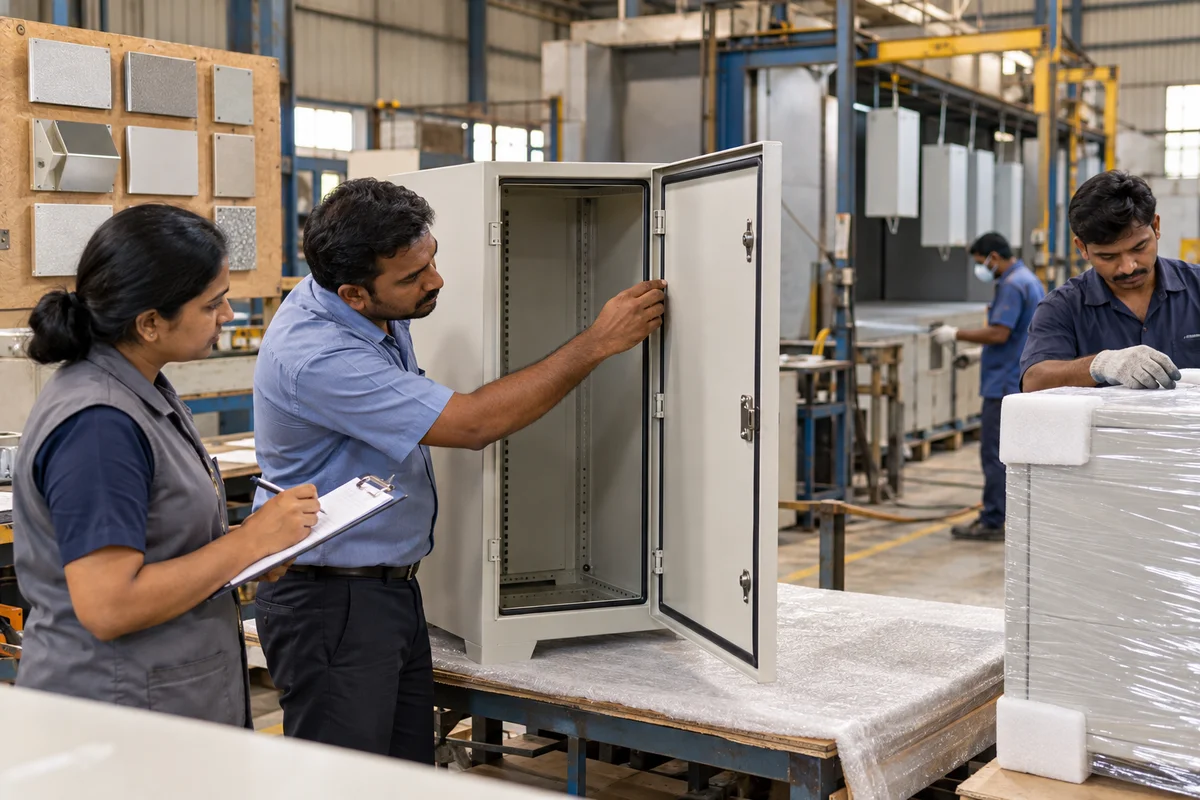
Seam finishing and polishing are skilled and yet get paid like general grinding. The small powder coating crew, who control an oven and the look of every box, may earn little more than helpers. Benders and welders are paid by market habit. When a finisher or coater is offered a small rise elsewhere, the shop loses the person who makes returns less likely.
Benchmarking compares each role with similar local shops, then sets bands that reflect the effect of the role on appearance and fit. Finishers and coaters sit higher than general helpers, with steps for working on stainless, large panels and special finishes. Overtime and peak week rules are written. People can see why they are paid what they are and what moves them up.
How to set it up
1. List roles and pay
Write every role in the flow, who holds it and total pay: cutting, bending, welding, finishing, coating, assembly and dispatch.
2. Collect local pay points
Ask recruiters, peer shops and suppliers for pay for finishers, coaters and benders. Note date and source.
3. Mark roles that customers see
Identify roles whose work shows in the finished box: seam finishers, polishers, coaters and door fitters. Review these more closely. for a way to compare.
4. Set bands and steps
Write a band per role with steps linked to skills such as stainless finishing or large panel coating. Add clear rules for peak weeks.
5. Adjust gradually
Place people in bands, plan any adjustment in stages over time and explain each change to the person concerned.
Check these first
Before changing anything, find out what is true today. Use your own records for a defined period and note gaps in the evidence. The review may take longer if records are incomplete or spread across teams.
- List what seam finishers and coaters earn against benders and welders.
- Count returns last year caused by finish or fit and which stage caused them.
- Ask where finishers and coaters who left went and what they were offered.
- Read peak-week overtime payments and check the rule was applied the same way.
GullyHR can do this with you. Read how we approach compensation benchmarking in general, or share your requirements and we will tell you where to start.
Questions owners ask
Not automatically, but their skill is visible to the customer and hard to replace. Compare with the market and set pay by the effect of the work.
Pay fairly, train a second person to run the oven and plan batches around it, so that one absence does not stop dispatch. A single point of failure is a pay and training matter.
If it needs a skill that takes time to learn and is scarce, a higher step is fair. Link the step to a practical check so everyone understands the rule.
We set up the interview and hiring process for industrial enclosure makers
Every business interviews, but few have a written process that works the same way for every role and every interviewer. GullyHR designs yours, from the role brief to the offer, trains your managers to run it, and can run it for you on the roles you hand us.