HR Audit for Growing Businesses in Battery dealers
What this looks like in your business
A battery dealer's HR audit looks at a small, physical business where the same few people sell at the counter, test cells on the bench, lift stock in the godown and ride out to dead vehicles. An owner reaches for it after a warranty quarrel, an acid splash or a resignation from the one rider who handled every doorstep visit. GullyHR reviews your files, registers and routines, rates each area and writes every gap as a specific missing step in a sequenced plan. The audit is paid and the first conversation is free. You decide what gets fixed, and in what order.
Where people records fail in a battery shop
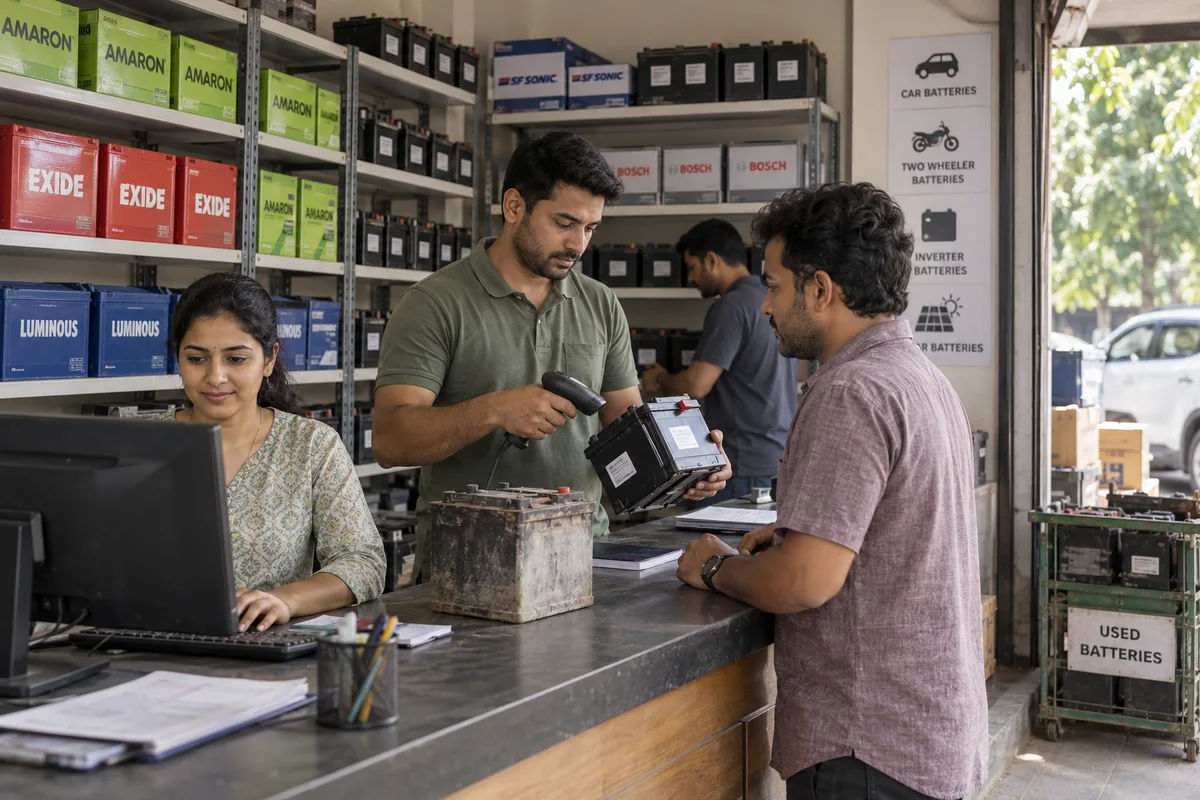
The people who carry the most risk in a battery business are the least documented. Counter salespeople advise anxious customers on whether a weak battery can be revived or must be replaced, and that advice is passed down from whoever stood at the counter before. Godown helpers and loaders move heavy, acid-bearing stock, yet no written rule says who wears gloves and eye cover or how a crate is lifted. Warranty and claims clerks inherit quarrels because the reason for a rejection was never recorded at the time. Mobile fitment technicians reach stranded cars and two-wheelers, and the whole doorstep service sits in one rider's head. Summer heat and the monsoon kill batteries in bulk, so peak season stretches shifts well beyond anything the shop has agreed on paper. None of this shows in a payroll sheet. It appears only when you set what the files claim beside what the counter, the bench and the godown really do, which is the work an audit is built for. Peak season is when the gaps cost most, so the audit also asks what changed in the last busy summer, who covered for whom, and which promises were made over the counter and never written.
What GullyHR checks first in your records
The audit starts with the documents a battery dealer already owns, then asks the people who use them. GullyHR reads the employee files for counter staff, testers, fitters and drivers and notes which have an appointment letter, a role description and a signed set of shop rules. It reads the last stretch of rejected warranty claims and looks for a recorded reason, a name against the decision and a customer reply. It looks at the old battery register and counts it against the godown, because stock that piles up tells you nobody owns the return trail. It checks the attendance sheet against the delivery and mobile visit logs to see who really worked a late summer week. It asks counter staff how they choose between repair and replacement and compares the answers. Each finding is written as a missing step, such as no owner for the old stock count, so you can see what to build and not only what is wrong. It also reads any shop rules posted on the wall, checks whether helpers and testers have signed them, and asks the godown who trained the newest person on handling.
A worked example from one shop
Picture a dealer with a front counter, a godown behind it and two mobile fitment riders. A customer complains that a car battery was rejected under warranty after four months and says nobody explained why. The audit takes that single claim and traces it backwards. Who accepted the battery at the counter? Was a test reading noted? Who told the clerk to reject it, and was the customer given a reason in writing? Then the trace moves sideways. Was the counter salesperson hired with any briefing on warranty terms? Does his file hold a role description? Did the same clerk handle three other rejections that month? The audit finds that two of the four steps exist only in the clerk's memory, and that the helpers who moved the returned battery had no gloves issued. The finding is stated plainly: a control exists for testing but not for recording, and a handling risk has no owner. You then decide whether to start with the claims form or with the safety kit.
Roles and records settled after the audit
When the findings are in, the plan names who holds which record, so the next audit finds something to read. The owner or branch head keeps final say on pay changes, warnings and exits, while a named person keeps the employee files for counter staff, fitters and drivers. The warranty clerk is given a short form that records the test reading, the reason and the customer reply, with the counter salesperson signing the handover. The godown supervisor owns the old battery register and the handling rules for gloves, eye cover and lifting. The rider roster is written down with a named back-up, so doorstep visits do not depend on one person. GullyHR hands over the plan and the evidence behind each rating, and then steps back. It does not give legal opinions, so anything about local labour or safety rules goes to your own adviser. What you fix, and when, stays with you. The final report is kept short and written for an owner who stands at the counter all day, so each finding can be read in a minute and acted on without a meeting.