HR Foundation Package for Battery dealers
What this looks like in your business
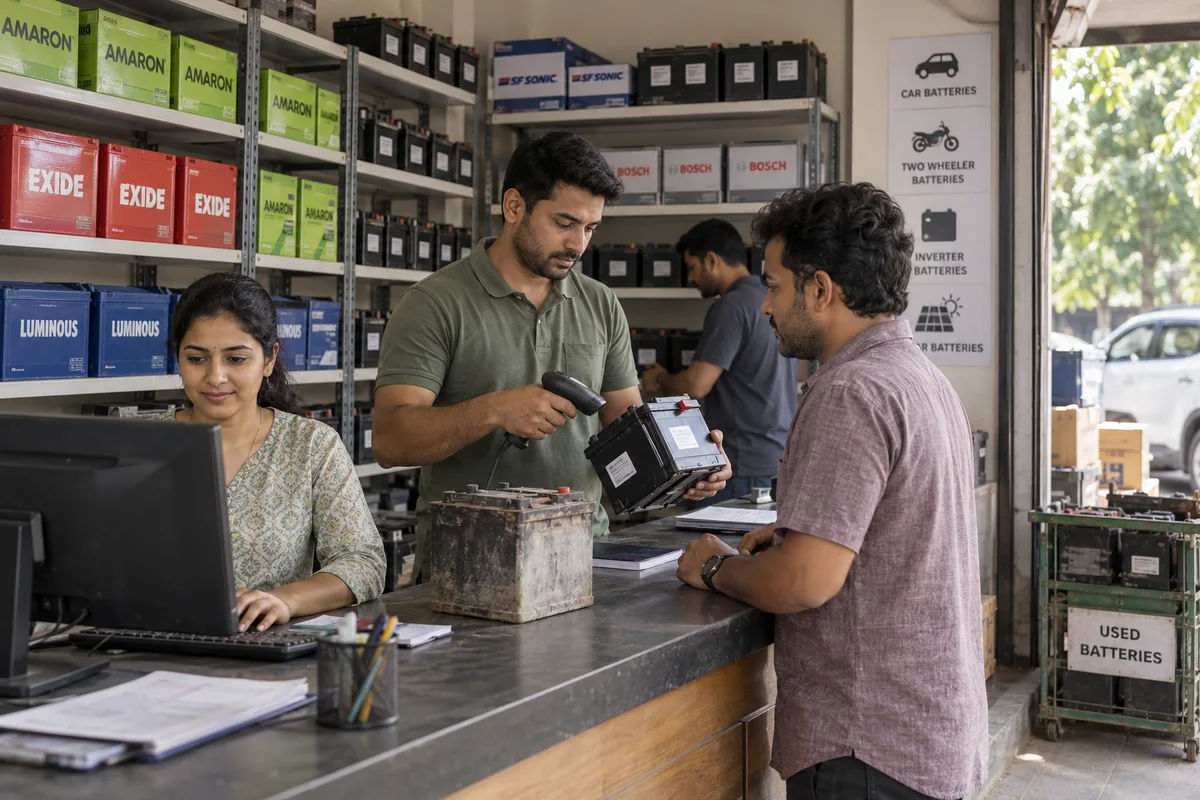
A battery dealer that has grown from one counter to a godown, a few fitters and a mobile rider runs on verbal instructions and the owner's memory. The HR Foundation Package is for that stage. GullyHR writes a handbook that speaks about gloves, lifting, warranty handovers and summer hours, then five short processes, standard letters and first records that your counter staff and godown supervisor can use without calling anyone. Scope and fee are agreed in writing before work starts, and each process is tested in your shop before it is handed over.
Why growth outruns the owner's memory
A battery shop begins with the owner at the counter and one helper in the back. Instructions travel by word of mouth, and that works until there are testers, fitters, a warranty clerk and a rider on the road. Then the same questions arrive daily. Who decides a rejected claim? How long can a helper work in the godown during the summer rush? Who covers when the mobile rider is ill? Which letter does a new salesperson sign? Each answer lives with whoever happens to be asked, so two staff give two answers and customers notice. Acid, heavy lifting and old stock make the gaps costly, because a missing rule is also a safety gap. A foundation package fills those gaps in a fixed, agreed order rather than all at once. It does not try to turn a battery dealer into a corporate office. It writes down what the shop already half knows, tests it on the floor, and gives managers something to point to when a question comes up.
What is set up first in a battery shop
GullyHR starts with the basics a battery dealer cannot do without. The handbook is written around your own work: counter conduct with anxious customers, handling and storage of stock with gloves and eye cover, hours in peak season, the use of the shop's vehicle and the rider's phone, and how warranty matters are passed between counter and clerk. First records follow, beginning with a clean file for each person, a roster for the mobile rider with a named back-up, and a simple register for old battery handovers. Standard letters cover joining, confirmation, warnings and exit so your supervisor does not draft them from memory. Each document is read by the people who will use it before it is finalised. A tester or helper reads the handling rule aloud and says whether it fits the godown. If it does not fit, it is changed, not issued and ignored. The standard letters follow, so your supervisor can issue a confirmation or a warning without drafting it from memory on a busy afternoon.
A worked example from the godown
Suppose a dealer takes on a new godown helper in April, just ahead of the summer rush. Nothing is written for his first day, so a senior loader tells him what to do and shows him where the gloves are. Two weeks later he lifts a crate alone and spills acid on his forearm. The owner is unsure whether to log it, who to tell or whether the helper should have been working alone. Under the foundation package, that situation has a path. His joining letter names the role and reporting line. The handbook sets the handling rule and the buddy system for the first month. A short incident note, kept in the file, records what happened and who was informed. The decision for the owner is whether to adjust the lifting rule or add a second helper at peak hours. The package does not give the answer, but it makes the question visible on paper. Your adviser confirms anything that touches local safety or injury rules. The same note format then serves for later incidents, such as a dropped battery or a vehicle scrape on a call-out, so the shop builds its first safety record from real events.
Who owns each document afterwards
A package is only useful if someone keeps it alive after GullyHR hands it over. The plan names an owner for each item. The owner or branch head holds the handbook and approves every change. The godown supervisor owns the handling rule and the old battery register. The warranty clerk owns the claims form and the customer reply record. A named person, perhaps the accounts assistant, keeps employee files and letters in one place. The counter lead checks that each new salesperson has read the counter conduct pages and signed. Managers receive templates for the standard letters and are shown how to complete them. The simple report that GullyHR sets up arrives on the schedule you agreed in writing, and it lists open items, not opinions. What stays with the owner is every decision on people, pay and policy, and the final word on whether a draft goes to your own legal adviser before issue. A short checklist is kept with each document, so the next time someone joins or leaves, the right steps and letters are easy to find.