
Learning and development process for Commercial building managers: equipment skills for the technical team
In an office tower, the technician who knows the chiller plant is worth more than any manual. Learning tied to the building's own equipment spreads that knowledge before it walks out.
Not sure what you need? Tell us about your business in six short steps and we will come to the first meeting prepared.
Share your requirementsWhy learning and development process matters in commercial building managers
Technicians in commercial buildings learn on the plant they look after. One knows the chillers, another the lift controllers, a third the fire panel. Nobody else can step in when they are on leave. Training is a one-off course arranged by a vendor when a new system is installed. The knowledge about the building's own history stays in the head of whoever has been there longest.
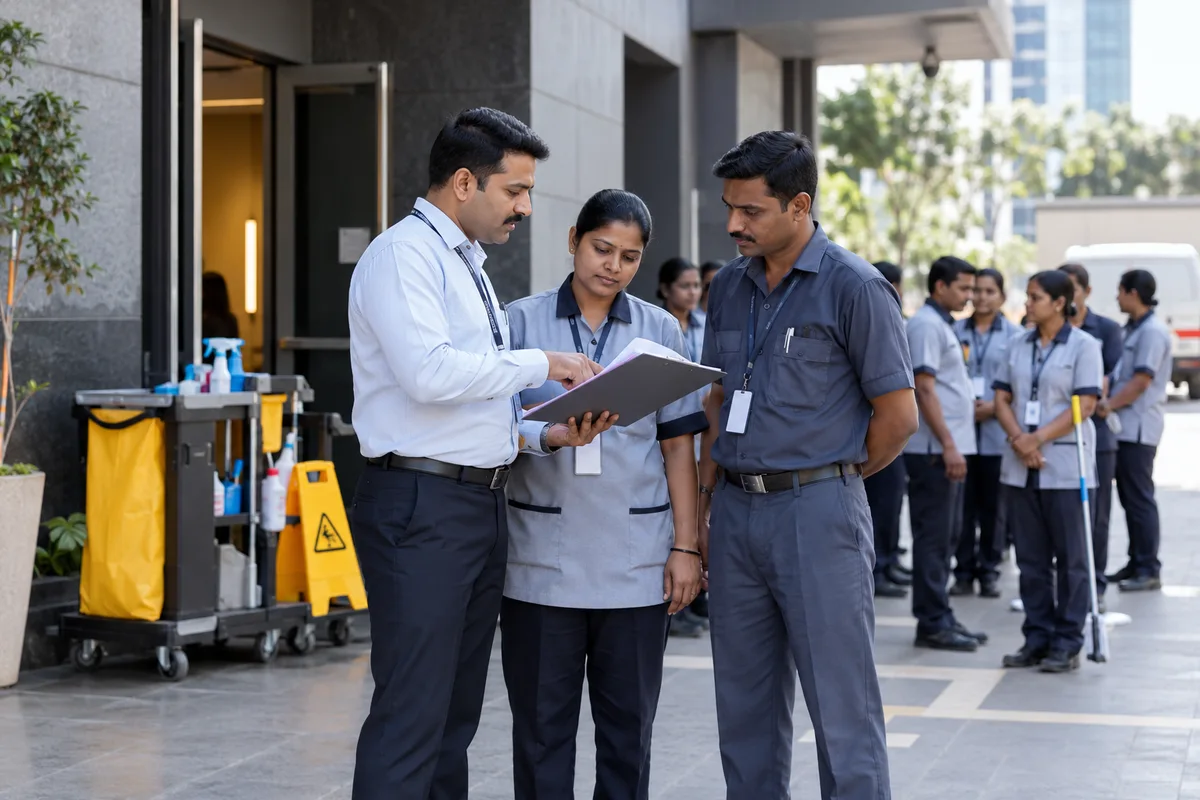
Learning here works best as a set of short, practical steps. For each critical system, list what a technician must be able to do, and sign off each task after a senior has watched it. Add a monthly session where an engineer explains one fault from the building. Front-of-house staff learn by a similar route, with tasks such as logging a request and handling a complaint.
How to set it up
1. List critical systems and tasks
For chillers, power, lifts, fire, water and controls, list what each level of technician must do. Keep each list to a page in plain words.
2. Sign off by task
A shift engineer watches and signs each task with the date. Use the sheet to choose who covers which system in absences.
3. Hold a monthly fault review
An engineer explains one fault from the last month: what happened, how it was found and what to do next time. Technicians from other shifts attend, or read the note.
4. Cross-train for cover
Pick one backup technician per system and set a short plan to bring them up to the tasks. Review quarterly. The competency and talent management page supports the grading.
5. Train front-of-house on real cases
Reception and parking staff practise logging tenant requests, giving directions and handling a complaint, using cases from the building. A supervisor observes the first month.
Check these first
Before changing anything, find out what is true today. Use your own records for a defined period and note gaps in the evidence. The review may take longer if records are incomplete or spread across teams.
- Ask each technician which systems they could run alone and compare the answers.
- Find which critical system has only one person who knows it.
- Look at the training done in the last year and note how much related to your own plant.
- Ask the reception team what their last training covered.
GullyHR can do this with you. Read how we approach learning and development process in general, or share your requirements and we will tell you where to start.
Questions owners ask
Use it, but add your own sign-off afterwards. A vendor teaches the system in general. Your engineers must show they can handle it in your building, with its quirks and history.
Do it in small steps during quiet hours, with the primary technician beside the backup. Start with routine tasks and move to harder ones. Review progress each quarter rather than rushing.
Yes. Tenants meet reception far more than they meet the engineer. A few focused sessions on real situations raise service and give the team a sense that the role matters.
We set up the interview and hiring process for commercial building managers
Every business interviews, but few have a written process that works the same way for every role and every interviewer. GullyHR designs yours, from the role brief to the offer, trains your managers to run it, and can run it for you on the roles you hand us.