
Workplace health, safety and wellbeing for Paper Product Makers: cutter guards, dust and stitching hands
Cutter blades, stitching machines and paper dust cause daily harm in a paper unit. Safety habits have to be set at the start of the shift, not after the first injury.
Not sure what you need? Tell us about your business in six short steps and we will come to the first meeting prepared.
Share your requirementsWhy workplace health, safety and wellbeing matters in paper product makers
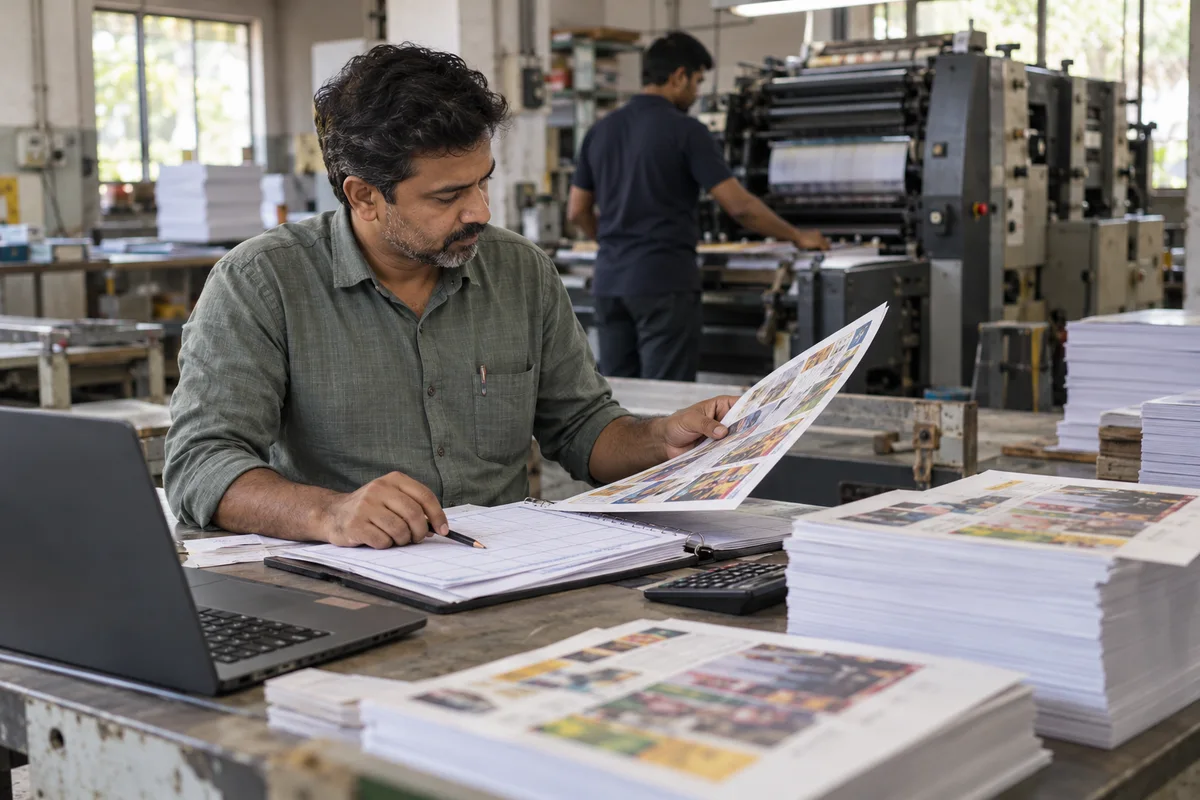
Guards on cutters and stitchers are taken off to save seconds, and gloves are skipped because they slow the hand. Helpers lift heavy reels and stacks without training. Paper dust irritates throats and skin, and damp reels jam machines so people reach into moving parts. One injury stops a whole section and shakes the crew.
Good looks like a supervisor walk at shift start, before the first reel is loaded, checking guards, gloves and clear floors. Any guard found removed is recorded and the reason is asked. Helpers are shown safe lifting, dust is cleared on a routine, and absence in dusty months is reviewed for patterns.
How to set it up
1. Walk every cutter and stitcher
Note guards missing or tied back, worn blades and loose wiring. Photograph what you find and show the crew without naming people.
2. Start each shift with a supervisor check
Guards, gloves, clear floor and stop button on each machine before the first reel is loaded. A signed list on the wall is enough.
3. Teach lifting and reel handling
Show helpers how to move reels and stacks, with a trolley for heavy ones. Repeat for each new hand in their first week.
4. Set a dust and damp routine
Cleaning times, reel storage off the floor and a check of damp reels before they reach the machine. Ask how many throat and skin complaints have appeared.
5. Log every injury and near miss
What happened, which machine and what changed afterwards. Review at a team meeting and thank the person who reported it.
Check these first
Before changing anything, find out what is true today. Use your own records for a defined period and note gaps in the evidence. The review may take longer if records are incomplete or spread across teams.
- Count guards missing, tied back or bypassed on your cutters and stitchers today.
- Read the injury and near miss log for the last three months.
- Ask helpers who lifts the heaviest reels and whether a trolley is used.
- Note which months show the most absence for throat or skin complaints.
GullyHR can do this with you. Read how we approach workplace health, safety and wellbeing in general, or share your requirements and we will tell you where to start.
Questions owners ask
To save seconds, especially on piece rate or under deadline. Make the guarded way as fast as the unguarded way, check at shift start and ask what makes the guard slow them.
Clean on a set routine, store reels off the floor and away from damp, and ask workers about throat and skin complaints. Take advice from a qualified professional on what controls apply.
The shift supervisor, using a short written list. Add a monthly check by the owner so the supervisor knows it matters. A check nobody reads soon stops.
We set up the interview and hiring process for paper product makers
Every business interviews, but few have a written process that works the same way for every role and every interviewer. GullyHR designs yours, from the role brief to the offer, trains your managers to run it, and can run it for you on the roles you hand us.