
Skill-based career progression for manufacturing floors
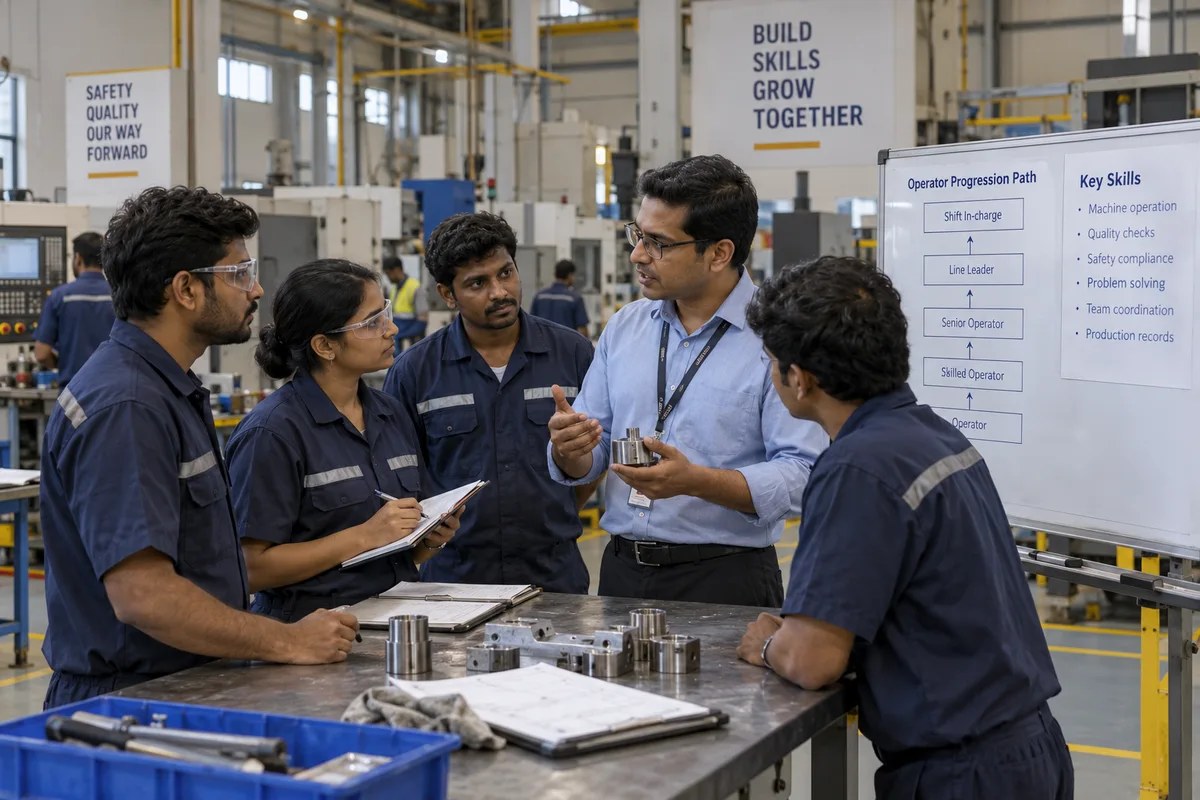
Operators progress on what they can do at a machine. This work turns that into a published ladder from trainee to shift supervisor, with observable criteria, linked pay and a prepared route into lead roles.
What this covers
Manufacturing has the most objective progression basis of any sector - demonstrable skill on specific machines and processes - and frequently leaves it implicit.
- Trainee operator
- Operator
- Multi-skilled operator
- Line lead
- Shift supervisor
- Skill matrix as the published basis for progression
- Pay linked visibly to skill level attained
- Multi-skilling incentivised rather than assumed
- Line lead and supervisor capability built before appointment
- Maintenance, quality and planning as alternative routes
- Shift supervisor succession named per shift
- Criteria for each level stated in observable terms
Publishing the skill matrix, with what each level pays, converts progression from a matter of the supervisor's favour into something an operator can work towards.
Where this goes wrong on the shop floor
- Operators with years on a machine see no step ahead and leave for a plant that names one.
- Promotion to line lead depends on the shift supervisor's view, and operators on other shifts feel passed over.
- Multi-skilling is expected but not paid for, so operators avoid learning a second machine.
- A strong operator becomes a line lead without any training in handling people or reading a production plan.
- Maintenance, quality and planning roles open up, but operators do not know how to move across.
- Nobody is named as successor for a shift supervisor, so a sudden exit leaves a shift without a leader.
How we set it up with your plant
Define the levels
We write each level from trainee to shift supervisor with the machines, quality tasks and responsibilities expected. Criteria are stated in what can be seen and tested.
Link levels to the skill matrix
We tie each level to the machines and processes that must be signed off. Assessments are done by a trainer or lead, with a record kept in the matrix.
Design pay for each level
We set out a pay step for each level and an allowance or increment for added skills. Approval and effective dates are written clearly for the plant.
Prepare leads and supervisors
We build a short readiness programme for line leads and supervisors covering team handling, shift reporting, discipline basics and quality routines. It runs before appointment.
Open alternative routes
We describe how operators can move into maintenance, quality or planning, with the skills needed and the training route for each.
Name successors by shift
We set up a simple succession sheet for each shift supervisor post, with a named successor and a development need, reviewed twice a year with the plant head.
Records and registers this produces
- Progression ladder chart by level
- Level criteria sheet in observable terms
- Skill sign-off and assessment record
- Pay step and skill allowance table
- Line lead and supervisor readiness checklist
- Alternative route guide for operators
- Shift supervisor succession sheet
- Promotion decision record
What good looks like
- Operators can name the next level, the machines to sign off and the pay that follows.
- Promotions are decided against written criteria and a skill record, not a supervisor's preference.
- Multi-skilled operators are paid for it, and more operators ask to learn a second machine.
- New line leads have been prepared before they take the role, not after.
- Each shift has a named successor for the supervisor post, reviewed on a set date.
Questions plant teams ask
Not necessarily. We can start with the floor ladder and the skill matrix, and connect it to your wider grade structure later. The criteria need to be clear enough that two assessors reach the same decision.
Each level has a pay step, and extra skills can carry an allowance or increment. We design the structure with finance, and you decide the actual amounts based on your budget and market.
A trainer, line lead or supervisor assesses against the written criteria, with a second person for key signoffs. We set this out so assessment is consistent across shifts.
Criteria are built on demonstrated skill, so long service and hands-on ability count. Where reading or documentation is needed at a level, we add training in support.
The ladder is for your own employees. Where contractor-supplied workers work beside them, we can share skill expectations for the machine, but progression and pay stay with their own employer.
We set up the interview and hiring process for manufacturing
Every business interviews, but few have a written process that works the same way for every role and every interviewer. GullyHR designs yours, from the role brief to the offer, trains your managers to run it, and can run it for you on the roles you hand us.