
Learning and development process for Modular Furniture Makers: changeovers, file checks and kit packing
Changeovers between colours and sizes decide whether a line makes good parts or scrap. Training a second person on each machine protects both quality and output.
Not sure what you need? Tell us about your business in six short steps and we will come to the first meeting prepared.
Share your requirementsWhy learning and development process matters in modular furniture makers
The senior setter knows how a thickness change affects the saw, how the edge bander is adjusted for a new colour, and how to catch a drilling file that looks fine but is not. This is rarely written. When they are on leave, a junior tries, and the first hundred parts are scrap or off size.
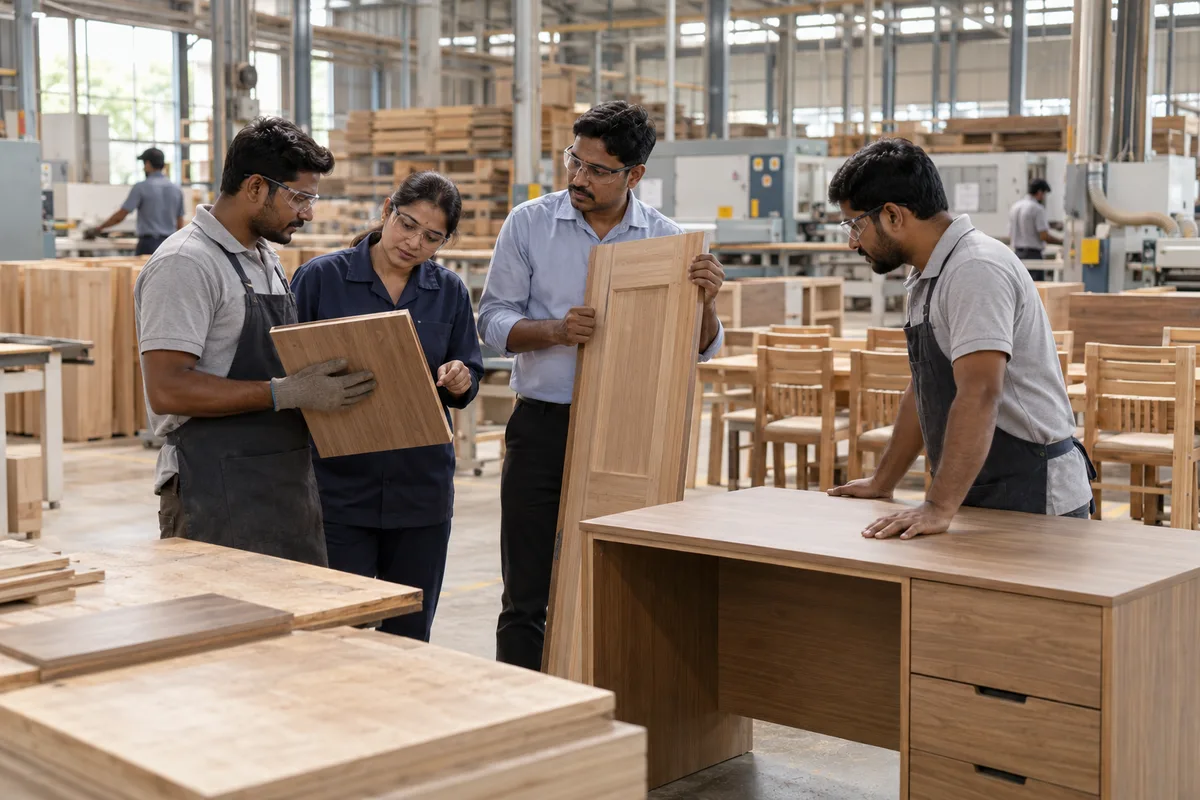
Good looks like a ladder per post: operator, trained on one machine, second machine, setter. Each step is signed off by observation. Changeover steps are written, with photos, by the setters themselves. Packers learn kit lists with a checker beside them, and the programmer learns the checks that prevent a wrong file from reaching the line.
How to set it up
1. Write each changeover as steps
Ask the senior setter to describe a colour change and a thickness change in order, while a junior notes it. Add photos at the points where errors happen.
2. Teach a second person per machine
Pick one operator for each of saw, edge bander and drilling station and train them to set up, with the senior setter present. Note the date and what they could do alone.
3. Train the programmer on checks
Show the programmer the faults seen at assembly and the file errors behind them, so the check list comes from real cases.
4. Run a kit packing drill
New packers pack against a product list with a checker counting. Repeat until counts are right, then spot check.
5. Sign off in stages
Keep a simple record of who can do what. Our learning and development process work uses a staged sheet like this.
Check these first
Before changing anything, find out what is true today. Use your own records for a defined period and note gaps in the evidence. The review may take longer if records are incomplete or spread across teams.
- Ask your senior setter which changeovers only they can do properly.
- Count how many machines have only one trained setter.
- List scrap after the last three changeovers and who was on the machine.
- Check whether new packers were counted against a list in their first week.
GullyHR can do this with you. Read how we approach learning and development process in general, or share your requirements and we will tell you where to start.
Questions owners ask
It varies with the machine and the person. We would look at your product mix and design a staged route, not a fixed duration, so a person moves forward when they can do the step alone.
Make teaching a recognised part of the role, with a clear raise or grade when they have trained a second person. Skills shared in a plan become a strength for them, not a threat.
Short phone videos of a changeover work as a reminder, but they do not replace working beside the setter. Use them as notes, not as the training itself.
We set up the interview and hiring process for modular furniture makers
Every business interviews, but few have a written process that works the same way for every role and every interviewer. GullyHR designs yours, from the role brief to the offer, trains your managers to run it, and can run it for you on the roles you hand us.