

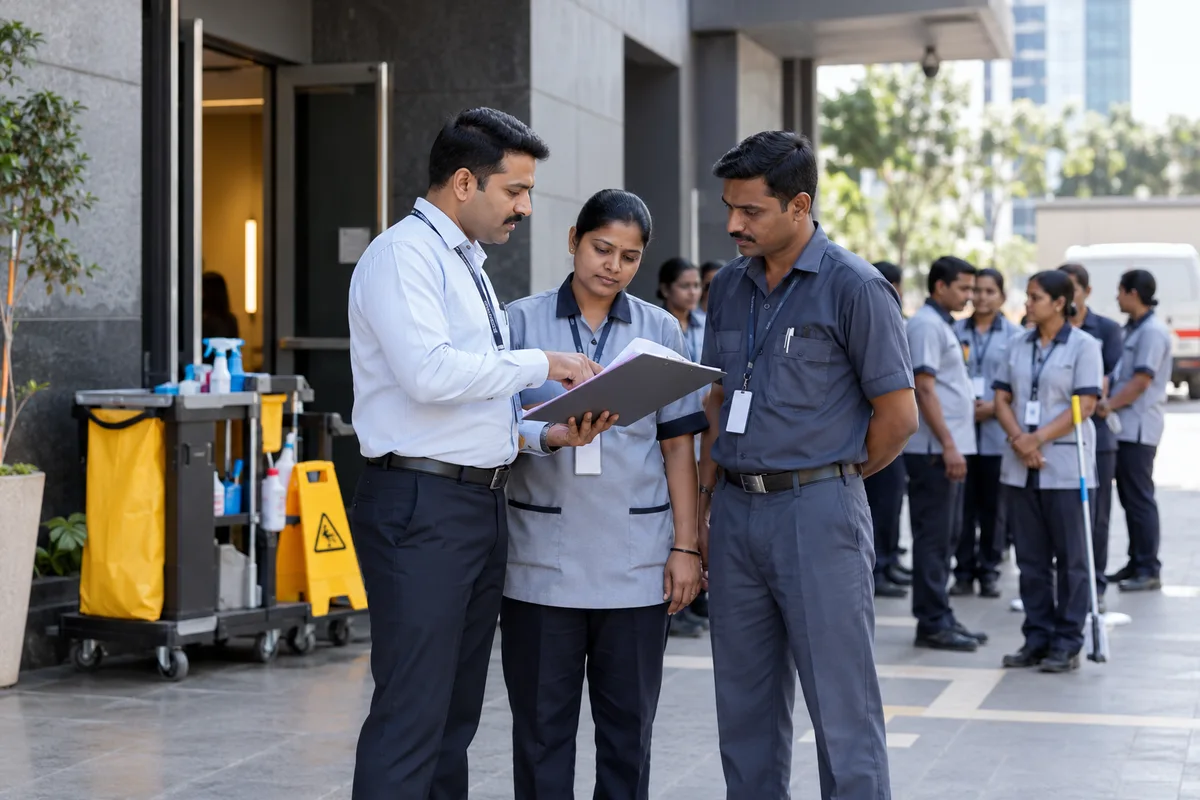
Why facility management staff leave and how to understand why
Housekeeping, technician and security staff at client sites leave for reasons head office rarely hears. How to ask, what to look for and how to act on it.
7 min readRead articleA tree care business prunes, fells and manages trees for housing societies, campuses, roads and farms. When the best two climbers carry most jobs, one injury or resignation can stop the business, so passing on skill is urgent.

Not sure what you need? Tell us about your business in six short steps and we will come to the first meeting prepared.
Share your requirementsA tree care and arborist business prunes overgrown branches, removes dead or dangerous trees, trims street and campus trees and clears fallen timber after storms. Customers are housing societies, schools, companies, builders, municipal bodies and individual owners, and some jobs need local permission before a tree can be touched. Crews of climbers, ground hands and a driver work with saws, ropes and a vehicle, and a single poor decision can injure someone or bring a branch down on property. Demand peaks before and after the monsoon and after storms, with emergency calls at odd hours. The skills are learnt on the job, from older hands. See also HR for facility management.
Who does the work
A few climbers carry the business
Few people can climb and cut safely, and losing one means turning away work or sending an unproven person up.
Knowledge passes by watching
How to read a tree, plan a drop and rig a branch is learnt from an older climber, and when he leaves the knowledge goes too.
Emergency calls break the roster
A fallen tree after a storm needs a crew immediately, at night, and the next day's planned work still has to be done.
Injuries are serious
Falling branches, saws and ropes cause grave harm, and informal practices on the ground are a daily risk.
Ground crews are treated as casual
Helpers who drag and chip branches are hired by the day with little induction, and are exposed to the same hazards.
Permission and paperwork delay jobs
Some work needs approval before it starts, and crews are left waiting or tempted to proceed without it.
Weather and season decide pay
Wet and windy days stop climbing, and earnings swing, which pushes the best climbers towards steadier employers.
Equipment ages unchecked
Ropes, harnesses and saw chains wear out, and no one is responsible for retiring them before they fail.
Grade climbers by what they have shown
A ladder from ground hand to climber to crew leader, based on observed skill and supervised jobs, and not on years claimed. The role design work builds it.
Write down the rescue and drop plan
A short plan for each job covering the cut, the drop zone, the rescue method and who is on the ground, briefed before anyone climbs. The health, safety and wellbeing work covers the habit.
Pair older and newer climbers on purpose
A planned apprenticeship with a named mentor and a record of what each learner has been shown, so knowledge is passed on before the elder retires. The learning and development process can structure it.
Run an emergency rota
A fair on-call list with agreed extra pay and rest after a night call-out. The attendance and shift process holds it.
Induct ground crew properly
A first-day briefing, personal protective gear and a short check on how to work around the saw and chipper, whatever the contract type.
Track equipment life
A register for ropes, harnesses and saws with a person responsible for inspection and retirement.
Confirm with a qualified professional. What applies to you depends on your business, your state and your arrangements, and it changes. This page describes practice. It does not state a legal position.
A job-by-job briefing, equipment register and training record that fits crews working with saws and ropes.
A planned apprenticeship so climbing knowledge is passed on, not lost when a senior leaves.
Clear levels from ground hand to crew leader, tied to demonstrated skill.
A fair emergency rota with rest built in after night call-outs.
Every engagement starts by recording where you stand, and every later report compares against that. We do not promise outcomes. Start with a free conversation, or see the paid HR Diagnostic.
From the GullyHR blog: one on HR in facility management, and one on each of the topics this page points to.

Housekeeping, technician and security staff at client sites leave for reasons head office rarely hears. How to ask, what to look for and how to act on it.
7 min readRead article

A laminated notice, an annual drill, and an incident register with three entries in two years. What workplace health and safety looks like when it is real.
7 min readRead article
A calendar of courses, a budget spent by March and no record of what any of it changed. What a learning and development process contains when it starts from need rather than from the catalogue.
7 min readRead article
A two-hour exercise that names the roles you could not fill quickly, who could cover them, and what readiness would actually require.
7 min readRead articleMore on the GullyHR blog.
Pay fairly across lean weeks, give them a path to crew leader, treat emergency work properly and look after their safety. The best climbers can choose where they work.
Start on the ground, move to low, supervised cuts and progress against a written list of skills, with a mentor who signs each step.
Use a rota, pay a known extra rate, and give rest the next day. Improvised calls to the same two people lead to exhaustion and exits.
The hazards around the saw, chipper and falling branches, where to stand, what protective gear to wear and who to ask. A short check afterwards confirms it was understood.
A named person, with a register and a schedule. Shared responsibility usually means no responsibility.
A first talk would cover which climbers can lead a job alone, how your most senior climber could teach juniors, and when each rope and harness was last inspected. A sensible opening piece of work is climber grading with a written rescue and drop plan. We then agree scope in writing before starting.
All 10 business types in facility management · Find another business type
See all HR topics for facility management, or another industry.
Identify payroll leaks, record gaps and hiring bottlenecks in a free first conversation, and leave knowing what to fix first.
Know what you need? Share your requirements in four short steps.
Want the full picture? See the paid HR Diagnostic.
Prefer a quick message? Chat on WhatsApp