
Manager development programme for Horticulture farms: block supervisors who can lead orchard crews
Block supervisors on an orchard are promoted pickers or pruners. They know the plant, but nobody taught them to plan a crew, count fairly or settle a quarrel, and the harvest shows it.
Not sure what you need? Tell us about your business in six short steps and we will come to the first meeting prepared.
Share your requirementsWhy manager development programme matters in horticulture farms
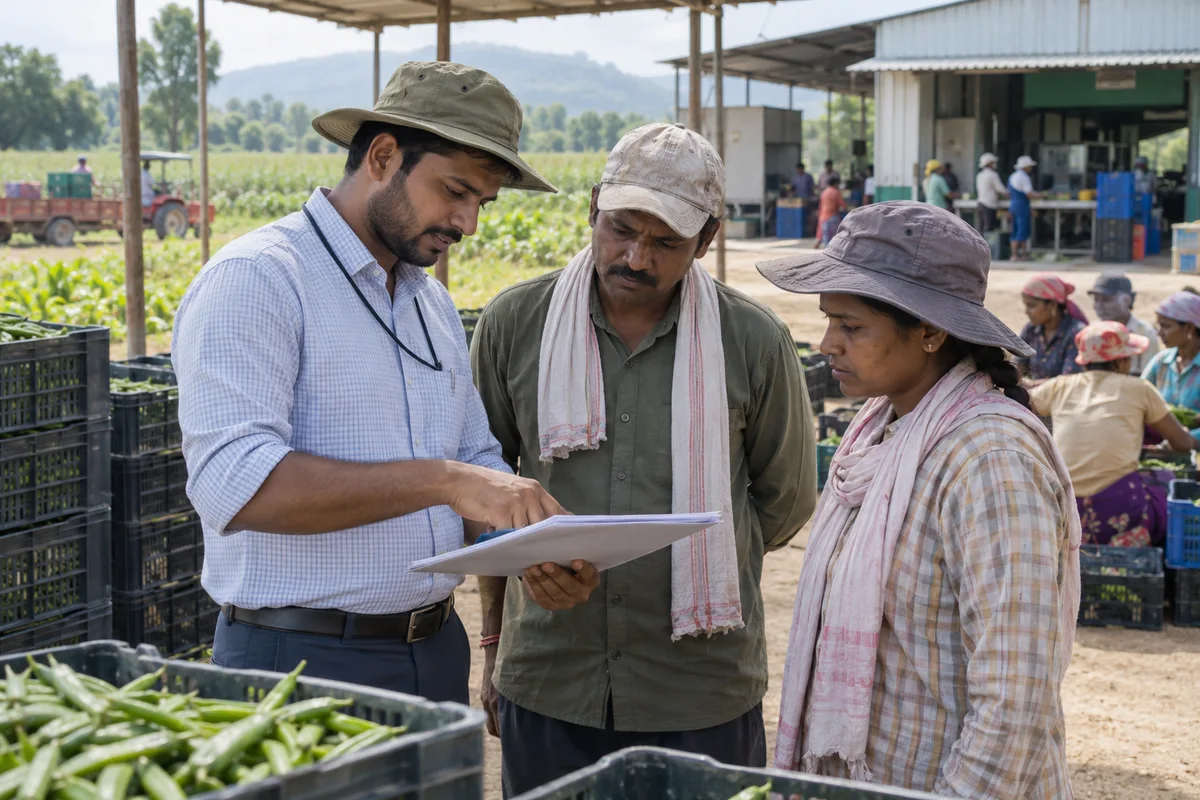
A good picker becomes a supervisor because they are reliable. The next day they must plan twenty people, keep a tally, check quality and handle the one who argues about rates. They copy what their own supervisor did, good or bad. Some become tough and lose crews. Some become soft and lose control of quality.
A short, practical programme can change this. Six or eight sessions of an hour each, held at the farm in the off-season, covering planning a day, giving instructions, counting and recording, checking quality, handling disagreements and caring for safety. Each session uses real situations from last season, and the orchard manager attends at least some.
Supervisors also deal with seasonal workers who may be new each year. Teaching a supervisor to run a short morning briefing, show a new picker a task and settle a rate question calmly turns a fresh crew into a working team faster. It also protects fruit quality in the first week, when mistakes are most costly.
How to set it up
1. List what supervisors do in a day
Sit with three supervisors and note what they actually do from first light to last count. This becomes the course outline.
2. Choose six topics
Plan a crew, give instructions, count and record, check quality, handle disputes, look after safety and heat. One hour each.
3. Teach with real cases
Use last season's examples, such as a tally argument or a bruised lot. Ask supervisors to say what they would do, then discuss.
4. Practise in the field
After each session, supervisors try one thing the next day, such as a morning briefing, and the orchard manager gives feedback.
5. Teach the morning briefing
Practise a three-minute briefing covering the day's block, the task, the quality point and the safety point.
6. Run a first-day induction for new crew
Supervisors show new pickers the tool, the pace, the grading rule and where to ask for help.
7. Follow up before harvest
Hold a short refresher before picking begins, and agree one improvement each supervisor will work on.
Check these first
Before changing anything, find out what is true today. Use your own records for a defined period and note gaps in the evidence. The review may take longer if records are incomplete or spread across teams.
- Ask supervisors how they plan a crew for tomorrow.
- Count tally disputes in the last harvest by supervisor.
- Check grading loss by block against the supervisor.
- Ask crews which supervisors they trust and why.
- Watch a morning briefing and note what a new picker would not know.
GullyHR can do this with you. Read how we approach manager development programme in general, or share your requirements and we will tell you where to start.
Questions owners ask
In the off-season, when time allows. Hold a short refresher just before harvest to remind them of the main points.
Basic counting and recording are needed. Where reading is weak, use tally sheets with simple marks and pair the supervisor with a clerk.
Look at tally disputes, grading loss and the share of crews returning next season. Also ask the supervisors themselves what they changed, and ask their crews if they noticed.
Start with the respected ones, hold sessions at the farm and use real problems. Show that the aim is easier work and less quarrel, not criticism.
Yes, covering drinking water, shade, rest, safe tool use and first aid. Check specific rules with your adviser.
We set up the interview and hiring process for horticulture farms
Every business interviews, but few have a written process that works the same way for every role and every interviewer. GullyHR designs yours, from the role brief to the offer, trains your managers to run it, and can run it for you on the roles you hand us.