
Communication skills training for Horticulture farms: clear instructions, rate talks and feedback in the field
Much of an orchard's trouble starts with a misheard instruction or an unexplained rate. Supervisors and leads need simple ways to say what is wanted, how it is paid and how well it was done.
Not sure what you need? Tell us about your business in six short steps and we will come to the first meeting prepared.
Share your requirementsWhy communication skills training matters in horticulture farms
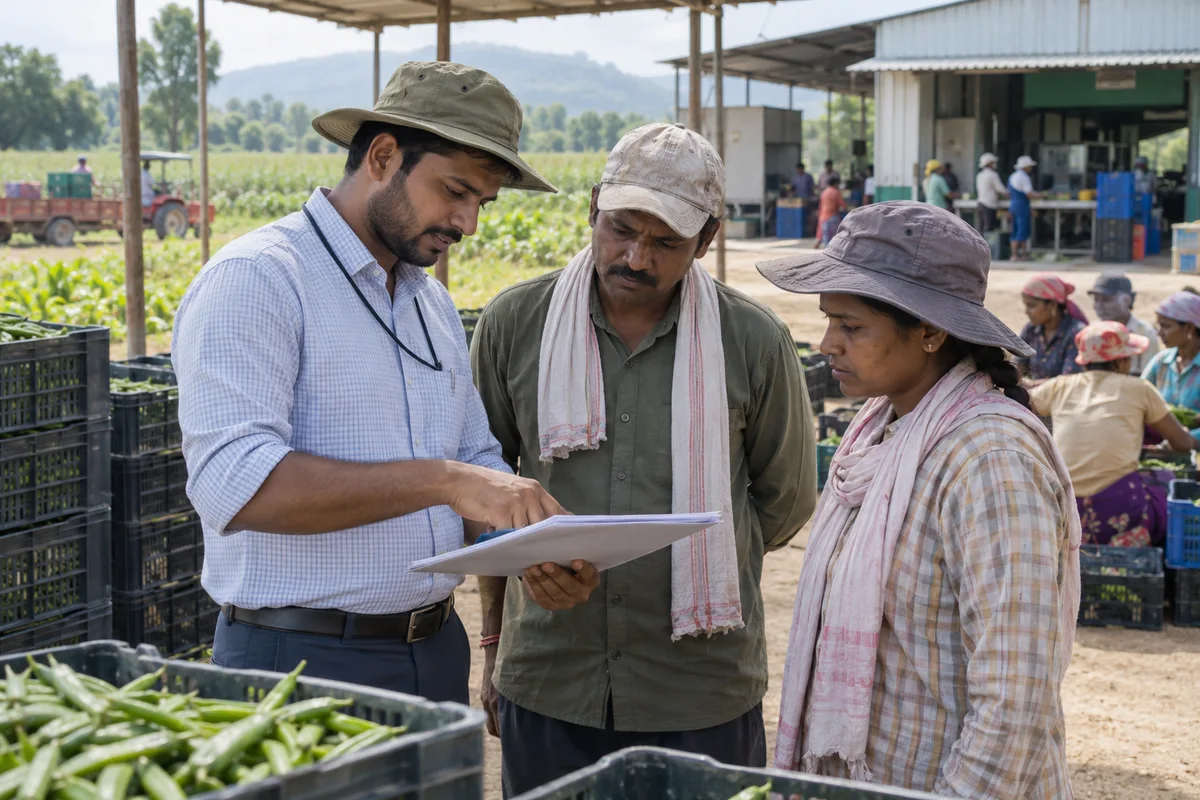
Crews on a horticulture farm come from different districts and speak different dialects. A supervisor says 'pick ripe fruit' and each picker has their own idea of ripe. A rate is announced once, in a rush, and disputed at the end. Feedback comes as shouting at the field edge, which loses good people.
Training on communication should be practical, short and in the local language. It teaches a supervisor to show first and tell second, to repeat a rate in words and numbers, to give feedback privately and to listen to the crew's concerns. Practised with real examples from the farm, it quickly cuts misunderstandings and returns crews next season.
How to set it up
1. Pick three situations
Choose the briefing at the start of the day, the rate explanation and the correction of a mistake. Use real cases from the farm.
2. Show, then tell
Teach supervisors to demonstrate a task on the plant, ask the crew to repeat it and check the first few trees or crates.
3. Practise explaining a rate
Have each supervisor explain a rate in words, then in a worked example, and ask a worker to repeat it back.
4. Practise private feedback
Role-play a correction of a careless picker, using calm language and one point only. Agree what to say and what not to say.
5. Check at the field
The orchard manager joins a morning briefing and gives the supervisor two notes, one on what worked and one to improve.
Check these first
Before changing anything, find out what is true today. Use your own records for a defined period and note gaps in the evidence. The review may take longer if records are incomplete or spread across teams.
- Ask three pickers to explain the rate and the ripeness rule.
- Listen to one morning briefing and note how much is understood.
- Check the number of quarrels over rates last season.
- Ask supervisors when they last gave private feedback.
GullyHR can do this with you. Read how we approach communication skills training in general, or share your requirements and we will tell you where to start.
Questions owners ask
The local language of the crew, with demonstration and examples. Where crews mix dialects, use simple words and gestures along with samples.
A first session of two to three hours with follow-up practice at the field gives a start. Habits change over a season, not in a day.
The instruction was not clear, or the rate was not explained. Check your own briefing first, then look at the relationship.
We set up the interview and hiring process for horticulture farms
Every business interviews, but few have a written process that works the same way for every role and every interviewer. GullyHR designs yours, from the role brief to the offer, trains your managers to run it, and can run it for you on the roles you hand us.