
Learning and development process for Industrial Electronics Makers: moving bench knowledge to more people
Industrial electronics units build in low volumes and support products for years. Training must move test, calibration and repair knowledge from a few seniors into the whole team.
Not sure what you need? Tell us about your business in six short steps and we will come to the first meeting prepared.
Share your requirementsWhy learning and development process matters in industrial electronics makers
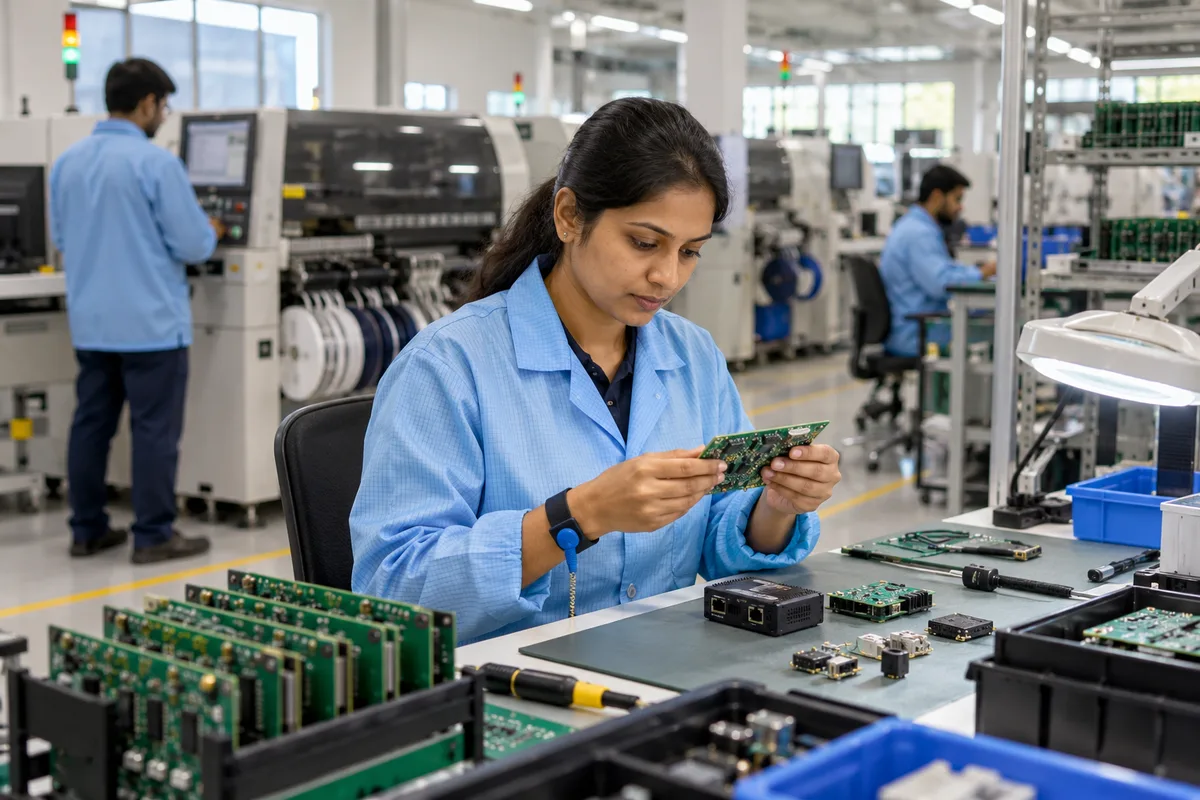
Without a plan, learning depends on the senior test technician. New people watch and copy, but the reasons are not written. Low volumes mean a task may come up only twice a year, so skill fades between runs. Repair of an old controller needs skills nobody else has, and service engineers learn products on the customer's site.
Good practice writes down the checks and reasons, records them as short guides and uses real units for practice. New staff spend planned time at the test bench and the repair bench with a named trainer. Seniors record their tricks on a card or short video. Refreshers are scheduled before a rarely built product returns, not after a fault.
How to set it up
1. Make a list of products and key skills
List each product family against the skills needed to build, test, calibrate and repair it. Mark the ones held by only one person.
2. Record the senior's method
Sit with the senior technician for a few sessions per product and write the steps, readings and warning signs. Photograph set-ups and keep them with the guide.
3. Train on real units
Set aside units for practice, such as returns and scrap boards. Trainees run the test and repair with the senior watching, then alone with review.
4. Plan refreshers before low volume runs
When a product is due, run a short refresher the week before. Our learning and development process support covers a calendar.
5. Include service and design in learning
Invite service engineers and designers to the bench sessions twice a year so they hear what fails in the field and what the design intended.
Check these first
Before changing anything, find out what is true today. Use your own records for a defined period and note gaps in the evidence. The review may take longer if records are incomplete or spread across teams.
- List products where only one person can complete test and calibration.
- Check whether each key test has a written guide that someone else can follow.
- Ask the newest technician what they learned by watching rather than reading.
- Find the last time a rare product was built and who ran it.
GullyHR can do this with you. Read how we approach learning and development process in general, or share your requirements and we will tell you where to start.
Questions owners ask
Sit with them while they work, ask why at each step and write it in their words. Add photos and readings. Then have a second person run the test from the guide and mark what is unclear.
Pair a younger technician with the experienced one on real repairs and keep a log of faults and fixes. Keep some old units for practice. Reward the teaching in the senior's role.
Yes for theory and safe working, but most skill comes from supervised practice on real units. Mix short sessions with bench time and sign off tasks one at a time.
We set up the interview and hiring process for industrial electronics makers
Every business interviews, but few have a written process that works the same way for every role and every interviewer. GullyHR designs yours, from the role brief to the offer, trains your managers to run it, and can run it for you on the roles you hand us.