
Workplace health, safety and wellbeing for Personal Care Product Makers: hygiene, hot vessels and strain
Personal care work asks for two kinds of safety at once: protecting the product from the worker and the worker from hot vessels, ingredients and repetitive strain. Both rest on shift habits.
Not sure what you need? Tell us about your business in six short steps and we will come to the first meeting prepared.
Share your requirementsWhy workplace health, safety and wellbeing matters in personal care product makers
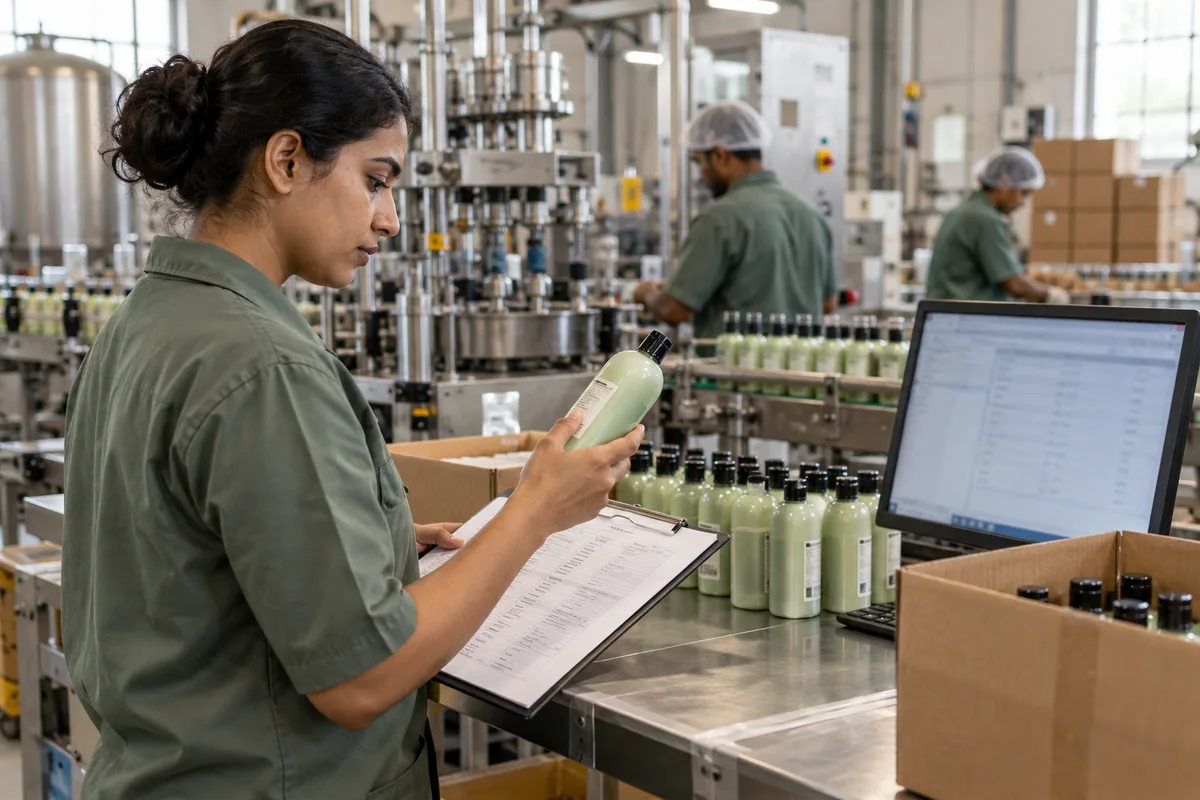
Hygiene is followed when an auditor or the owner is in the building and slips on night shifts. Hair covers come off in the afternoon heat, gloves are reused and handwashing is skipped when the line is behind. At the same time, mixers lift heavy containers and work beside hot vessels, and fillers and labellers sit in one position for hours, with sore backs and wrists that nobody reports.
A shift-start routine brings it together. A gate check for clean uniforms, hair covers and hands. A line check for gloves, tools and floor. A short note on hot vessels and safe lifting. A rest break and a change of task for packing staff. A supervisor on every shift, including nights, with the same authority to stop the line. Ask a qualified professional about the legal requirements that apply.
How to set it up
1. Write a short gate and line routine
One page: uniform, hair cover, hands, jewellery and gloves, with a picture for each. Put it at the entrance and at the line.
2. Sign it off every shift
The supervisor checks each person and signs a sheet. Retrain anyone found skipping it, and stop the line if gloves or covers are missing.
3. Check vessel and lifting practice
Walk the mixing area with the mixers and note hot surfaces, steam, heavy containers and slippery floors. Add guards, trolleys and clear marks.
4. Rotate packing and filling tasks
Change tasks every couple of hours and give short breaks. Check seating and lighting.
5. Hold the night shift to the same standard
Give night supervisors the same checks and visit unannounced from time to time. Compare findings between shifts at a regular meeting.
Check these first
Before changing anything, find out what is true today. Use your own records for a defined period and note gaps in the evidence. The review may take longer if records are incomplete or spread across teams.
- Count how many people on the night shift followed the hygiene routine on your last visit.
- Ask mixers and fillers about burns, strains or skin reactions in the last few months.
- Check whether hair covers, gloves and uniforms are available at the line when the stock runs low.
- Look at where heavy ingredient containers are lifted and whether a trolley is within reach.
GullyHR can do this with you. Read how we approach workplace health, safety and wellbeing in general, or share your requirements and we will tell you where to start.
Questions owners ask
Make the routine short, visible and non-negotiable, and let the supervisor stop the line. Pressure for output should not decide hygiene.
Treat them as a signal. Ask workers to report them early, change gloves or tasks, and note patterns by product. Seek professional guidance on obligations.
Rotate tasks, provide proper seating and lighting and allow short breaks. Watch complaints about eyes and wrists, since they show up before absence does.
We set up the interview and hiring process for personal care product makers
Every business interviews, but few have a written process that works the same way for every role and every interviewer. GullyHR designs yours, from the role brief to the offer, trains your managers to run it, and can run it for you on the roles you hand us.