
Succession planning for Tool Rooms and Die Shops: preparing for the master toolmaker's retirement
A master toolmaker's judgement took a decade to form and sits in their hands. Succession in a die shop means starting years before the retirement, not the month the notice arrives.
Not sure what you need? Tell us about your business in six short steps and we will come to the first meeting prepared.
Share your requirementsWhy succession planning matters in tool rooms and die shops
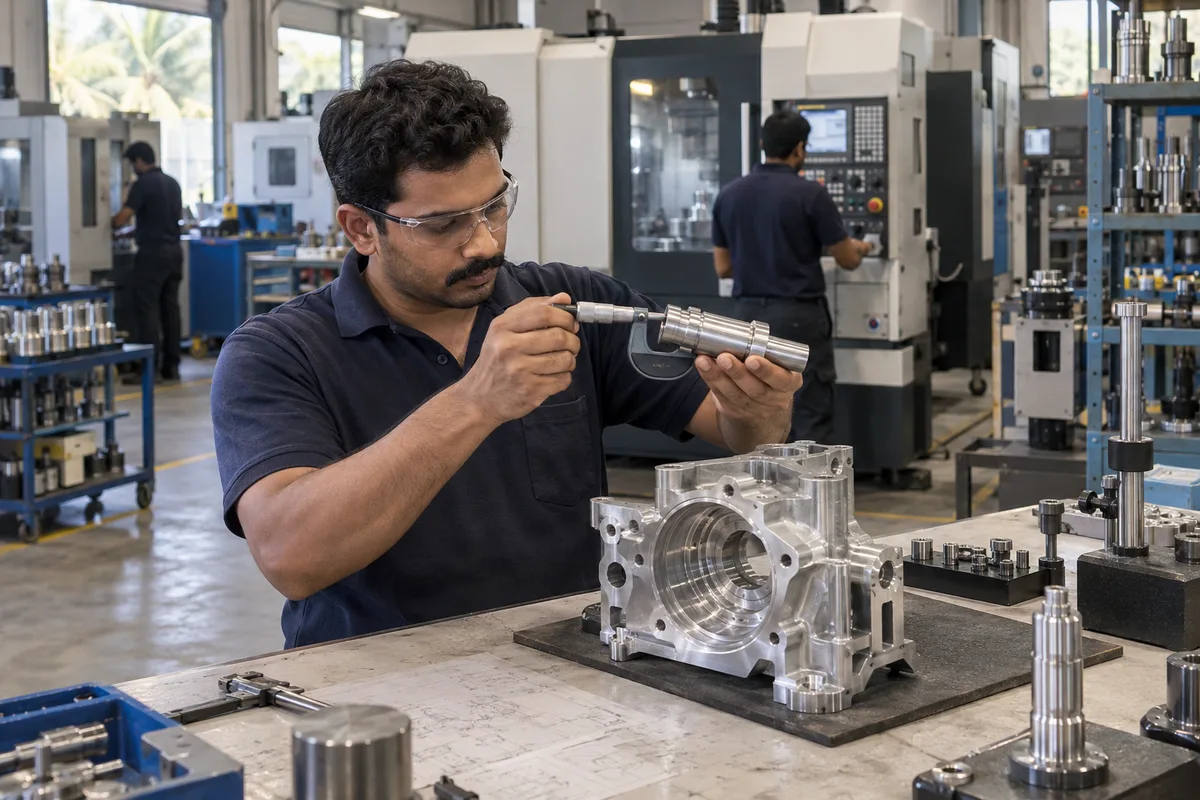
The master decides how much to leave for fitting, how to read a trial strip and which hardened block will crack. This is not in drawings. When they retire or are poached, the next person is a good fitter, but has never been the one who made the call, and the first die trial under them goes badly. Customers notice, and they notice faster in a business of long lead times and repairs under pressure.
Practical succession names the next judge for each area, such as progressive dies, moulds and gauges. The successor sits in on every trial, makes the call first and compares it with the master's. The master writes a short note on each tool: what was risky, what they changed at trial and why. Over a few years the successor builds their own record.
How to set it up
1. List the judgement roles
Write the calls only the master makes: die clearance, trial strip reading, heat treatment choice, final fit. Include designers who hold similar knowledge.
2. Name a successor for each
Choose a person for each judgement area, and tell them and the master. Agree how many trials per quarter the successor will attend.
3. Make the successor call first
At each trial, the successor says what they see and what they would change before the master speaks. Note where the two agree and differ.
4. Write a note on every tool
One paragraph on risks, changes made at trial and reasons. Keep it with the tool record. The HR documentation process shows how to keep such records tidy.
5. Plan the master's later role
Talk early with the master about a mentoring or reviewing role after retirement age, if both sides want it. It keeps knowledge in reach.
Check these first
Before changing anything, find out what is true today. Use your own records for a defined period and note gaps in the evidence. The review may take longer if records are incomplete or spread across teams.
- Ask the master toolmaker what they decide that no one else can, and write the list.
- Check how many trials in the last year the named successor attended.
- Look at your last three tool records and see whether trial changes were written.
- Ask the master how many years they plan to work and whether that is written anywhere.
GullyHR can do this with you. Read how we approach succession planning in general, or share your requirements and we will tell you where to start.
Questions owners ask
Start now. Name a successor, have them call trials first, record trial notes and talk with the master about a later advisory role. Waiting until notice leaves only months for what takes years.
Some can, but design and fitting are different skills. A designer who spends time on the bench and in trials can grow into the judgement, so plan bench time for them.
It is a cost of the business, in time at trials and slower fitting at first. Treat it as the price of continuity and plan it into job estimates and quarterly targets.
We set up the interview and hiring process for tool rooms and die shops
Every business interviews, but few have a written process that works the same way for every role and every interviewer. GullyHR designs yours, from the role brief to the offer, trains your managers to run it, and can run it for you on the roles you hand us.