
Workplace health, safety and wellbeing for Steel Casting Foundries: safer heavy pours through people habits
A heavy pour in a steel foundry is a team act under real risk. Safety here depends on habits, briefings and rest, not only on posters and equipment.
Not sure what you need? Tell us about your business in six short steps and we will come to the first meeting prepared.
Share your requirementsWhy workplace health, safety and wellbeing matters in steel casting foundries
Injuries in a steel foundry rarely come from one dramatic error. They come from small lapses that stack up: a hurried crane signal, a wet floor near a ladle path, a tired operator on a long heat treatment shift, a helper standing where they should not. Supervisors know these habits exist, but nobody has time to correct them in the middle of a busy shift, and near misses are not talked about.
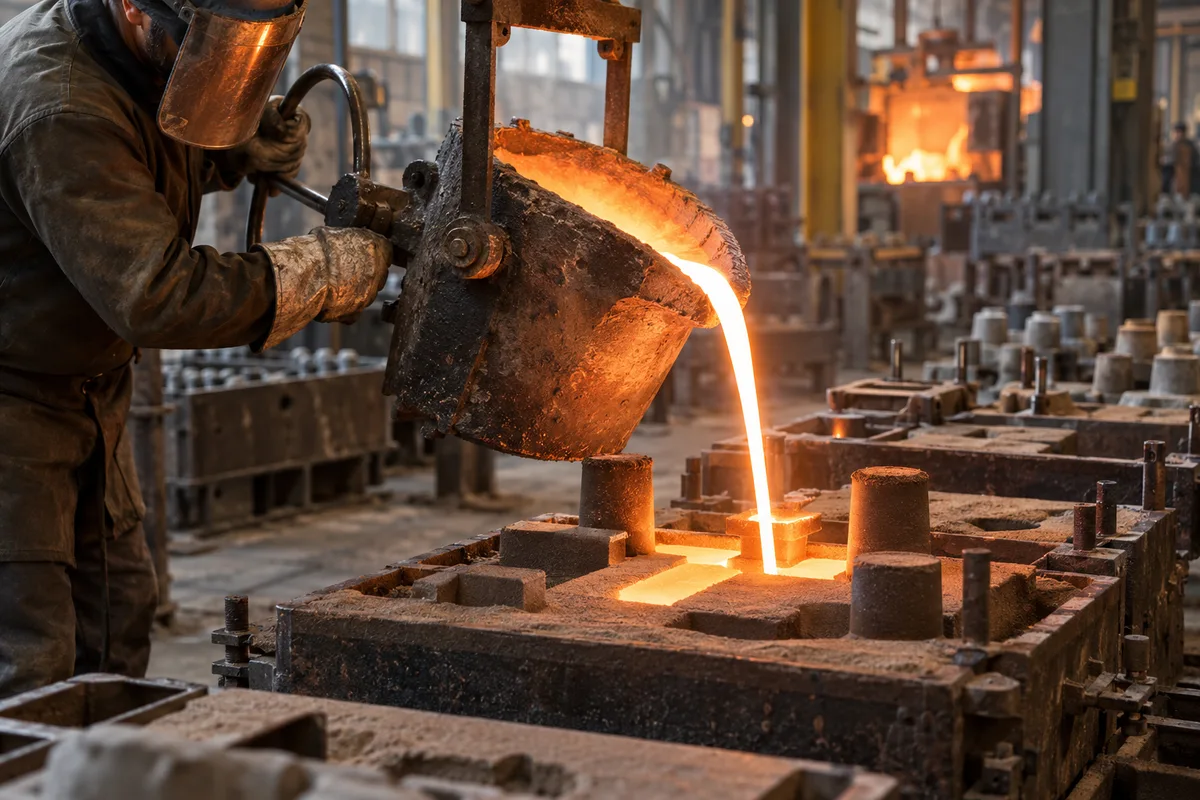
Good practice starts with a short briefing before each heavy pour, naming who does what and where each person stands. It adds clear hand signals, a rule on who may stop the pour, and a way for any worker to raise a concern without blame. Rest and shift length are watched for crane operators and furnace crew. Heat stress is managed with water, breaks and shaded points. Near misses are written down and read out.
How to set it up
1. Brief every heavy pour
Hold a two-minute briefing at the ladle: who tilts, who signals, where the helpers stand, and who can call a stop. Keep it the same each time so it becomes habit, not a speech.
2. Standardise crane and ladle signals
Agree one set of hand and voice signals, teach it to every rigger and operator, and check it in practice. Fatigue is a risk for these roles, so look at their hours and break pattern too.
3. Plan for heat and long shifts
Check water points, rest spots and rotation for furnace, heat treatment and fettling crews. Where nights are unavoidable, spread the burden so the same few people do not carry it.
4. Start a near miss log
Give supervisors a simple sheet to record what almost happened, with no blame. Review it weekly at the shift handover and fix the cause. Our health and safety work can set up the routine.
5. Coach supervisors on stopping work
Practise what a supervisor says when a pour should wait. When a stop is respected, the whole floor learns it is allowed. When a stop is mocked, the lesson is the opposite.
Check these first
Before changing anything, find out what is true today. Use your own records for a defined period and note gaps in the evidence. The review may take longer if records are incomplete or spread across teams.
- Read your accident and first aid records for the past year and group them by task
- Ask crane operators how many hours they worked in the last long week
- Check whether there is a written near miss log and when it was last used
- Stand at a pour and note who is where, and whether each person knows their role
GullyHR can do this with you. Read how we approach workplace health, safety and wellbeing in general, or share your requirements and we will tell you where to start.
Questions owners ask
Any person who sees a clear risk should be allowed to call a stop, and the shift head should decide the next step. Say this at the briefing and protect people who use it, or nobody will.
Look at actual hours, rotate heavy lifting between trained people and give breaks that are real. A skill map helps, because you need a second trained operator to share the load.
A committee helps but does not change floor habits by itself. Pair it with pour briefings, supervisor coaching and a visible near miss log, so safety is part of the daily routine and not only a scheduled meeting.
We set up the interview and hiring process for steel casting foundries
Every business interviews, but few have a written process that works the same way for every role and every interviewer. GullyHR designs yours, from the role brief to the offer, trains your managers to run it, and can run it for you on the roles you hand us.